


Museum  April 29, 2026  Annah Otis

How LACMA Is Centering Curation Around Cross-Cultural Exchange

WikiCommons

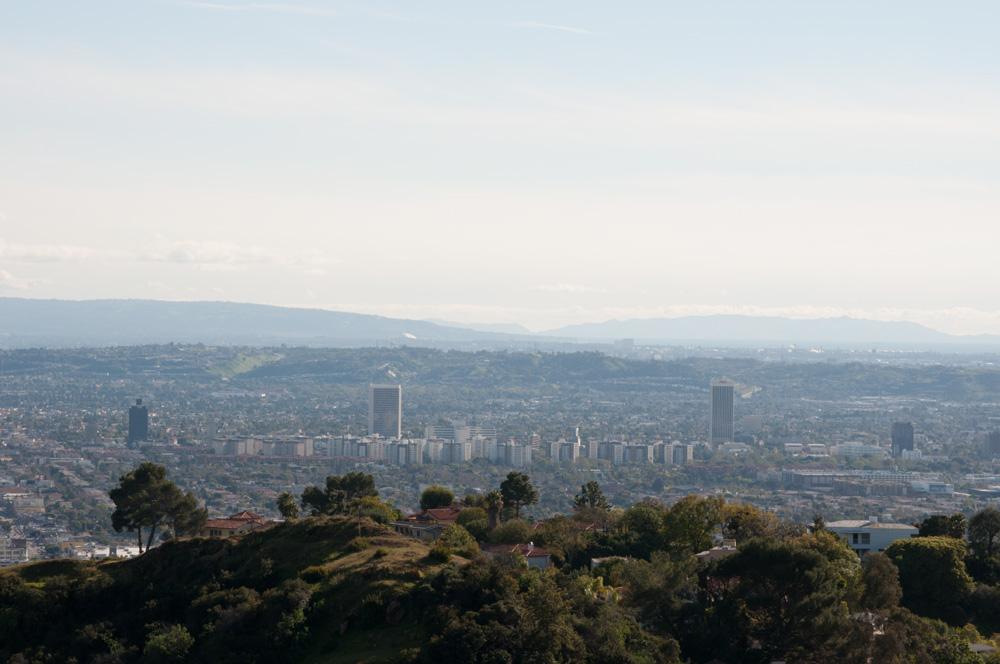
A view of Los Angeles looking toward Miracle Mile where LACMA’s buildings are. License.

When the Los Angeles County Museum of Art (LACMA) opened its David Geffen Galleries on April 19, visitors were met with works from vastly different cultures and centuries hung together without the hierarchies that have long shaped how Western museums arrange their collections. LACMA’s inaugural installation in the new single-level exhibition space is instead organized around bodies of water: the Pacific Ocean, Atlantic Ocean, Indian Ocean, and Mediterranean Sea. Museum-goers are free to meander through the space without prescribed pathways in the same way art is exchanged and moved through the world over centuries.

The elevated 900-foot-long gallery designed by architect Peter Zumthor was created to hold between 2,500 and 3,000 objects. 45 curators working across various areas of study collaborated to fill the space for the first time. Their decision to organize by ocean rather than by country of origin or chronological sequence is an important one. Traditional curatorial models center the Western canon and guide visitors through exhibitions according to a pre-ordained idea of whose art matters and in what order. The oceanic framework implicitly challenges that legacy by foregrounding the cultural exchanges that existed long before European contact. Oceans are treated as a site of connection rather than borders.

WikiCommons

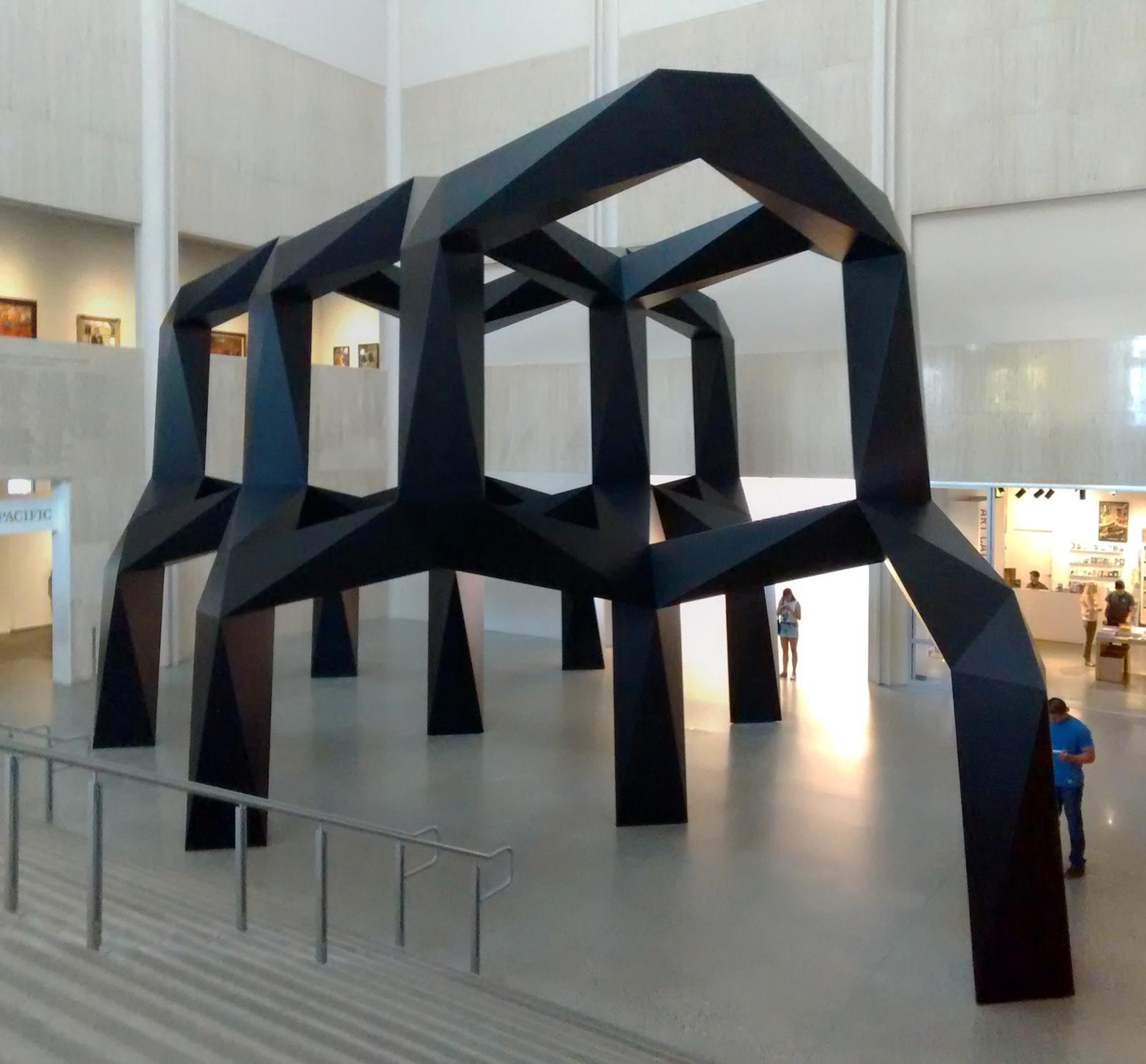
Smoke by Tony Smith, which is now installed outside the David Geffen Galleries. License.

Conscious uncoupling from historically prevalent curatorial approaches has increased as institutions recognize their inherent biases. LACMA is not alone in looking for alternative ways to frame its collection. The Colby College Museum of Art, for example, is organizing its upcoming exhibitionImagining an Archipelago: Art from Cuba, Guam, the Philippines, Puerto Rico, and Their Diasporas, along new lines. The show will bring together around 50 works by 40 contemporary artists across two floors: one organized by geography and one by theme. It acknowledges that oceanic thinking is a set of possibilities for how to connect and contextualize art across land and sea.

What makes LACMA’s ocean-centric approach especially consequential is its scale. The museum’s Local Access program partners with seven West Coast institutions to distribute works from its permanent collection to spaces across Southern California and beyond. These include the Vincent Price Art Museum at East Los Angeles College, the Riverside Art Museum, and the Ontario Museum of History & Art. Objects that do not make it into the David Geffen Galleries can be routed to these partners instead of being held in storage to ensure the collection remains accessible across a broad geographic range.

WikiCommons

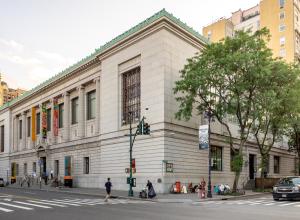
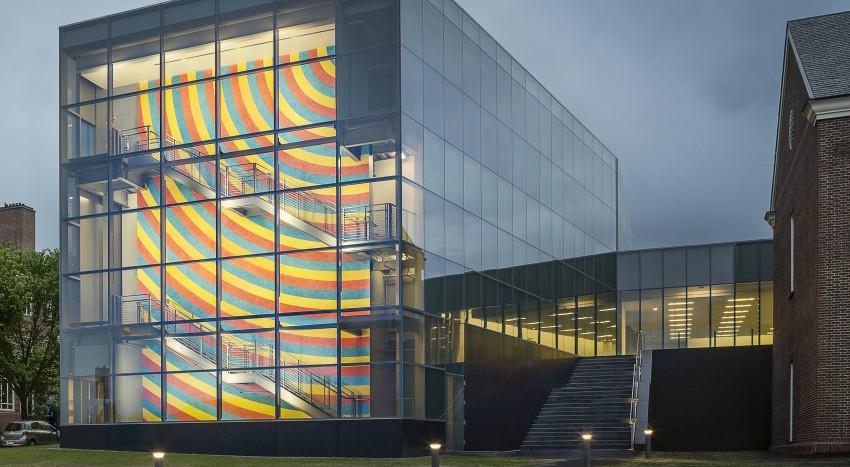
Colby College Museum of Art. License.

This distribution model is part of a larger national enterprise known as the Art Bridges Cohort Program, a collection-sharing initiative that encourages museums to work together over a period of four to six years to expand the accessibility of their holdings. It is designed to eliminate the logistical bottlenecks that have historically kept pieces locked in institutional silos and give regional museums the resources to present exhibitions that meaningfully engage local audiences.

Such shifts in how collections are organized intellectually and physically distributed reflects a growing recognition that museums serve as connectors rather than custodians. LACMA’s inaugural show at the David Geffen Galleries and collection-sharing efforts make it clear that access is as valuable as connoisseurship when it comes to art.

About the Author

Subscribe to our free e-letter!

Webform
Art and Object Marketplace - A Curated Art Marketplace
Loading categories...