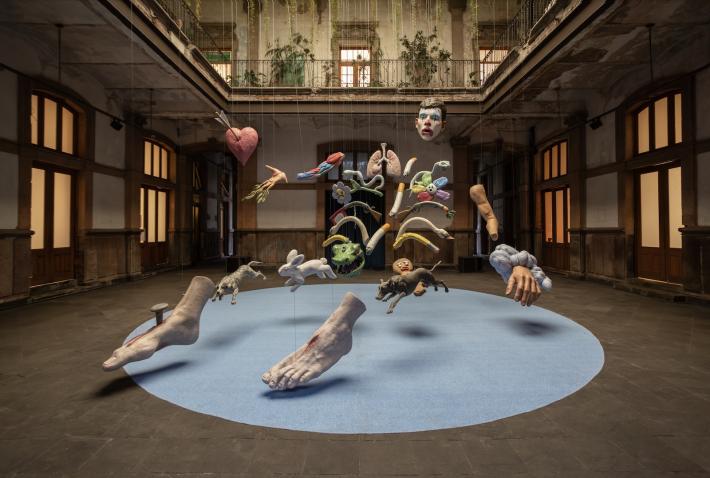

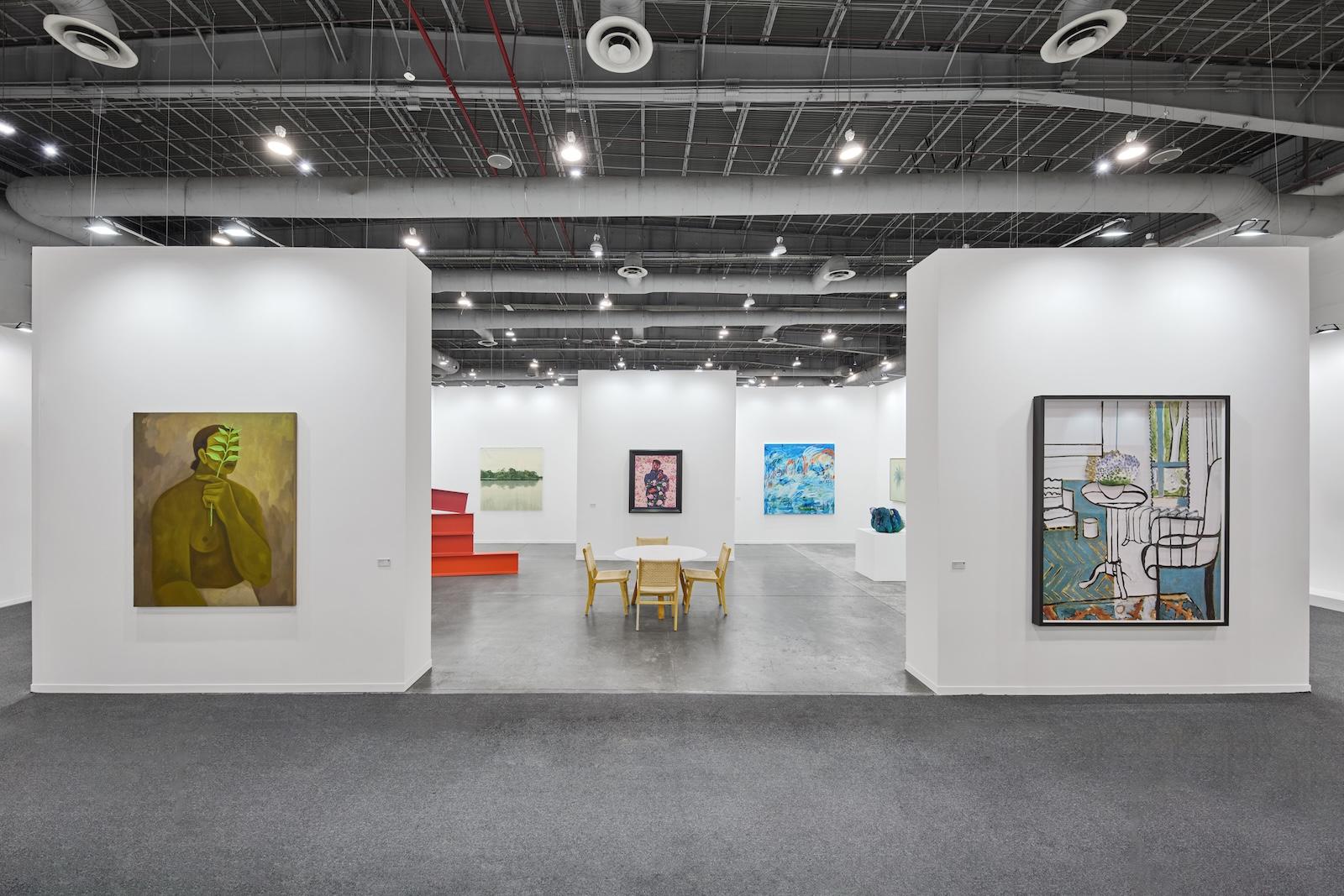
Sean Kelly at Zona Maco 2026, February 4-8, 2026, Centro Citibanamex, Mexico, Booth C110
One of the most lively and engaging events on the international art scene, Mexico City Art Week made its return with Zona Maco leading the way, followed by Feria Material, Salón ACME, CLAVO, and Unique Design X—making the cosmopolitan capital the place to be at the start of February.
“There was a palpable sense of excitement and expectation, even before the week began,” Zona Maco Artistic Director Direlia Lazo shared with Art & Object. “This year, we welcomed around 70 international museum groups, underscoring the fair’s role—and Mexico City’s place—as a meeting point for institutional, curatorial, and market conversations.”
Scroll through to find some of our favorite works from all five art and design fairs.
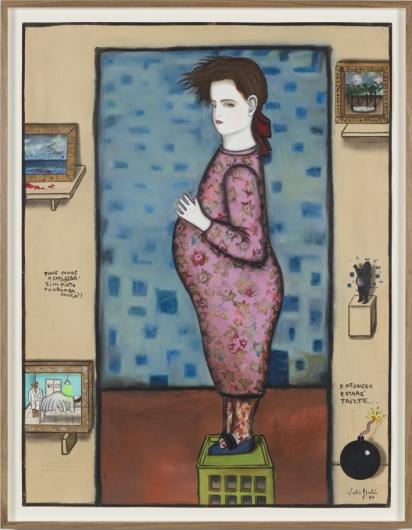
Dubbed the male Frida Kahlo for using his canvas as a personal diary, Julio Galán, who died at age 47 from a brain hemorrhage in 2006, explored universal themes of suffering and solitude. One of the first contemporary Mexican artists to address gender issues, he was a gay dandy whose work focused heavily on self-portraiture. Like Kahlo, he drew inspiration from Mexican retablos, kitsch iconography, and colonial portrayals. In this Untitled, surreal self-portrait, he playfully captures an explosive, creative spirit.
Image: Julio Galán, Untitled, 1984. Pastel, pencil, oil on paper, 121.6 x 95.9 cm (47 7/8 x 37 3/4 in).
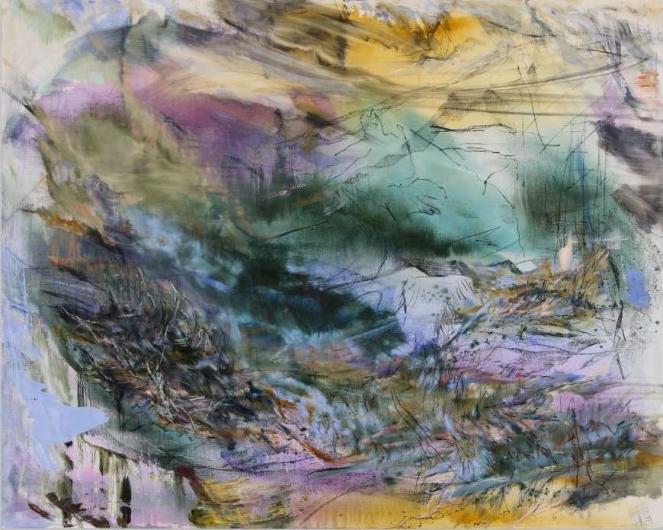
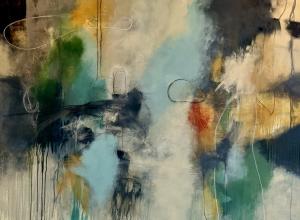
Using homemade pigments sourced directly from the Mexican landscape, Kylie Manning creates large-scale, atmospheric canvases that blend figuration and gestural abstraction. Inspired by her formative years living between Alaska and Mexico, the Brooklyn-based artist’s solo booth presentation featured paintings of genderless, spectral figures that appear and fade within tumultuous, dreamlike realms. Paintings like Swords and feathers showcased warm earth tones alongside cooler Alaska-inspired shades, reflecting her bicultural background.
Image: Kylie Manning, Swords and feathers, 2025. Oil, volcanic ash, azurite, malachite, hematite, iron oxides, graphite, charcoal on linen, 64" × 80" × 1-1/2" (162.6 cm × 203.2cm × 3.8cm).
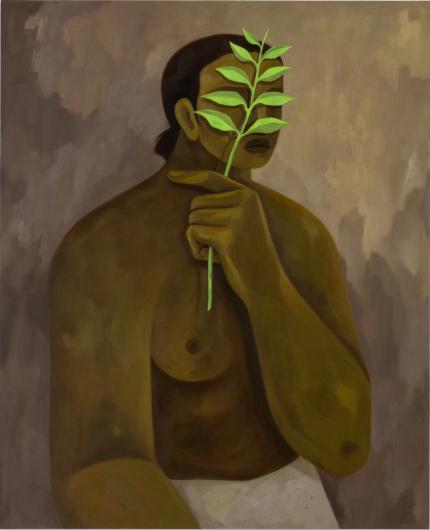
A prominent Mexican artist based in Mexico City, Hilda Palafox combines the legacy of Mexican muralism with modern feminist perspectives. Recognized for paintings and murals depicting oversized women with pronounced limbs and commanding presence, she considers the female body a means of expression rather than a passive muse, exploring subjectivity and human connection. With a current solo exhibition at its New York location, the gallery featured one of her new paintings, A través del verde de una hoja (Through the green of a leaf), for her hometown audience.
Image: Hilda Palafox, A través del verde de una hoja, 2026. Oil and wax on linen, 63 x 51 3/16 inches (160 x 130 cm).
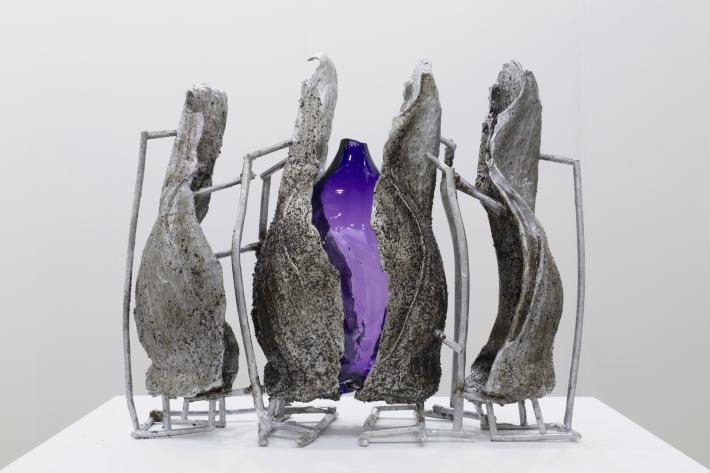
Mexican artist Tania Pérez Córdova is best known for her conceptual sculptures and installations that explore the connections among everyday objects, the flow of time, and unseen social or economic networks. Presenting her static objects as performative, often including traces of external actions or people, the Mexico City-based artist’s pieces like Oráculo (máquina), which translates to Oracle (machine), along with the works in her current gallery exhibition, combine traditional materials such as aluminum and blown glass with ephemeral or contemporary elements like a person's breath, dirt, and varnish.
Image: Tania Pérez Córdova, Oráculo (máquina) | Oracle (machine), 2025. Aluminium cast, blown glass, breath of a person, dirt, and varnish, 45 x 52 x 23 cm | 17.72 x 20.47 x 9.06 in.
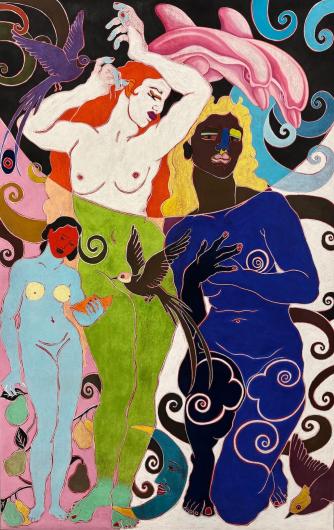
Blending dreamlike surrealism with raw, sensual stories, Amparo Viau creates large-scale, figurative chalk pastel works on cotton paper mounted on canvas, such as this striking Untitled piece. She crafts theatrical experiences for viewers; the Buenos Aires-based Argentinian artist is celebrated for exploring themes of duality, like the pagan and the religious, love and hate, and sacred art and surrealism. Her focus on the human form in creating a Latin American odyssey is based mainly on live models, emphasizing line, gesture, and color so that intertwined bodies appear realistic.
Image: Amparo Viau, Untitled, 2026.Chalk pastel on paper mounted on canvas, 220 × 140 cm.
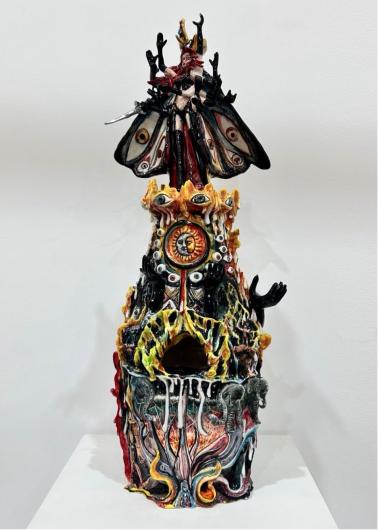
Alejandro García Contreras is a Mexican artist known for his multidisciplinary works that blend Mexican folklore, ancient mythology, and contemporary pop culture. Exploring themes of transience, mortality, and the human unconscious, he is widely recognized for his highly detailed ceramic sculptures, including snake-like forms and contemporary idols that blend pre-Hispanic symbols with anime and manga influences. Based in Guadalajara, he created his piece Glory Holes, a vessel with a removable top and holes for projecting candlelight, at the city’s celebrated Cerámica Suro, which showcased the phantasmagorical work fair.
Image: Alejandro Garcia Conteras, Glory Holes, 2026. Glazed ceramic.
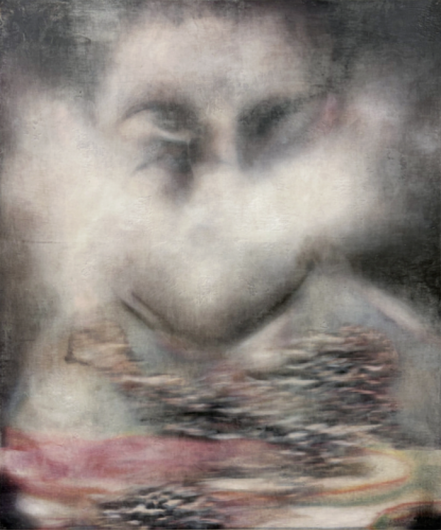
A Mexican painter based in Mexico City, Ángela Leyva creates spectral, distorted portraits that explore themes of identity, memory, and medical history. Using her geneticist father's medical archive of clinical photographs, featuring patients with congenital disorders, she blurs and morphs their faces—reminiscent of Francis Bacon's physical distortions—to craft emotionally intense, layered paintings that are hauntingly beautiful. Offering a second life to forgotten subjects through a process she calls pictorial transfiguration, as seen in her painting GAN-AB-XII at the fair and the canvases in her engaging solo show at Curro in Guadalajara, Leyva expressively liberates her human subjects from cold, clinical records.
Image: Ángela Leyva, GAN-AB-XII, 2026. 100 x 120 x 5 cm. Oil on linen mounted on wood.
A standout at Llano’s solo booth at Frieze London last October, Enrique López Llamas is a multidisciplinary Mexican artist known for work that explores the intersections of art history, pharmaceutical culture, and personal identity. Based in Mexico City, his work addresses the cultural and power structures that shape modern life through painting, video, performance, and installation. His recent work, including I Am The Resurrection and I Am The Life, examines how the body and identity are shaped by cultural fragments such as 1990s cartoons, religious icons, and mass media.
Image: Enrique López Llamas, I Am The Resurrection And I Am The Life, 2026. Hand-painted acrylic on plastic polymer.
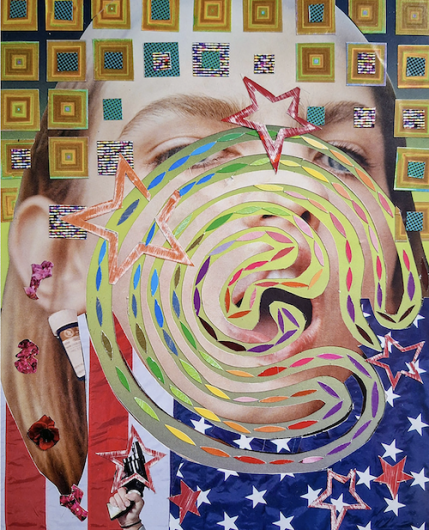
A master at creating intricate analog collages, Paul Loughney’s work is defined by his use of found imagery from contemporary magazines, which he regards as anthropological records, carefully excavated and reconstructed into new stories. The Brooklyn-based artist specializes in paper collage, often using techniques such as drawing, appropriation, and frottage to layer materials while revealing what lies beneath. He notes that his work—including the piece Indoctrinated Spirit, which was part of a group show organized by PasteUp, a Mexico City group that arranges international collage exhibitions—is carefully handcrafted, avoiding digital manipulation in favor of physical texture.
Image: Paul Loughney, Indoctrinated Spirit, 2025. Collage mounted on panel, 10 x 8 x 1 in.
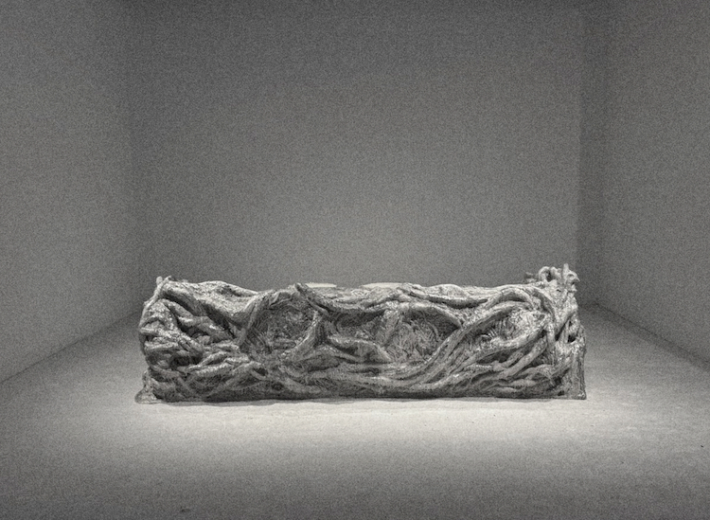
An Iranian multidisciplinary artist and designer based in Dubai, Roham Shamekh is best known for his bold and experiential approach to design. Since founding his eponymous studio in 2016, he has established himself as a leading figure in the Middle Eastern design scene, recognized for blending functional art with personal stories, technology, and spiritual themes. His recent collection includes hand-carved ceramic and resin sofas, such as his Sculptural Sofa at the fair, and side tables that resemble ancient root systems, often featuring immersive soundscapes to evoke a meditative experience.
Image: Roham Shamekh, Sculptural Sofa, Roots Collection, 2025. Epoxy resin base with melted aluminum, overlaid with silk fabric, 300 x 120 cm; 118.11 x 47.24 in. Edition 3+2AP.
Paul Laster
Paul Laster is a writer, editor, curator, advisor, artist, and lecturer. New York Desk Editor for ArtAsiaPacific, Laster is also a Contributing Editor at Raw Vision and Whitehot Magazine of Contemporary Art and a contributing writer for Art & Object, Galerie, Artforum, Artsy, Ocula, Family Style, Sculpture, and Conceptual Fine Arts. Formerly the Founding Editor of Artkrush, he began The Daily Beast’s art section and was Art Editor at Russell Simmons’ OneWorld Magazine. Laster has also been a Curatorial Advisor for Intersect Art & Design and Unique Design, as well as an Adjunct Curator at P.S.1 Contemporary Art Center, now MoMA PS1.