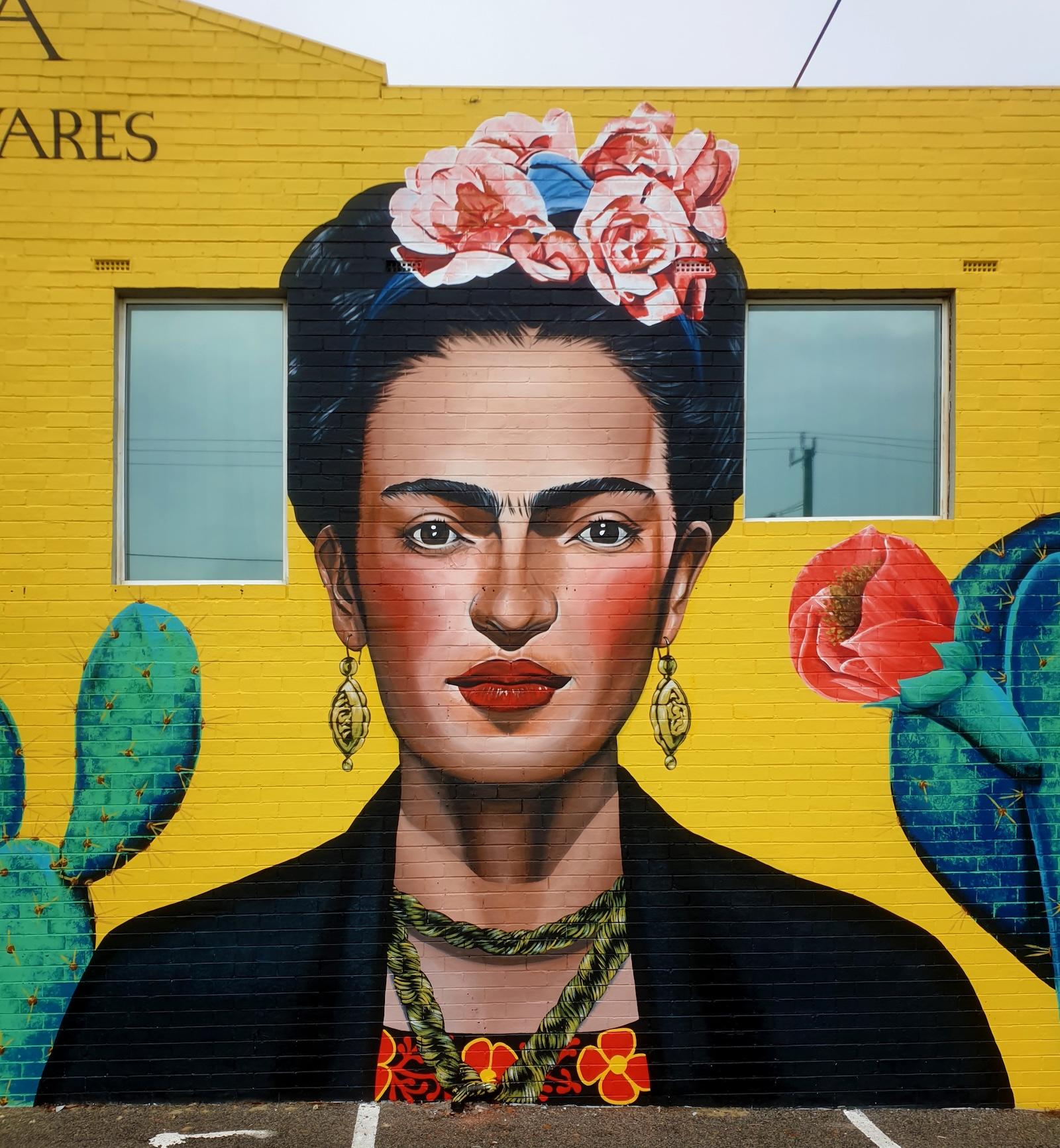

Bausor leaned into this imagery when also developing an exhibition space for Frida and Diego: The Last Dream at the Museum of Modern Art (MoMA) in collaboration with the Metropolitan Opera. Artworks by both Kahlo and Rivera, who were romantically linked from 1928 until Kahlo’s death in 1954, bridge the theatrical and the visual. Kahlo was known for her colorful dress and bold pre-Columbian jewelry that drew attention away from her physical disabilities. Rivera used spectacle as a political instrument in his large-scale murals. Each understood art as a space for memory, tradition, and self-expression.
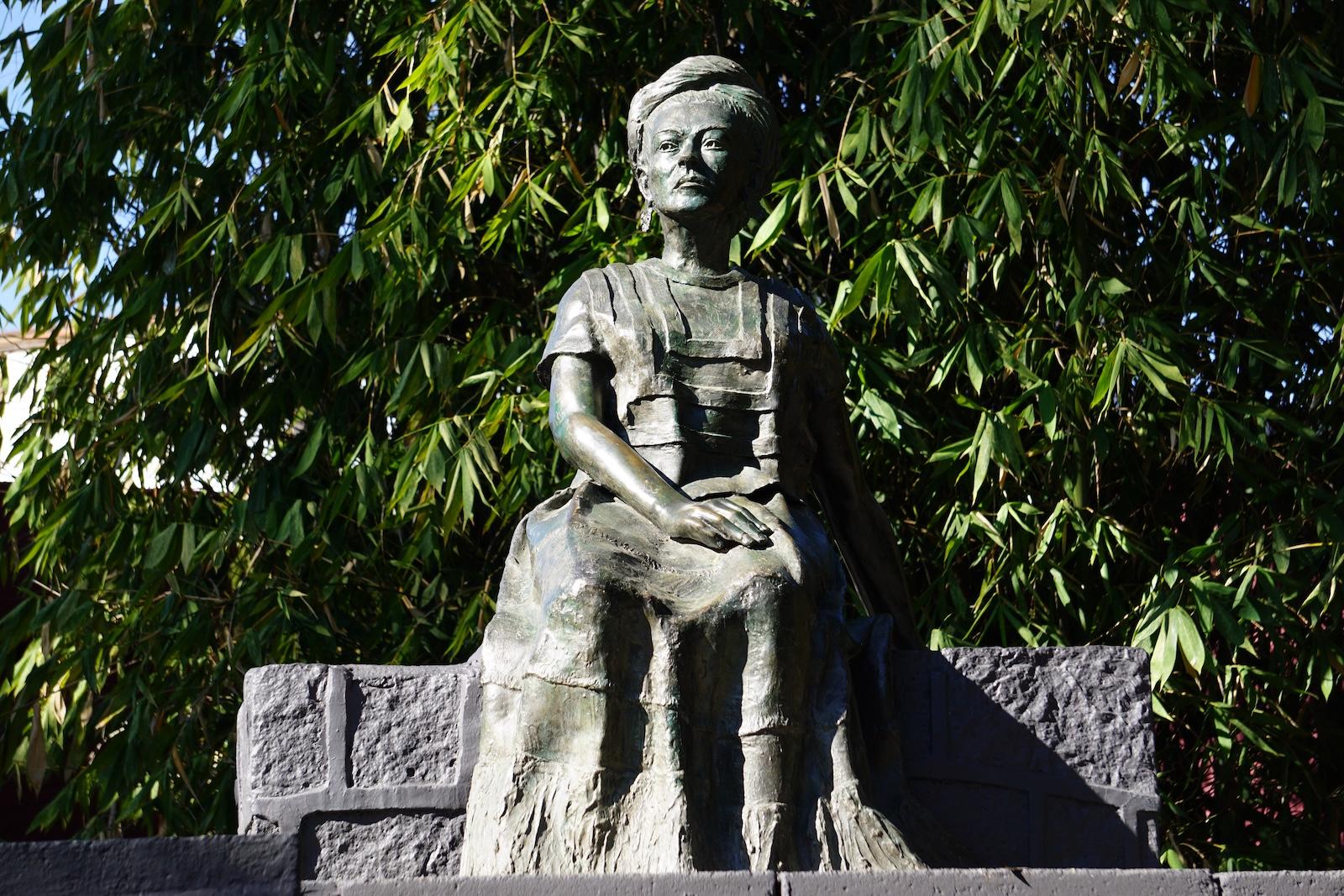
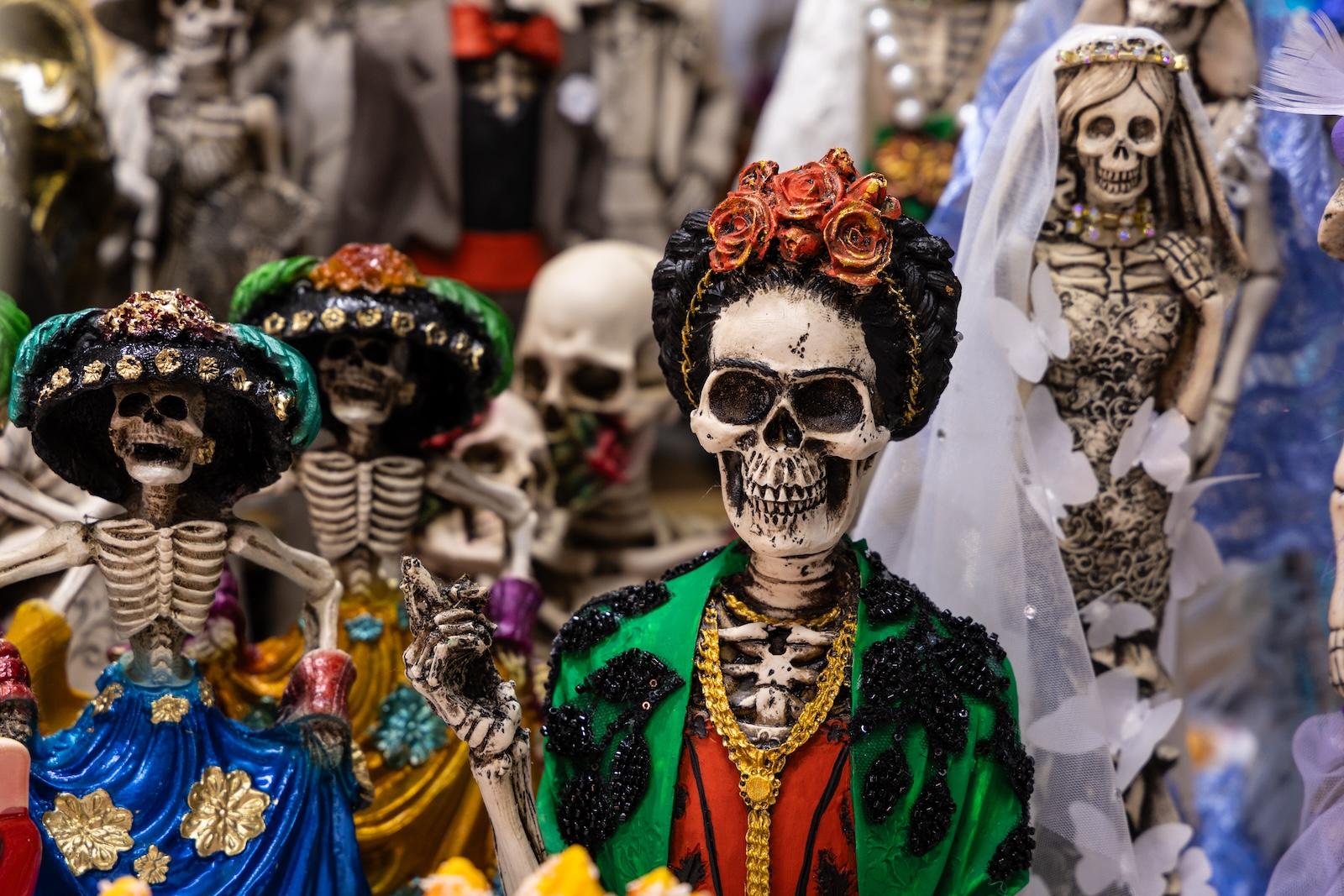
A more comprehensive survey of Kahlo’s life and afterlife is presented through Frida Kahlo: The Making of an Icon, an exhibition that premiered at the Museum of Fine Arts in Houston this January and will make its way to Tate Modern in London next month. It traces the artist’s transformation from a relatively unknown painter during her lifetime into a global brand whose commercial reach now rivals that of Vincent van Gogh or Andy Warhol. 30 of her works are shown alongside more than 200 pieces by her contemporaries and those she influenced. A separate gallery examines the hundreds of commercial objects that now bear her face, style, and persona to ask: What does it take to become an icon?