


At Large  May 6, 2026  Annah Otis

Is Fashion Art? The Met and Sotheby’s Answer

WikiCommons

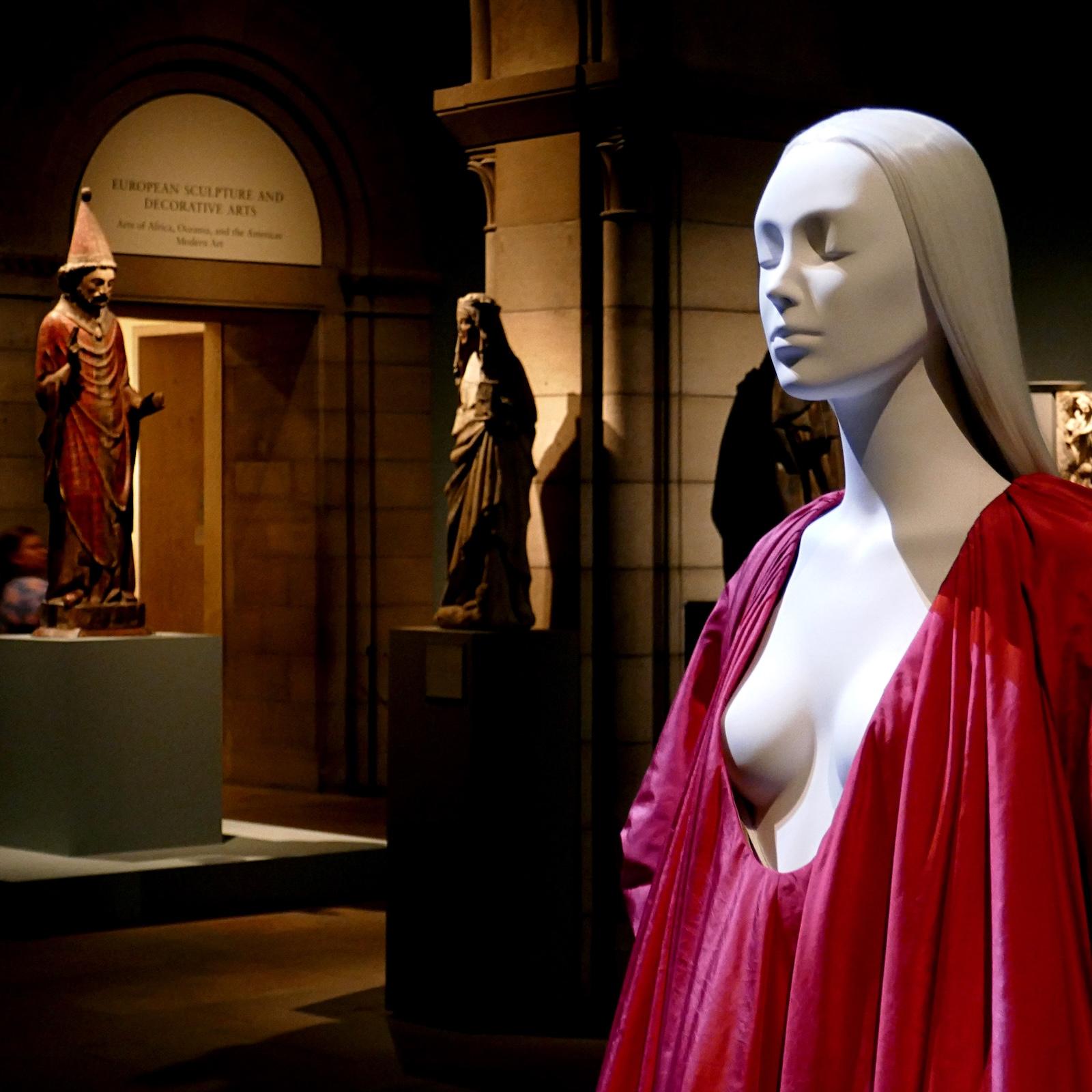
Valentino evening dress in the Met’s “Heavenly Bodies: Fashion and the Catholic Imagination” exhibition in 2018. License.

Although museums have long housed clothing in “costume institutes” removed from their painting and sculpture galleries, a series of exhibitions and events is collapsing the distance between fashion and art this spring. This past Monday kicked things off with the Metropolitan Museum of Art’s annual Costume Institute Benefit (The Met Gala) with its theme of “Fashion is Art."

This year’s event coincides with the opening of the Met’s Condé M. Nast Galleries, nearly 12,000 square feet of space adjacent to the Great Hall, whose inaugural exhibition is titled Costume Art. The show pairs pieces from the Costume Institute and objects from the museum’s broader collection around the theme of the dressed body across cultures. A Greek vessel from 460 BCE is placed alongside a 1920s gown by Fortuny. Albrecht Dürer’s The Man of Sorrows hangs near Vivienne Westwood’s “Martyr to Love” jacket. A Georges Seurat study for A Sunday on La Grande Jatte is set in dialogue with an 1883 walking dress.

WikiCommons

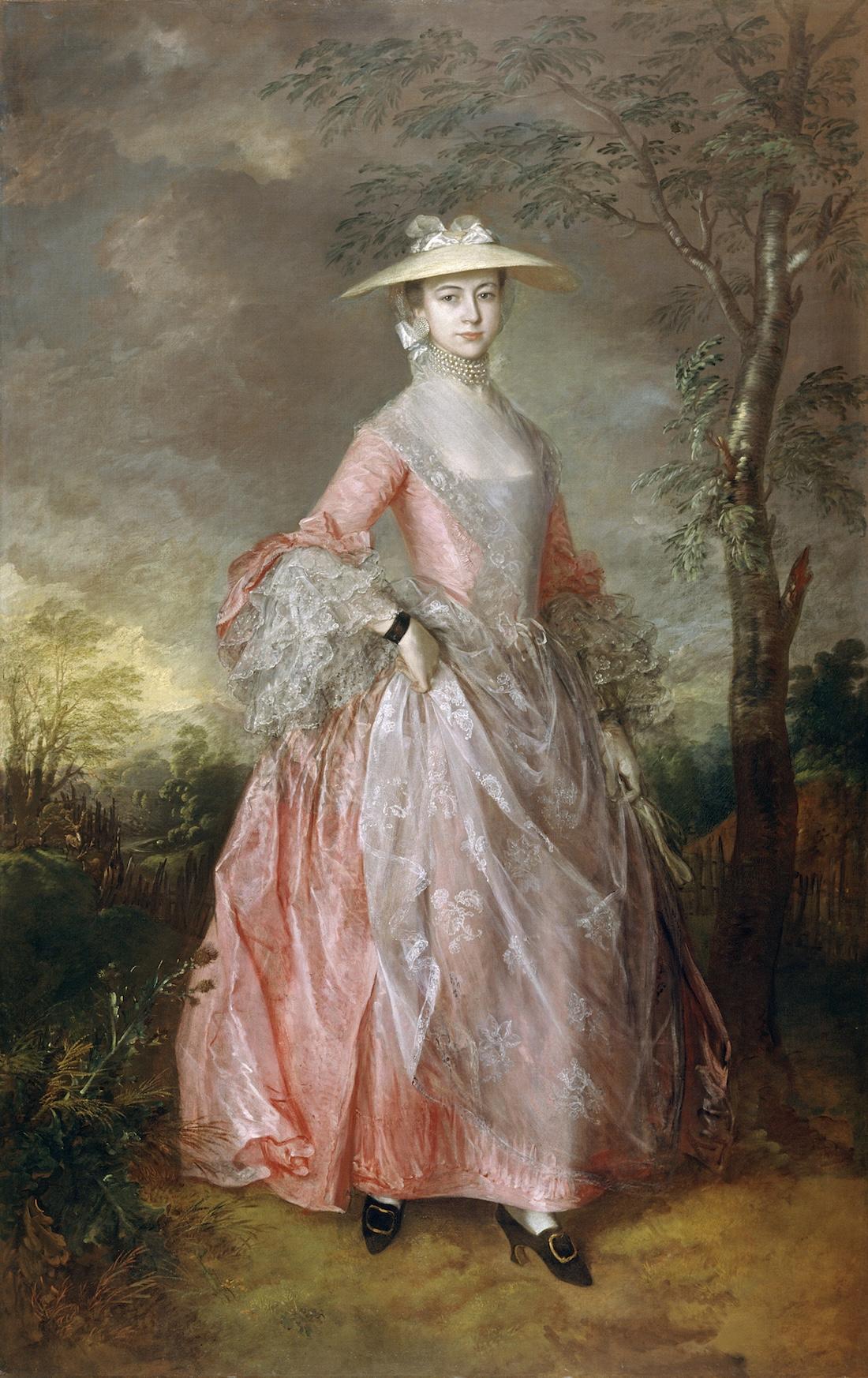
Thomas Gainsborough, Mrs. Edmund Morton Pleydell, c. 1765. License.

Fashion is framed as a form of creative expression and an essential part of shared human history. Brooklyn-based firm Peterson Rich Office designed the galleries with limestone thresholds to echo the Great Hall’s arches in a way that draws further parallels to the works within each space.

The Frick Collection’s soon-to-close Gainsborough: The Fashion of Portraiture exhibition similarly examines clothing as a form of personal and social expression in Georgian England. Both men’s and women’s dress operated as an indicator of class and fortune. While the Royal Academy pushed painters towards classical costumes to dignify subjects and insulate them from the passage of time, Thomas Gainsborough insisted that contemporary fashion was central to a true likeness. He worked beside his sister’s millinery shop in Bath after moving to the city in 1759 and would have been familiar with the latest styles.

WikiCommons

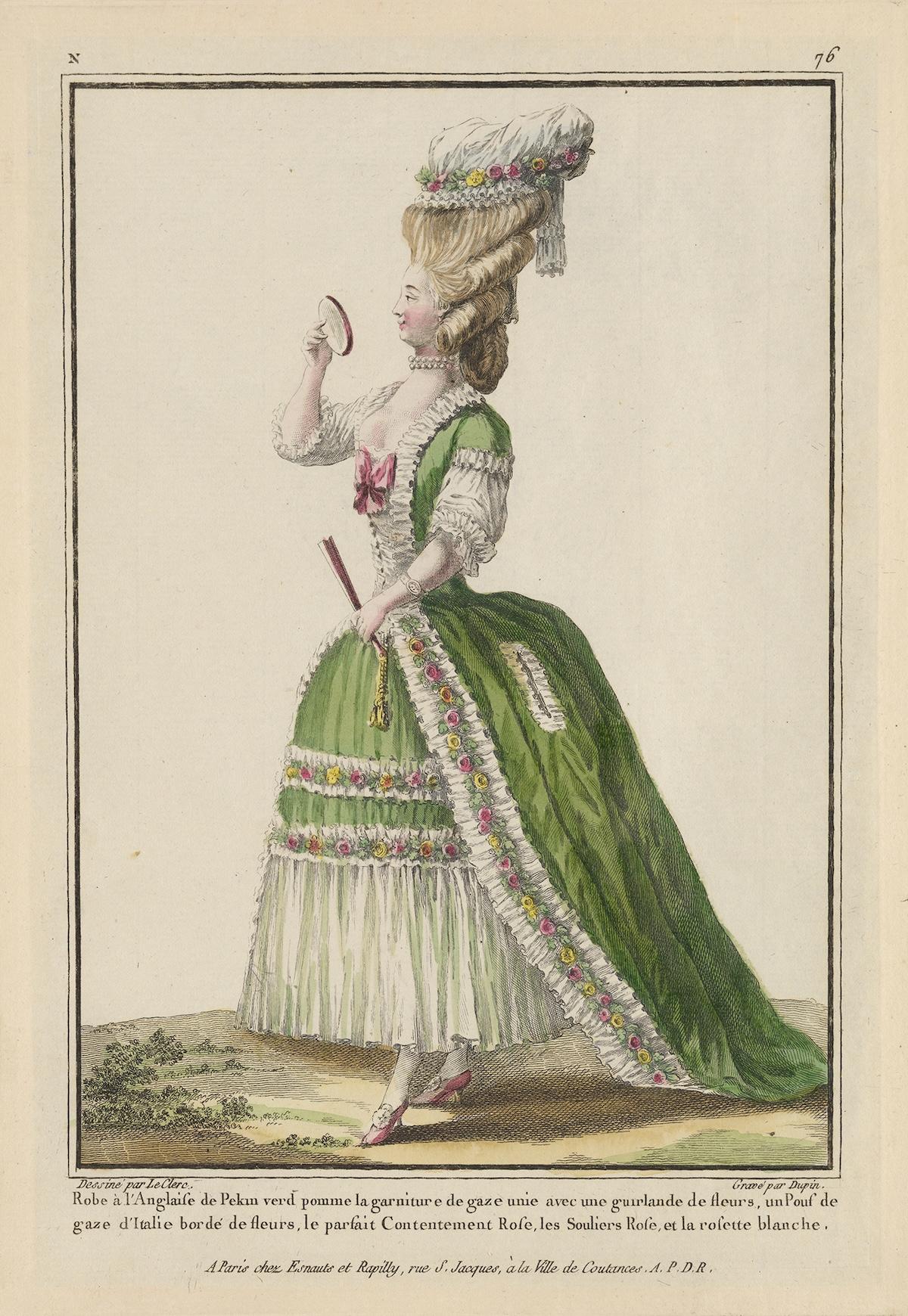
Plate from Galerie des Modes et Costumes Francais, 1778. Source.

Accompanying the Frick’s exhibition is a display of 24 hand-colored engravings of French designs published between 1778 and 1787. Ruffles and Ribbons: Fashion Plates from the Time of Marie Antoinette pulls from the museum library’s set of Galerie des Modes et Costumes Français, a series of costume plates distributed throughout Europe and its colonies that functioned as an early fashion magazine. Some of these mainstreamed styles made their way into Gainsborough’s work.

Nor is the question of whether fashion qualifies as art contained to the museum world. Designer Gabriela Hearst and artist Adam Pendleton recently collaborated on a limited edition bag to be offered at Sotheby’s. 25 of Hearst’s Nina Bags have been individually hand-painted with black and white abstract shapes characteristic of Pendleton’s style. The auction house is asking collectors to consider a luxury accessory within the same evaluative framework applied to paintings on stretched canvas.

Lines between fine and decorative art have always been blurred. However, the exhibitions and auction items being offered this spring suggest that there should be no lines at all. After all, fashion has been making the case for its own seriousness all along.

About the Author

Subscribe to our free e-letter!

Webform
Art and Object Marketplace - A Curated Art Marketplace