At Large  February 24, 2026  Ashley Busby

Berthe Weill: The Mother of Modernism

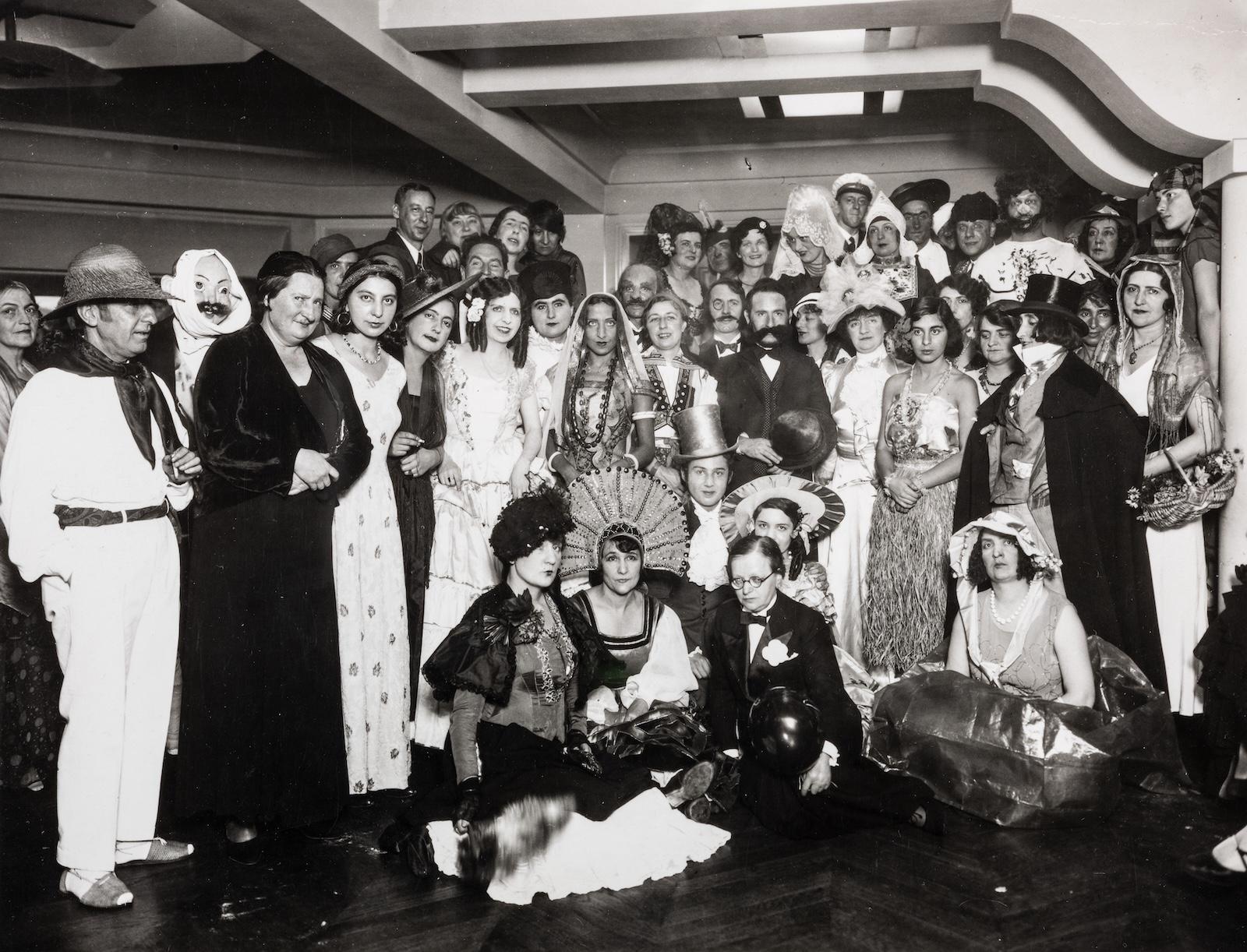
Collection Marianne Le Morvan, don de Jeanine Warnod

Marc Vaux (1895-1971), Bal costumé pour les 30 ans de la Galerie B. Weill (Berthe Weill assise au centre, en smoking), 13 décembre 1931. 

In October 1900, a 19-year-old Picasso first arrived in Paris to visit the World’s Fair while simultaneously navigating the road to recognition in the city’s art scene. His first sale—three small canvases depicting bull-fights—sold for just 100 francs to Berthe Weill, an up-and-coming gallerist. Before long, Weill had sold the trio, with a profit of 50 francs, to publisher Adolphe Brisson.

That profit, though, was not Weill’s priority, nor was it her motivation in seeking to support the fledgling artist. Instead, she pursued her work as a dealer with a kind of fervor and vocational devotion unseen in the field. Over four decades, her Galerie B. Weill was a stalwart in the industry, and her dogged pursuit and support of emerging and underrepresented artists set her apart from her art-world peers. Her early-career business card read, “Make way for the young!”

Weill helped spark the careers of a who’s who of some of the biggest names in Modernism. She was the first to exhibit work by Henri Matisse, Amedeo Modigliani, and Jean Metzinger. But despite her prominence in the early 20th-century art world and her connections to these well-known artists, Weill has until recently been lost to the annals of history, a forgotten footnote in the careers of superstars.

Berthe Weill, Art Dealer of the Parisian Avant-garde, on view this summer at the Montreal Museum of Fine Arts (May 10-September 7, 2025) brings well-deserved and renewed attention to Weill and recognizes her as a trailblazer for later female art-world professionals. This first large-scale exhibition dedicated to her career had its debut at New York University’s Grey Art Museum (October 1, 2024-March 1, 2025) and will travel to the Musée de l’Orangerie in the fall (October 8, 2025-January 26, 2026).

A cross-institution curatorial team helped bring the show to life, including Marianne Le Morvan, guest curator and founder of the Berthe Weill Archives; Lynn Gumpert, Director of the Grey Art Museum, New York University (1997-2025); Anne Grace, Curator of Modern Art at MMFA; and Sophie Eloy, Attaché to the Collection at the Musée de l’Orangerie, Paris. The exhibition features over 100 works in painting and sculpture from the Modernist artists whom Weill supported, along with archival documents, seeking in part to replicate, if not a specific show at Galerie B. Weill, at least the spirit of that place and the work that Weill loved.

A gorgeous illustrated catalogue with essays by curators and other specialists complements the presentation. Of the exhibition, Grace observes, “This is the first museum exhibition to bring to light the overlooked story of Berthe Weill. The art dealer’s unwavering dedication to artists—although far less quantifiable than financial success—was one of her most important contributions as an art dealer, and something for which she was appreciated and respected throughout her life.”

At the time that she first met Picasso, Weill had just three years earlier opened her namesake shop in the 9th arrondissement. Born in 1865 as the daughter of working-class Jewish émigrés, due to her delicate health, Weill had not been forced into early work like her six siblings. Instead, at the age of 15 she was apprenticed to a relative working in the art trade. Salvator Mayer was a fixture along “Painting Street” (rue Lafitte), also in the 9th. Mayer helped train Weill’s eye, ushering her into the Bohemian world of Montmartre artists. And perhaps more importantly, he introduced her to an industry that was rapidly shifting from the world of “picture dealers” to “gallerists,” a more professionalized but also cut-throat world driven by critical praise and sales. Weill eventually made her mark on this new world of galleries, but often forwent sales and profitability in the interest of her convictions.

After Mayer’s death in 1896, Weill convinced her parents to allow her to use funds saved for her dowry—Weill never married—and secured her own shop with additional support from Mayer’s widow. That first shop, while more antique-and-trinket store than traditional gallery, still allowed her to pursue her goals in earnest. A 1901 refurbishment created open wall space  for display similar to other rising galleries, and in the years that followed, Weill made other moves to expand her square footage. In 1920 she relocated to a large storefront that at last afforded her the opportunity to create a true gallery, leaving behind sales of antiques and focusing solely on a full slate of exhibitions for the young artists she supported.

During her early visit with Picasso, Weill was drawn to a newly completed canvas, Le Moulin de la Galette (1900), and remarked upon characteristics not readily apparent in his other recent work, such as a more abstracted approach. Already well acquainted with the buying habits of those interested in avant-garde art, she convinced one of Henri de Toulouse-Lautrec’s early collectors, Arthur Huc, to purchase the work for an astonishing 250 francs, unheard-of for emerging talent. Picasso would have his first exhibition at Galerie B. Weill in April 1902, and Weill continued to support his work despite flagging collector interest in the years leading up to his 1907 shift to Cubism. She was not hurt when Picasso eventually sought representation elsewhere, maintaining a life-long correspondence with the celebrated Spaniard.

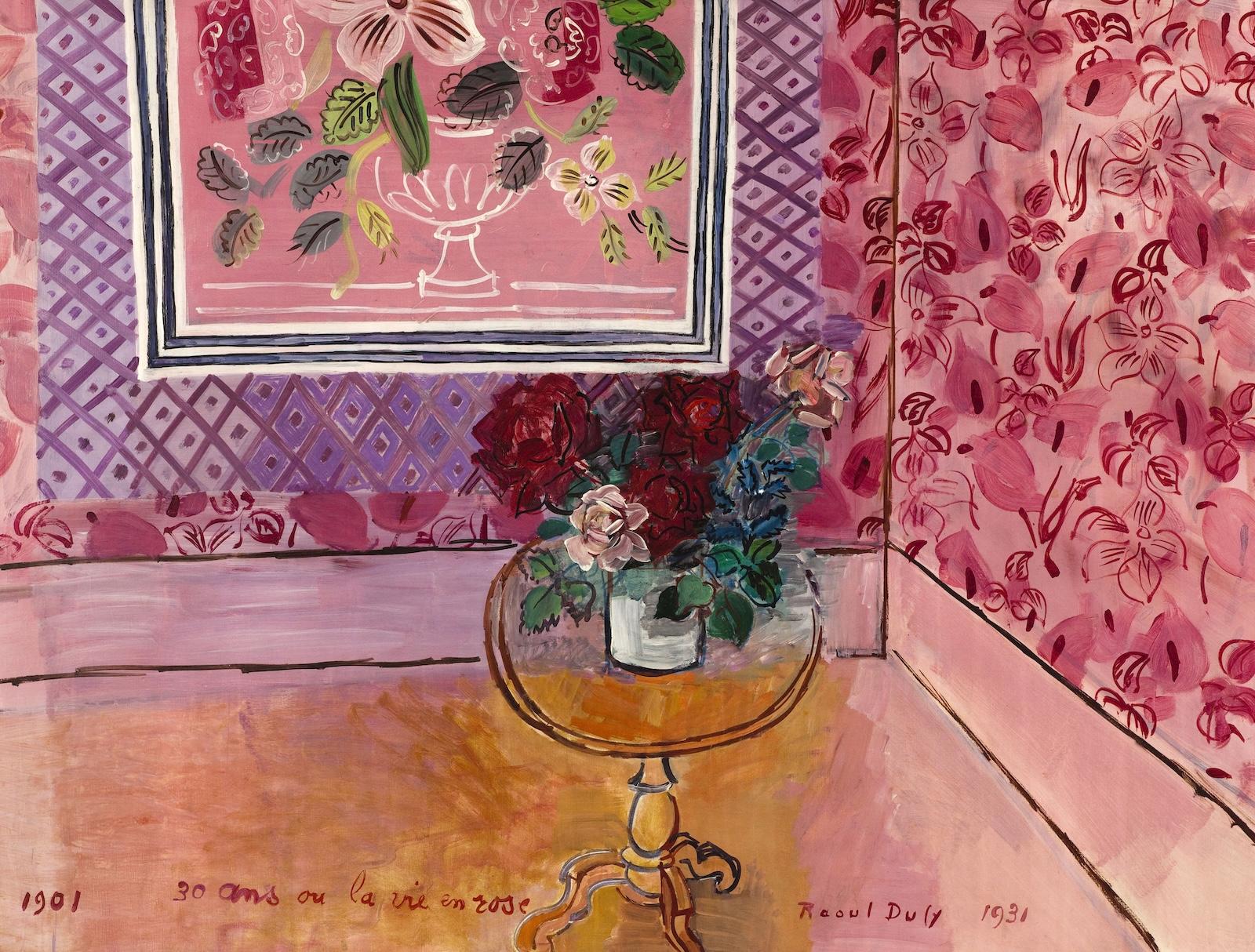
Photo © Paris Musées, musée d'Art moderne, Dist. RMN-Grand Palais / image ville de Paris / Art Resource, NY

Raoul Dufy (1877-1953), 30 ans ou La vie en rose, 1931. Musée d’art moderne de Paris, don de Mathilde Amos, 1955. 

This tactic of providing support for artists on the cusp of their greatness would be a running theme in Weill’s work as a gallerist. She was most interested in identifying that spark of talent and in cultivating artists and their work, often long before they rose to critical prominence. Weill treated equally all of the more than 400 artists who exhibited at Galerie B. Weill, whether they showed once before moving on to other representation or remained in her stable for an extended period. That care and passion led many to see her as a maternal figure. Fauvist Raoul Dufy affectionately referred to her as “la petite Mère Weill” (little mother Weill) while rival dealer Paul Rosenberg awarded her the title “the mother of modernism.” Critic and dealer Adolphe Basler once noted, “Mlle. Berthe Weill was the godmother of all the great painters.”

Despite her connections with so many artists, only six paintings and a small number of drawings depict Weill. Grace examines these in the catalogue, placing emphasis on the ways Weill chose to present herself, especially as she attempted to navigate the “uncharted social space” she occupied as a woman in the art world. A portrait by George Kars from 1933 presents her in her gallery. Weill’s diminutive figure stands proudly, despite the challenges she faced, amid stacks and stacks of canvases. The art world at this time was financially challenging, and Weill, due to her lower-class origins, had no safety net on which to fall back. To be a single woman in a professional position at this time was rare; to be in that position with no familial or professional support system was perilous at best. Weill openly admitted her struggles to make good financial decisions. Her unwavering support of undiscovered artists was admirable, yet extraordinarily challenging.

In both the Kars portrait and one by Émilie Charmy from 1910-1914, we see Weill’s preference for conservative black-skirted suits. This neutral and restrained style allowed her to evade traditional gender expectations. She is neither the abrasive New Woman nor the expected feminine, instead favoring an austerity that lets her work and her gallery rise to the forefront. Still in the Charmy portrait in particular, her staring eyes, rimmed by her favored gold lorgnette, are a strong assertion of her vigor and personality. Her tilted head and flat mouth suggest her whip-smart attitude and judiciousness. A further indication of Weill’s spirit might best be found not in these portraits but in the selected title for her 1933 memoir, Pan! Dans l’oeil! translated into English in 2022 as Pow! Right in the Eye! Remembered by many as proud and even a bit prickly, Weill navigated many of the gender stereotypes and conditions that professional women still battle today. In 1917, she wrote, “A woman’s struggles are tough and it takes exceptional strength of will to emerge almost unscathed from the mire.”

Weill’s awareness of the challenges of women in the art world compelled her to support women artists. She staged some 149 group exhibitions, of which almost one-third included work by one or more women. Twenty-nine of the 149 solo exhibitions at the gallery presented work by women. Aside from Charmy, less-known artists such as Hermine David, Valentine Prax, and Jacqueline Marval all graced the walls of Galerie B. Weill. Polish-born Cubist painter Alice Halicka showed at the gallery four times, including a solo presentation in 1922. Weill also supported Suzanne Valadon during her ascendency, playing a major part in her eventual recognition.

Scholar Charles Dellheim also notes that Weill’s outsider status—or at the very least the hurdles she faced— were also embedded in an era of deep anti-Semitism. In 1898, during the height of the Dreyfus Affair, and just after opening her gallery, Weill received threats and insults after she chose to display a pro-Dreyfus painting in her shop window. Unlike other Jewish figures in the art world in the early part of the century, Weill openly identified as Jewish. Carter H. Harrison IV, a mayor of Chicago and a regular attendee at Weill’s gallery, noted, “Berthe, far from being ashamed ... glories in her Hebraic blood.”

Weill’s Jewish identity eventually led to the shuttering of her gallery. During the Nazi occupation of Paris, Jewish business owners were forced to “transfer” ownership to non-Jews, but the friend to whom she entrusted the business fled the city. Nonetheless, because of Weill’s lower financial profile, she was not a primary target of the plunder of Jewish-owned art collections. She survived the occupation, in large part because after breaking her hip in 1941, she decamped from the city as a part of her rehabilitation.

After the war, her health continued to falter. In 1946, the Société des Amateurs d’Art et des Collectionneurs arranged an auction to support the elderly gallerist, in appreciation of the  decades’ worth of assistance she rendered to young artists. Weill died in her home in 1951.

Berthe Weill was, in a word, unafraid. Unafraid to be who she was and to pursue what she loved, despite threats of personal or financial peril. For this author, she remains an important model, not only for the potential for a more equitable art world but for remaining steadfast in one’s belief at a time—not so unlike today—when rising threats of bigotry, misogyny, and greed seemed to threaten around every corner. 

*This article originally appeared in Art & Object Magazine's Summer 2025 issue.
About the Author

Subscribe to our free e-letter!

Webform
Art and Object Marketplace - A Curated Art Marketplace