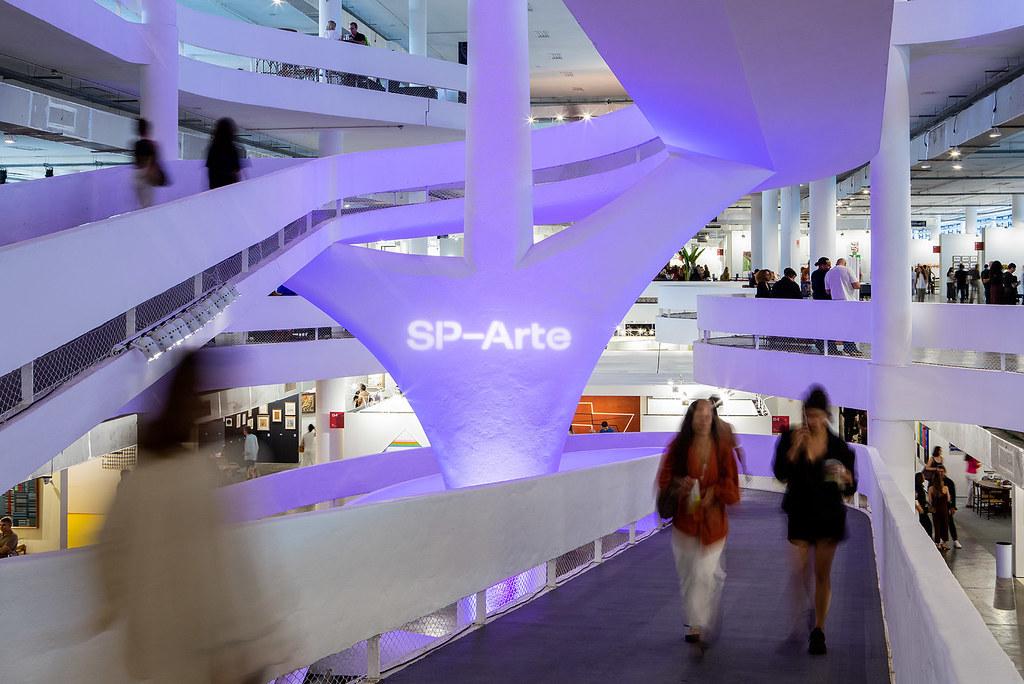
SP-ARTE 2026.
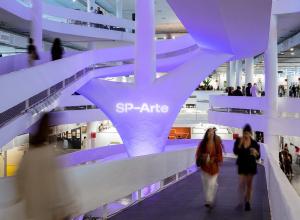
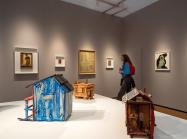
Returning for its 22nd edition, SP-Arte 2026 featured 180 exhibitors including national and international art galleries and design studios, museums, independent spaces, and publishers spread across three floors of the iconic Bienal Pavilion, designed by Oscar Niemeyer, in São Paulo’s Ibirapuera Park, from April 8 to 12, 2026.
São Paulo was bubbling with opening receptions, special exhibitions, brunches, and happy hours at galleries and architectural wonders, including Marco A. Castillo’s takeover of Casa Domschke, designed by Vilanova Artigas and presented by Nara Roesler, a leading Brazilian gallery celebrating its 50th anniversary with an exhibition at its São Paulo space. Almeida & Dale and Fortes D’Aloia Gabriel hosted lively brunches for the openings of Peter Halley and Maxwell Alexandre at the former and Janaina Tschäpe at the latter. Luciana Brito Galeria held a brunch at its modernist residence venue, designed by architect Rino Levi, with landscaping by Roberto Burle Marx and Levi. And, Mendes Wood DM celebrated an exhibition of works by Lygia Pape at its striking Gregori Warchavchik-designed Casa Iramaia space with a happy hour and Pape and Daniel Steegmann Mangrané solo shows inside a former factory in the city’s industrial-chic Barra Funda neighborhood.
From new paintings, sculptures, and editions by Brazilian artists featured in solo gallery exhibitions to standout works being seen in São Paulo for the first time, here are our favorite artworks at the fair.
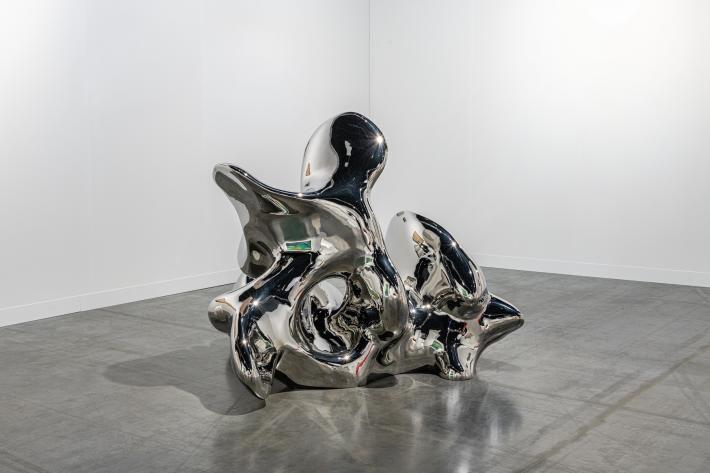
A Brazilian-born artist and sculptor based in Connecticut, Saint Clair Cemin is recognized for his eclectic style that blends Surrealism, classical antiquity, and everyday objects. He first gained recognition in the 1980s as a prominent figure in New York City’s East Village art scene, creating work characterized by a holistic approach that explored various artistic languages, often in strange or humorous combinations. His striking stainless-steel Star Seed sculpture, on view at one of the gallery’s two art fair booths, blends references to ancient Greek sculpture, Art Nouveau, and Surrealism with organic molecular structures from cosmic realms.
Image: Saint Clair Cemin, Star Seed, 2026. Stainless steel, 51 x 60 x 53 in, 120 x 150 x 135.6 cm.
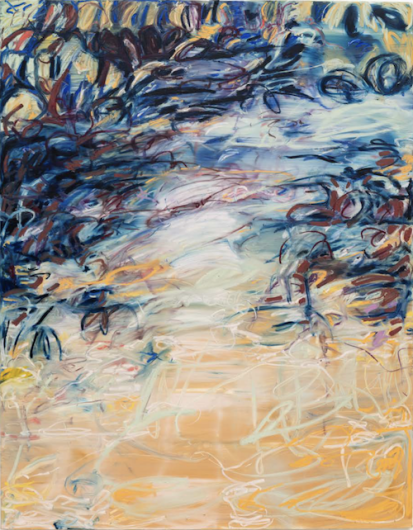
Janaina Tschäpe, a German-Brazilian artist renowned for her multidisciplinary work, investigates the connections among the body, nature, and myth. Her art is shaped by her dual heritage, and her pieces often inhabit a dreamlike realm that blends representation and abstraction, drawing heavily on aquatic and terrestrial environments. The New York-based artist’s painting, Maré na pele (Tide on the skin), is part of a new body of work on display in the gallery’s large São Paulo space, comprising panoramic-scale paintings that continue the artist’s exploration of gesture, instability, and the transformation of landscape into a painterly experience.
Image: Janaina Tschäpe, Maré na pele (Tide on the skin), 2026. Oil and oil stick on linen, 110 x 86.3 in, 279.4 x 219.1 cm.
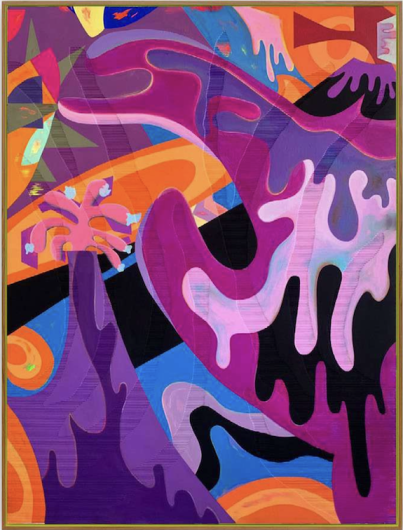
An international artist collective and pseudonym founded in 2001 by Brazilian-born artist Eli Sudbrack, assume vivid astro focus (avaf) functions as a flexible network of collaborators including musicians, designers, and dancers. The group produces carnivalesque, immersive environments that overwhelm the senses with bright colors and complex patterns, while addressing themes such as gender, politics, and cultural codes. At the gallery’s booth, the collective exhibited a pair of vibrant paintings, including Lavas Vulcões Flor, created using its own Pantone color palette, similar to the illuminating colors we see on our computer and smartphone screens, which Sudbrack believes both heals and energizes the viewer.
Image: assume vivid astro focus, Lavas Vulcões Flor (Lava Volcanoes Flower), 2026 Acrylic on corrugated cardboard, 81 x 61 in, 206 x 156 cm.
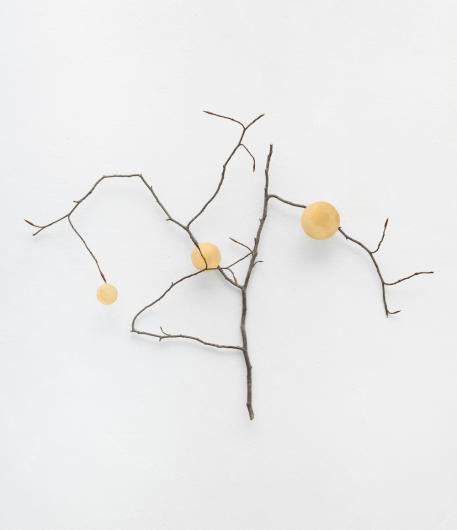
Barcelona-born Spanish artist Daniel Steegmann Mangrané has lived and worked in Rio de Janeiro for over 20 years, creating immersive installations and conceptual works exploring nature and culture, often focusing on the Brazilian rainforest. His art, characterized by fragility and precision, blends organic materials with geometric abstraction, blurring the distinction between natural and human-made elements. Works like Ramita with Gold Accents, part of a series of transformed branches with gold pins at his concurrent gallery solo show, reflect his view of the environment—especially the Amazon—as a living being and a metaphor for global interconnectedness.
Image: Daniel Steegmann Mangrané, Ramita with Gold Accents, 2025. Beech branch, and gold pins, 15 x 20 x 3 in, 38 x 50 x 7 cm.
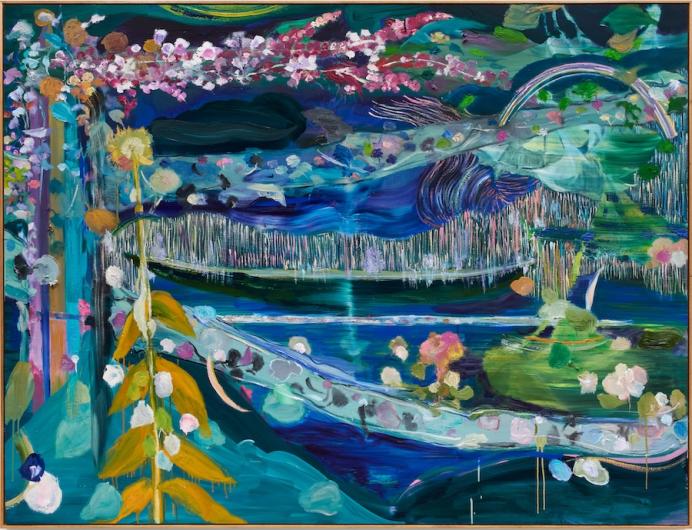
A São Paulo-based Brazilian artist, Thalita Hamaoui creates vivid, fantastical landscapes that merge memory with tropical flora. Her art, often inspired by her grandmother's stories of Romania, features a botanical narrative that blends abstraction and figuration. Her paintings, typically devoid of humans or animals, depict lush, dreamlike terrains, melding her experiences of the local tropical environment with the folklore and haunted forests of her heritage. Her Untitled painting relates to the colorful canvases in her solo show at the gallery’s São Paulo space, where her visual language draws on the Tropicália movement, Post-Impressionism, and Eastern art traditions, emphasizing the rhythmic flow of organic forms.
Image: Thalita Hamaoui, Sem Título (Untitled), 2026. Oil and oil stick on canvas, 63 x 82,7 in, 160 x 210 cm.
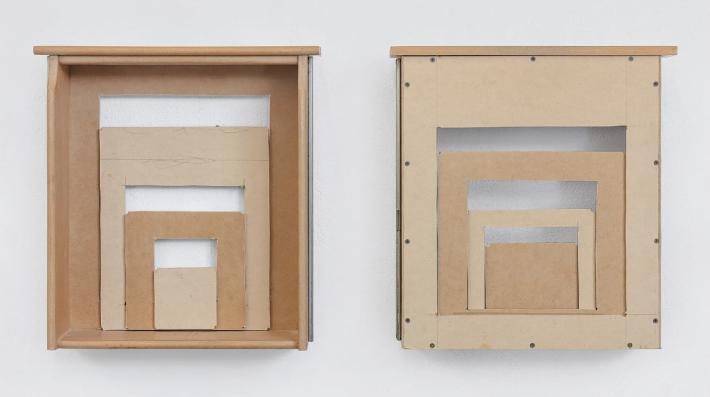
Known for cultivating an aesthetics of resistance, Brazilian artist Marcelo Cidade examines how art interacts with society by incorporating street elements—urban debris, security devices, and symbols of social unrest—into the structured environments of galleries and museums. With a background as a São Paulo skater and graffiti artist, Cidade is influenced by urban dynamics—earning a reputation for challenging social norms through subversion and informal practices. Made from modified discarded drawers, Dentro de fora 15 (part of a new set of works addressing the relationships between control and resistance, on view in his solo gallery show) exposes both the inner and outer sides, transforming what once was concealed into what is revealed.
Image: Marcelo Cidade, Dentro de fora 15 (Enter from outside 15), 2025. Modified drawers and glue, 47 ¹⁄₄ × 70 ⁷⁄₈ in, 120 x 180 cm.
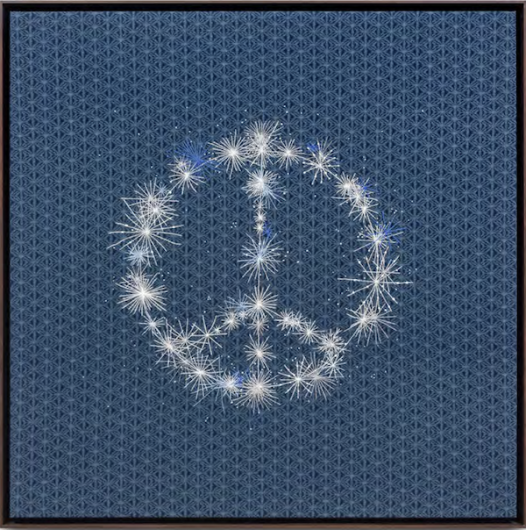
A Brazilian artist based in São Paulo, Sandra Cinto is celebrated for her intricate, large-scale drawings and immersive installations that depict imaginary landscapes featuring roiling ocean waves, turbulent clouds, and starry night skies. Having spent over three decades pushing the boundaries of drawing, she primarily uses permanent markers and acrylic paint to create fantastical landscapes, as seen in her concurrent solo show at Casa Triângulo, her São Paulo gallery. Beside a circular canvas of clouds drifting over mountains in the gallery’s booth, her hand-embroidered edition, Tecer a Paz, was on view at Carbono Galeria, known for its art multiples. Embroidered by mothers on patterned Japanese fabric, the piece becomes a silent plea for peace, a concern that is both sensitive and uncertain.
Image: Sandra Cinto, Tecer a Paz (Weaving Peace), 2026. Hand-embroidered on 100% cotton Japanese fabric, 28 x 28 x 2 in, 70 x 70 x 5 cm Edition of 20 + 3PA.
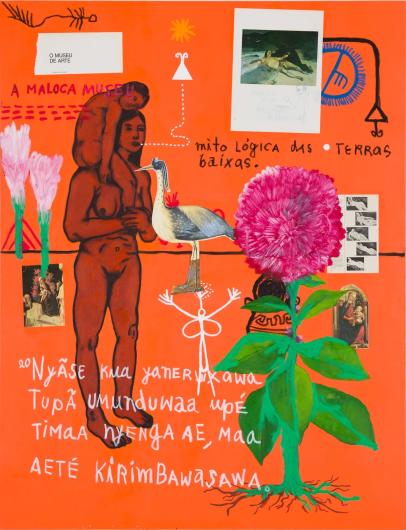
An Indigenous artist and activist from the Baniwa people of the Rio Negro in Amazonas, Denilson Baniwa is regarded as one of his generation's leading artists, using his art to confront colonial narratives and reaffirm Indigenous presence in Brazil's official history. Firmly grounded in his heritage and cultural identity, he repurposes images from colonial archives and Western pop culture to reinterpret them and challenge historical violence against Indigenous peoples. He studies and advocates for Indigenous cosmologies to share ancestral knowledge and protect these traditions. Alongside a concurrent solo exhibition at the gallery’s São Paulo space, his Mitologia das terras baixas painting addresses the life-threatening impacts on Indigenous territories.
Image: Denilson Baniwa, Mitologia das terras baixas (Lowland mythology), 2026. Acrylic, oil pastels, and collage on canvas. 51 1/8 x 39 3/8 x 1 1/8 in, 130 x 100 x 3 cm.
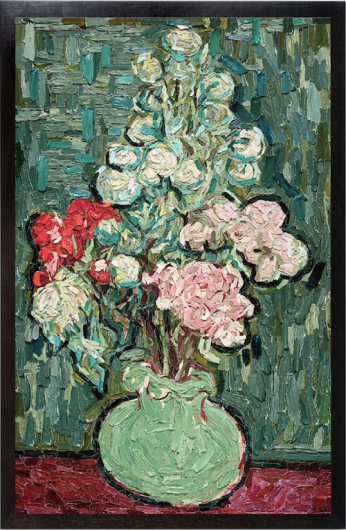
Widely celebrated for his photographic illusions, Brazilian artist Vik Muniz creates detailed recreations of iconic artworks and pop-culture images using unconventional, often ephemeral materials, which he then photographs. Born in São Paulo and based in Rio de Janeiro and New York, he employs a multi-layered process, assembling a tableau from everyday items, photographing it from a specific vantage point, and then destroying the original. At the fair, Muniz exhibited Vase of flowers, after Van Gogh, from his Brushstrokes series, reconstructing masterpieces by treating each brushstroke as a sculptural building block. Illuminating each paint swath and photographing it to match the original’s lighting, he then digitally reassembled the pieces into the final, magical print.
Image: Vik Muniz, Vase of flowers, after Van Gogh (Brushstroke series), 2024. Archival inkjet print, edition of 6 + 4 AP. 62.8 x 40 in, 159,5 x 101,6 cm.
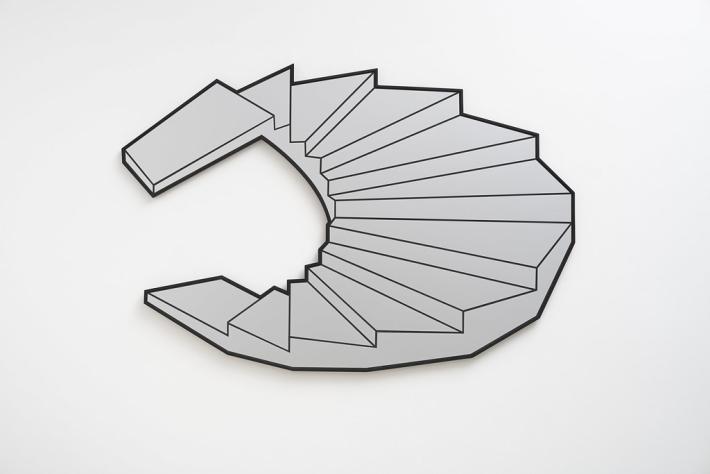
Famous for her innovative installations that transform space, perception, and light, Regina Silveira is a major figure in post-conceptual Latin American art. She is recognized for her work with skiagraphia, the study of shadows, in which the São Paulo-based artist creates large-scale optical illusions by distorting the shadows of everyday objects. Heavily rooted in drawing and printmaking, she is also known for her site-specific vinyl cutouts and digital projections on buildings, streets, and in parks, as well as for her exploration of video, embroidery, porcelain, and virtual reality. The gallery presented GRAPHOS 6 (CARACOL), a snail-shaped staircase made from engraved aluminum sheets that provokes our perception of reality through distortions, depth, and perspective, while exhibiting Silveira’s earlier graphic works at its iconic residential venue.
Image: Regina Silveira, GRAPHOS 6 (CARACOL), 2025. Aluminum on wood, 59.05 x 89.76 in, 150 x 228 cm.
Paul Laster
Paul Laster is a writer, editor, curator, advisor, artist, and lecturer. New York Desk Editor for ArtAsiaPacific, Laster is also a Contributing Editor at Raw Vision and Whitehot Magazine of Contemporary Art and a contributing writer for Art & Object, Galerie, Artforum, Artsy, Ocula, Family Style, Sculpture, and Conceptual Fine Arts. Formerly the Founding Editor of Artkrush, he began The Daily Beast’s art section and was Art Editor at Russell Simmons’ OneWorld Magazine. Laster has also been a Curatorial Advisor for Intersect Art & Design and Unique Design, as well as an Adjunct Curator at P.S.1 Contemporary Art Center, now MoMA PS1.