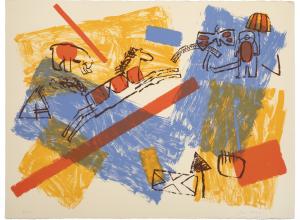


Can the visual arts capture movement in stillness? This slideshow traces the representation of dance, particularly of dancing groups, through western art history with special attention paid to the trope’s Grecian origins. Maenads, the female followers of Dionysus, and Nymphs, usually following Hermes or Pan, are among the most popular dancing Greek figures. In Greek art, maenads in particular tended to appear erratic, frenzied, and clad in pelt, while, with the onset of Roman art, they became more graceful. In one of the surviving frescoes of Pompeii, a Maenad is depicted wearing billowy, gossamer clothing that would become a signature style in most of the depiction of dancers.
Fascination with groups of dancers remained constant in the West from the Renaissance onwards. Painters and sculptors often used dancing figures as central characters in their paintings when they sought to represent mythological scenes and pastoral revelries or engage in studies of movement and harmony.
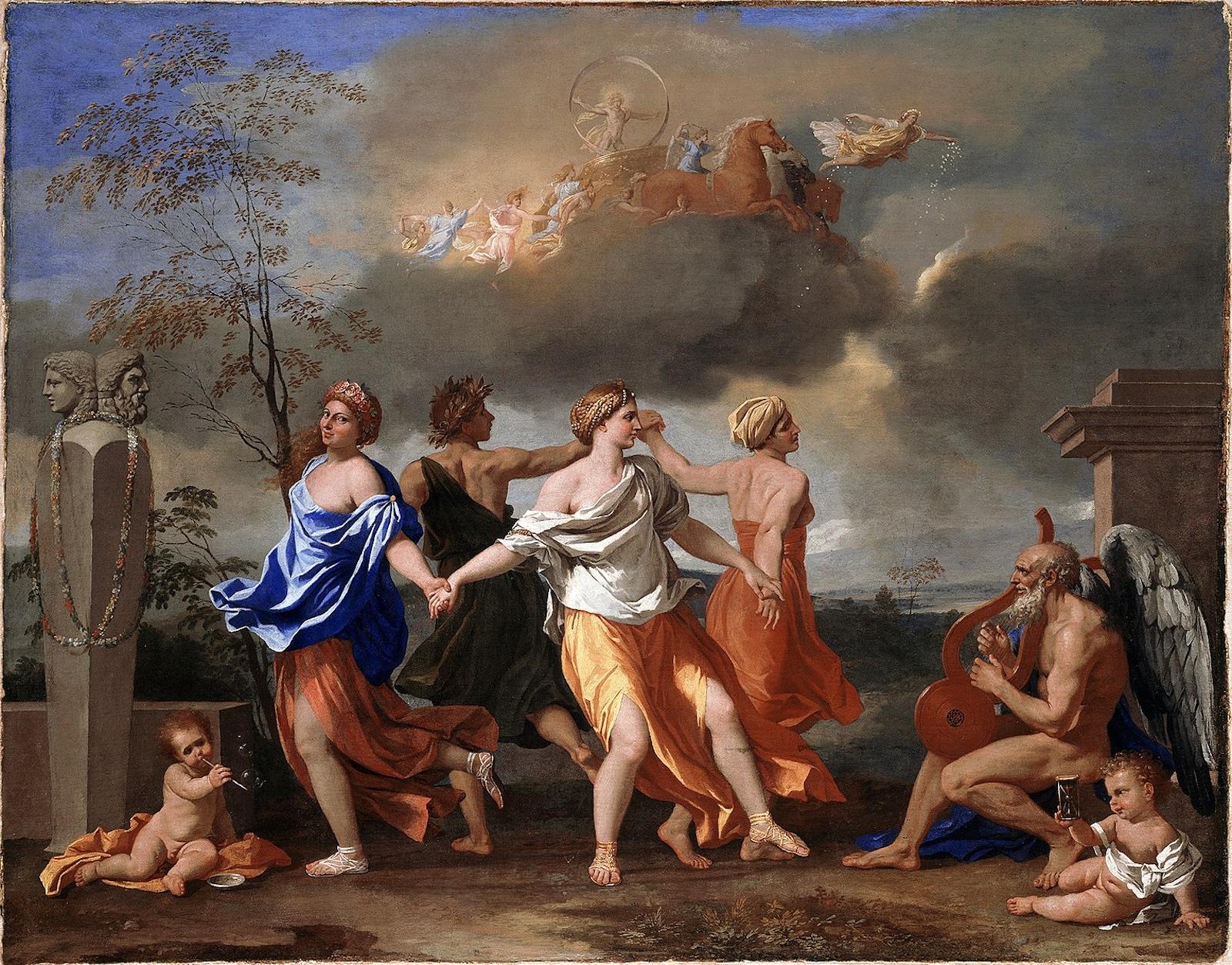
Nicolas Poussin, A Dance to the Music of Time, C. 1634-1636.