Gallery  November 23, 2026  Dian Parker

Nature’s Collaborator: Constantin Brâncuși at MoMA

Photo by Jonathan Dorado © The Museum of Modern Art, New York

Installation view of Brancusi: The Artist and His Studio on view at The Museum of Modern Art, New York, from October 25, 2026, through February 27, 2027.

It’s always fascinating how an artist depicts reality. Michelangelo found his David inside a two-ton block of stone, paring away chunks of marble to create a 17-foot man in all his muscular prowess: the slight bend of the knee, brave furled fist, and his rounded buttocks. Not so with Constantin Brâncuși. His sculptures don’t attempt literal representation. Instead, he metamorphosed limestone, marble, and wood to abstract the human form, as he said, into “a spiritual effect.”

Photo: Thomas Griesel © Succession Brancusi – All rights reserved (Adagp) 2026

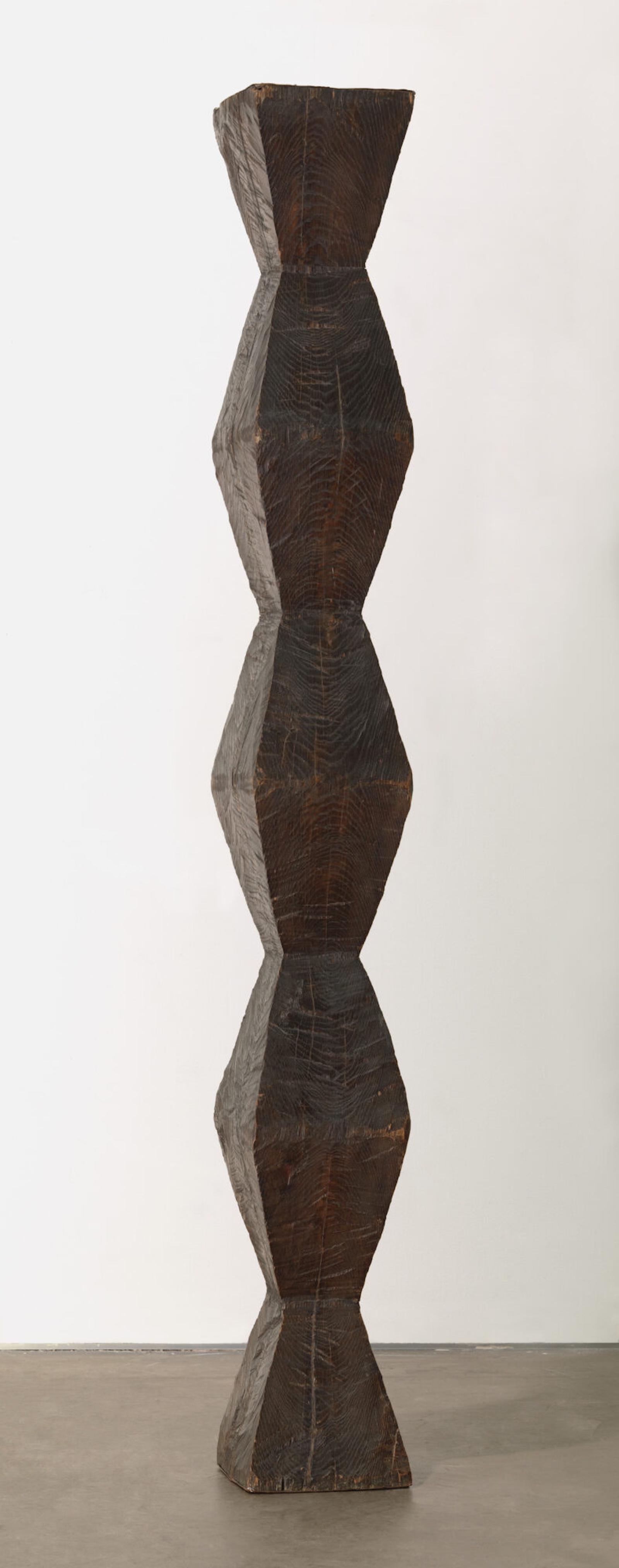
Constantin Brancusi. Endless Column. version I, 1918. Oak, 6′ 8″ × 9 7/8″ × 9 5/8″ (203.2 × 25.1 × 24.5 cm). The Museum of Modern Art, New York. Gift of Mary Sisler, 1983. 

Born in rural Romania in 1876 to farming and woodworking parents, he attended the School of Fine Arts in Bucharest. After spending his first 30 years in Romania, he walked all the way to Paris where he worked for a few short weeks as Auguste Rodin’s assistant, famously saying, “Nothing can grow under the shadow of a tall tree.” Brâncuși later carved his own tall tree: The Endless Column, a reiteration now on view at MoMA.

Brâncuși: The Artist and His Studio is a sprawling show, contrasting the densely packed space of his studio, as shown in 1200 photographs and 215 sculptures Brâncuși left behind. The black-and-white silver gelatin prints he developed himself cover the walls of the exhibit. In them, viewers can see the marble dust, the heavy stone bases, the towering sculptures, the changing light, and the artist himself with chisel and hammer in hand, severing the stone, carving the wood. 

In the MoMA exhibition, the works are displayed at a distance from one another, not like in his studio. It is a sterile exhibit, clean and stately. Brâncuși was a muscular man, wearing overalls, with the proverbial lit cigarette in his mouth, moving heavy stones around with his bare hands. A powerful artist on the move, he was always creating. He often filmed himself and his many friends amongst the work in his studio. Visitors can witness this in the black-and-white films playing throughout the exhibit, some taken by his good friend, Man Ray. 

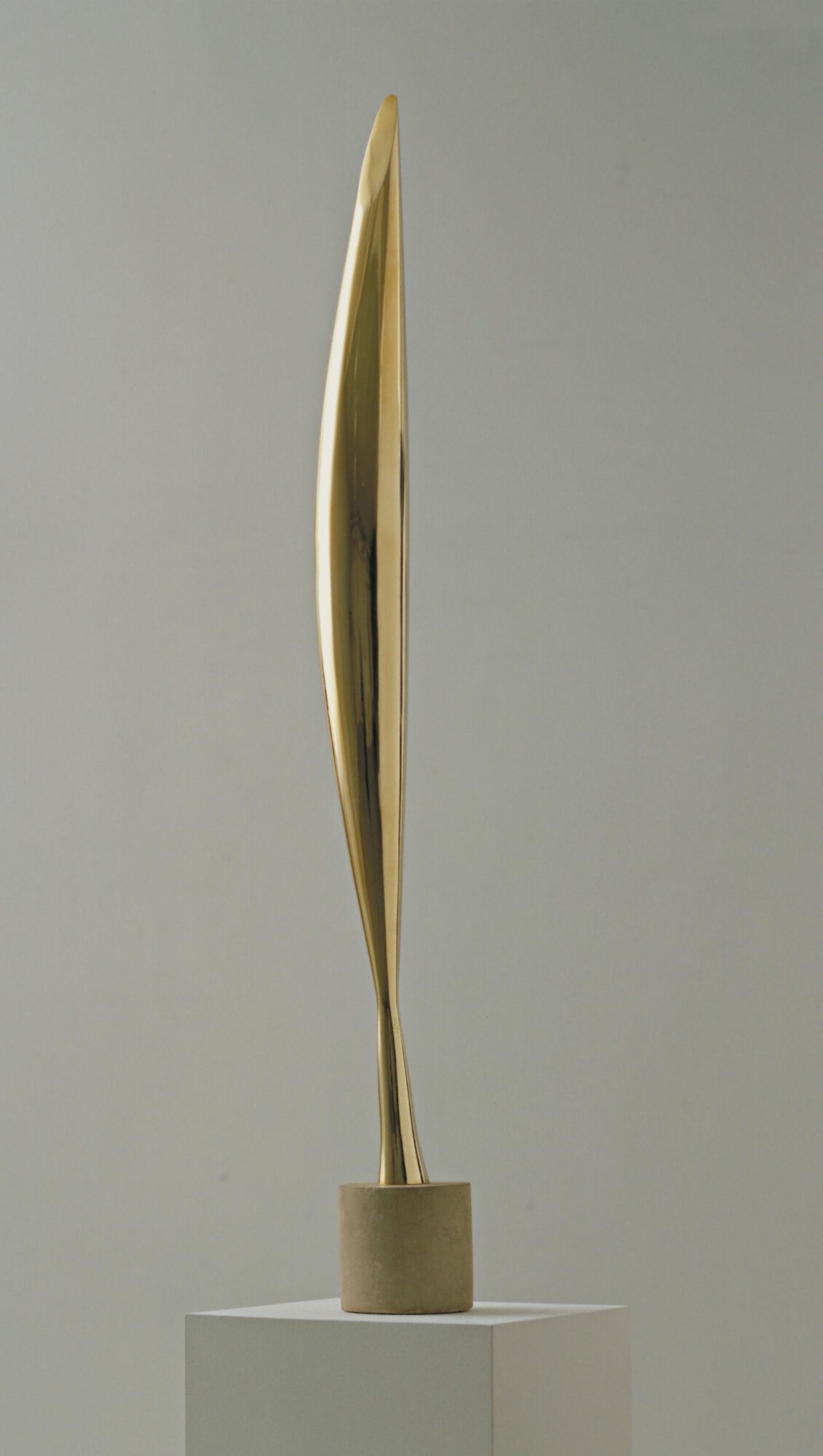
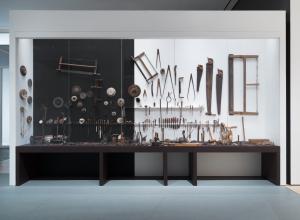
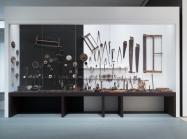
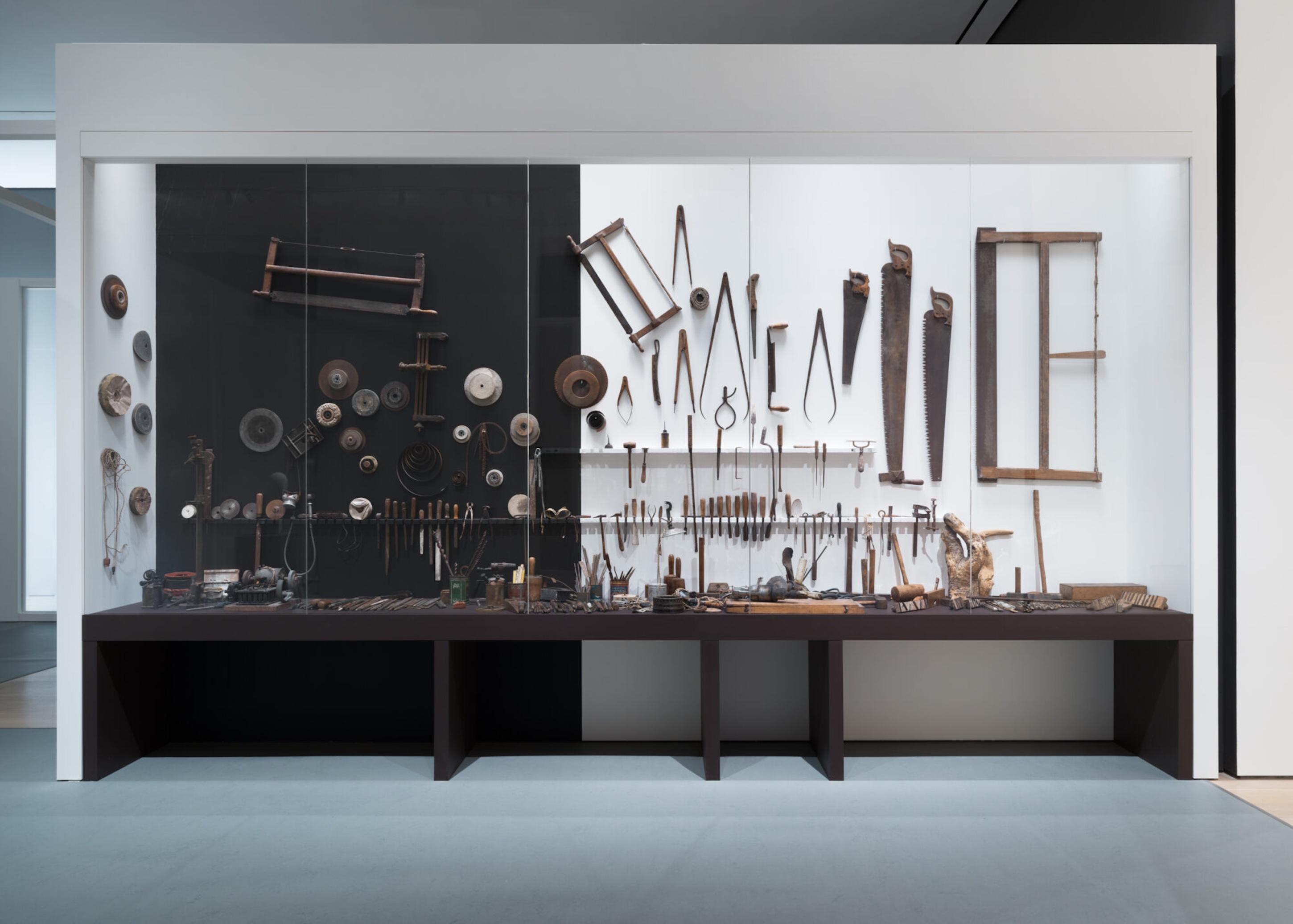
The show covers the entire sixth floor of the museum and showcases many of his iconic works, some on their original bases. There is the sleek and soaring Bird in Space (1928), towering oak Endless Column (1918), floating blue-gray marble Fish (1930), the demure bronze with black patina Mlle Pogany (1913), elegant bronze Leda (1926), and many more. There is a long display of his sculpting tools, as well as a showcase displaying album covers of the music he liked to listen to—often Romanian and Latin music. 
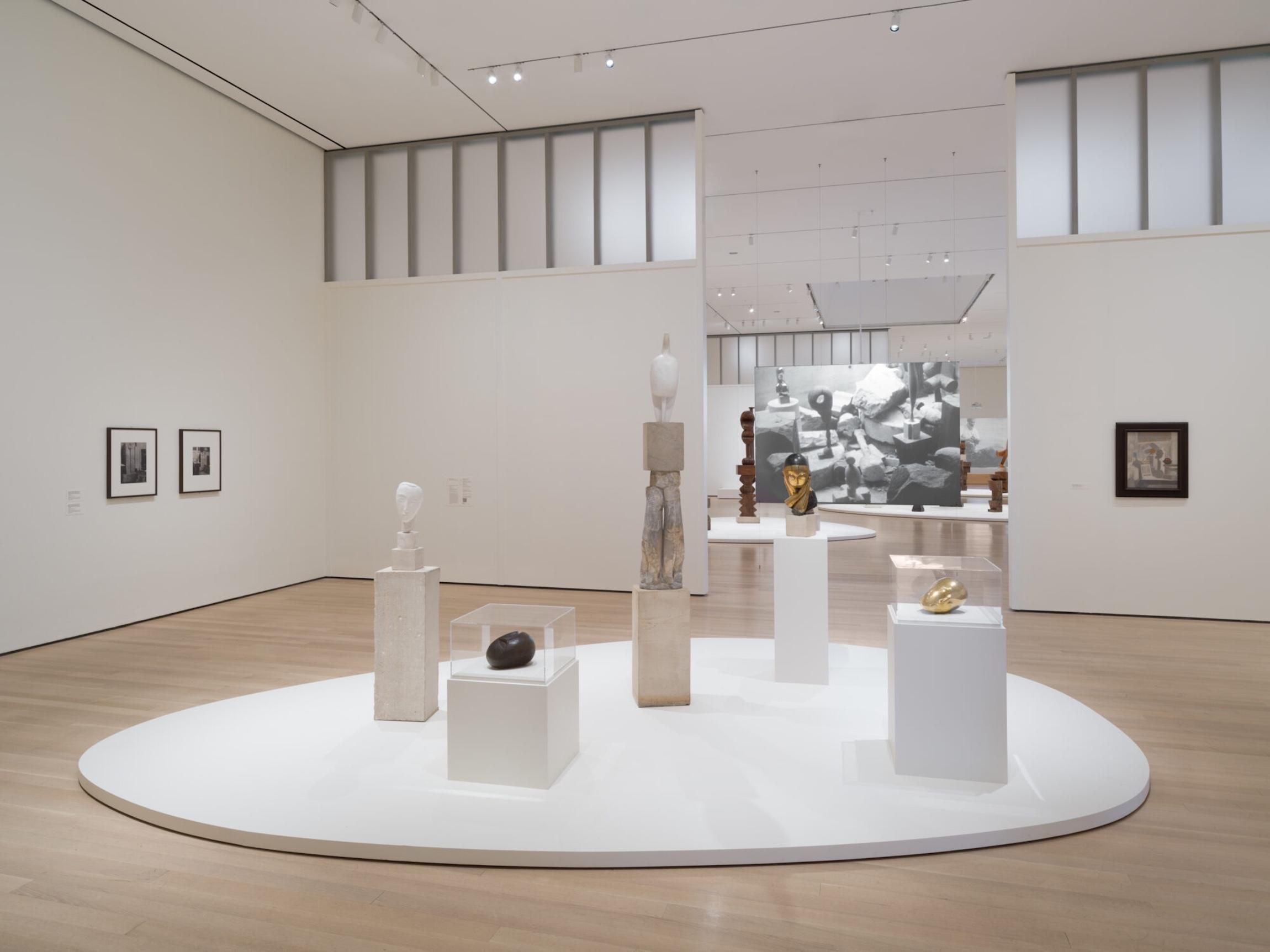
Photo by Jonathan Dorado © The Museum of Modern Art, New York

Installation view of Brancusi: The Artist and His Studio on view at The Museum of Modern Art, New York, from October 25, 2026, through February 27, 2027. 

Erik Satie was a good friend, as well as Amedeo Modigliani and Mina Loy, along with other artists, writers, and performers. He enjoyed entertaining in his Paris studio. The first studio he rented in Montparnasse, the floor collapsed under the weight of all the heavy stone. He bought another studio nearby and knocked down walls to make it larger. There was a large open yard at the back where he built and moved many of the larger works. 

The Museum of Modern Art, New York. © Succession Brancusi – All rights reserved (Adagp) 2026

Constantin Brancusi. Bird in Space. 1928. Bronze, 54 × 8 1/2 × 6 1/2″ (137.2 × 21.6 × 16.5 cm). 

Brâncuși was a gregarious man, larger than life like his distinctive sculptures. He had many women, never married, and felt that his sculptures were his “babies.” He created many dinners in his studio, cooking a leg of lamb in the stove he built, serving copious amounts of champagne, wine, and cognac, and “something Man Ray referred to as fire water.” After dinner, Brâncuși would sometimes play the violin. In 1957, at the age of 81, he died, leaving behind his spirited legacy in his many sculptures and photographs. 

His studio was a work of art in itself. He would curate his pieces according to the changing light and situate his many guests where they would best view the work. When a work of art sold, he replaced it with a plaster cast so as not to disturb the harmony of the whole. He even made the furniture and displayed his working tools on the studio walls.

Once, in his studio and having just recovered from a long illness, Brâncuși saw that a chestnut tree trunk he thought was long dead had, overnight, sprouted new green leaves. Nature was his collaborator. He transformed stone and wood, without making casts first, into living beings. He once said, "To make art free and universal, you must create like a god, command like a king, and execute like a slave." He did just that, an exacting titan.

40.761548513689, -73.97737095

Brancusi: The Artist and His Studio
Start Date:
October 25, 2026
End Date:
February 27, 2027
Venue:
MoMA
About the Author

Dian Parker

Dian Parker’s essays have been published in numerous literary journals and magazines. She ran White River Gallery in Vermont, curating twenty exhibits, and now writes about art and artists for various publications. She trained at the Royal Academy of Dramatic Art in London. To find out more, visit her website. 

Subscribe to our free art newsletter!

Webform
Art and Object Marketplace - A Curated Art Marketplace