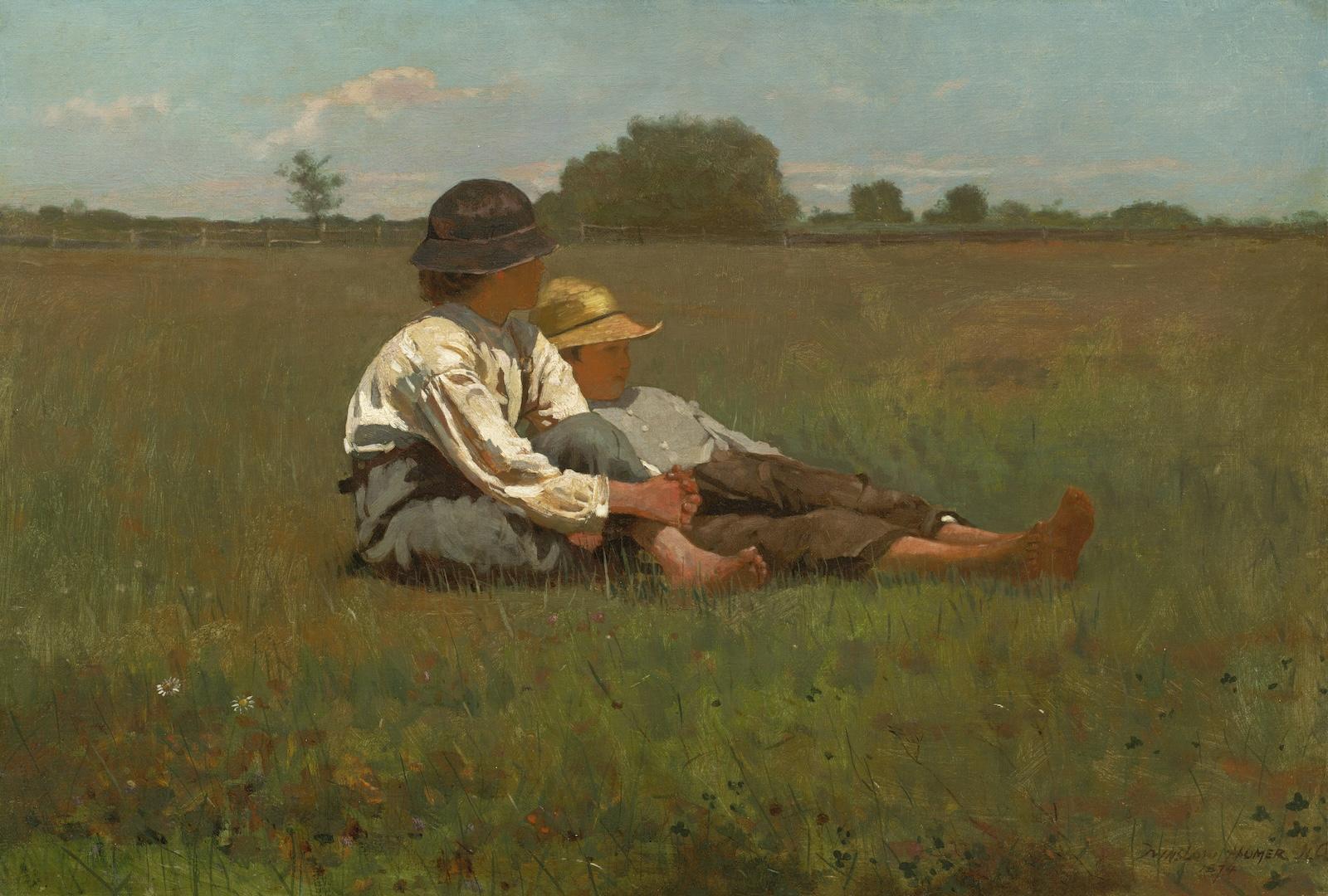
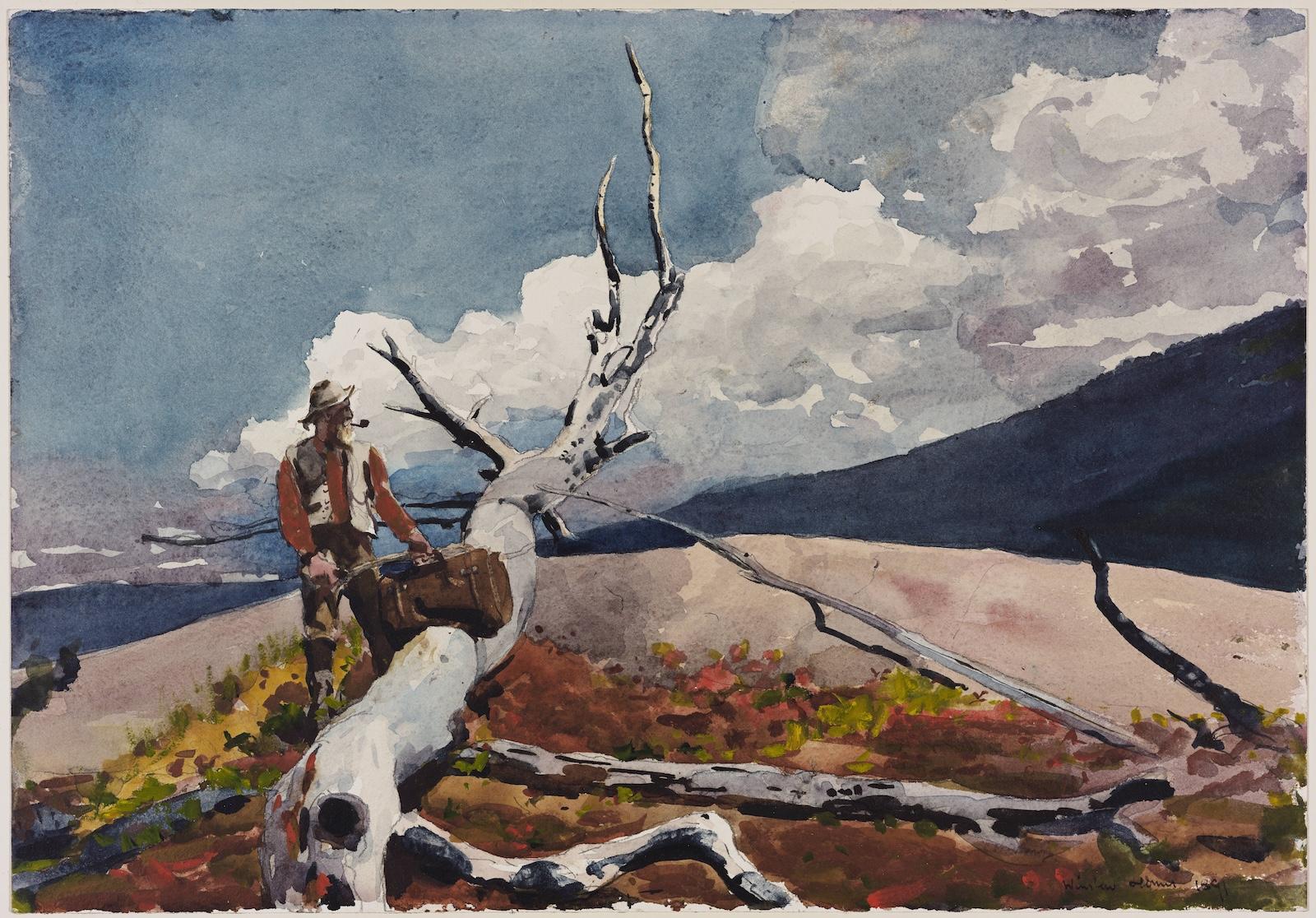
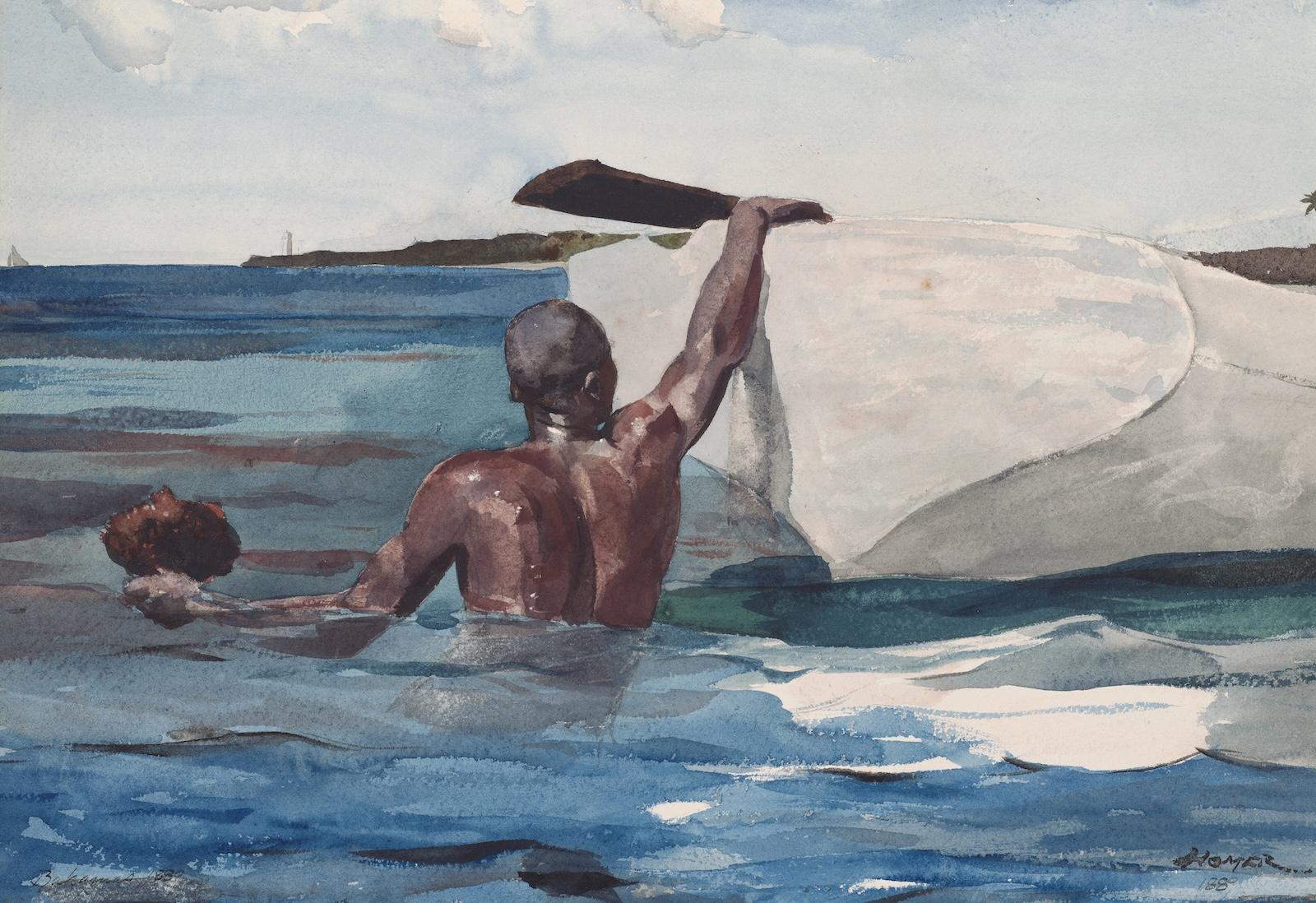
In the video “Winslow Homer: A Legacy in Watercolor,” visitors can enjoy a video featuring Judith Walsh, paper conservator and Professor Emerita, SUNY Buffalo State College, and James Prosek, artist, writer, and naturalist, who share insights on Homer’s life and influence. The two take a closer look at some of Homer’s watercolors in the MFA Boston’s Morse Study Room and venture to Homer's home and studio in Prouts Neck. Prosek also paints a watercolor, employing many of Homer’s techniques.
Homer’s studio was located directly on the coast, and he spent many hours during the last decades of his life observing and recording the movement of waves and the varied colors of ocean and sky. “Turn, Turn, Tumble,” the final gallery in the exhibition, takes its name from a phrase Homer wrote on the wall of his Prouts Neck Studio, articulating the motion of rolling waves, a phenomenon he frequently strove to capture. It includes two depictions of waves painted 23 years apart—Breaking Wave (Prouts Neck) (1887) and Driftwood (1909), Homer’s final oil painting.
About the Artist
Winslow Homer was born in Boston and raised in Cambridge, Massachusetts. Around the age of 17, he began an apprenticeship at one of Boston’s leading print shops, where he learned about composition and draftsmanship. Though he later relocated to New York and then to Maine, Homer maintained his ties to Boston through the patrons, dealers, printers, and publishers who supported him throughout his career. Working as a freelance artist, Homer contributed illustrations to popular newspapers. At the start of the Civil War in 1861, Harper’s Weekly sent him to the front lines as an artist-correspondent. Homer was embedded with a regiment of Union troops for six weeks, where he sketched scenes of military action and life in camp.
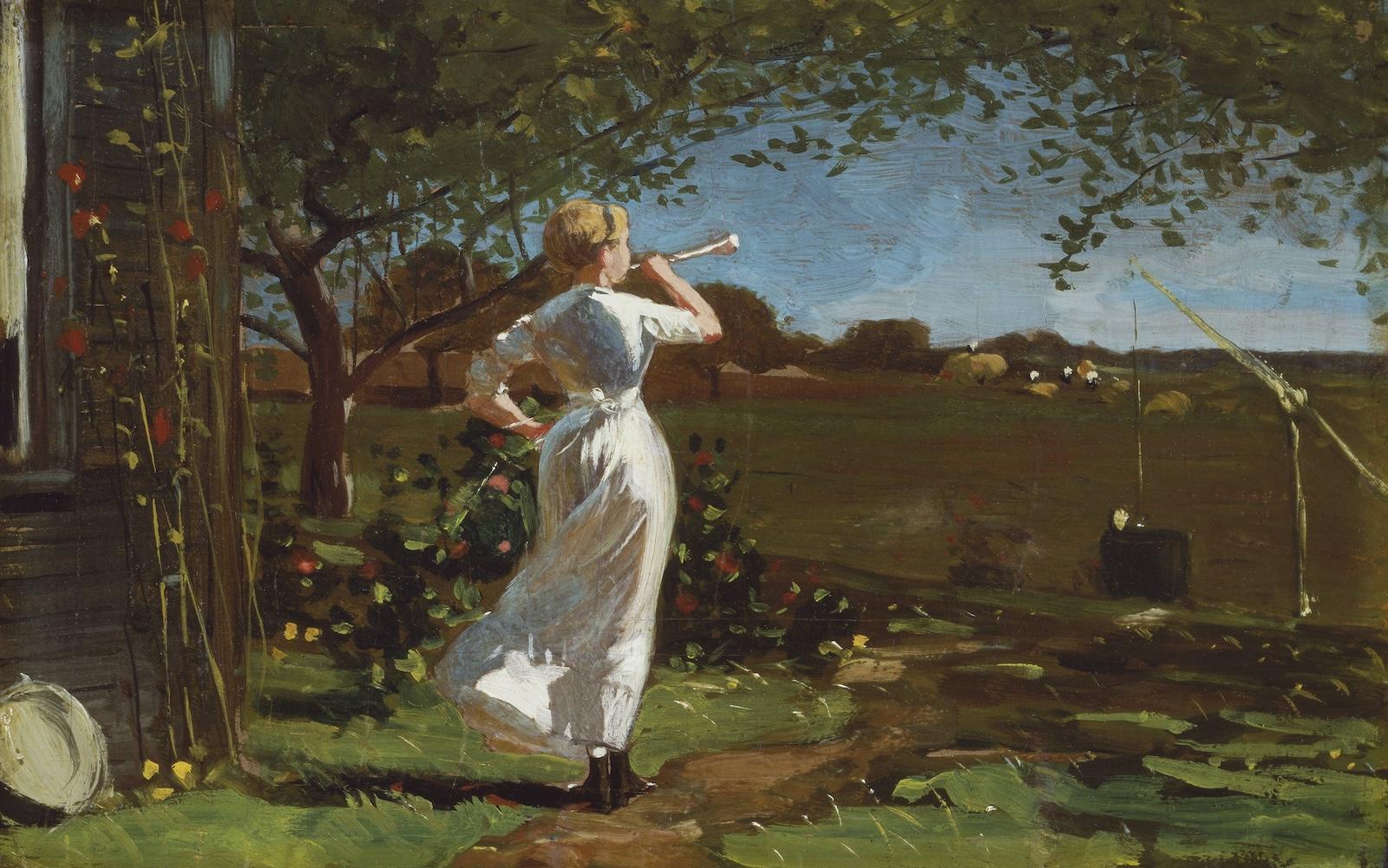
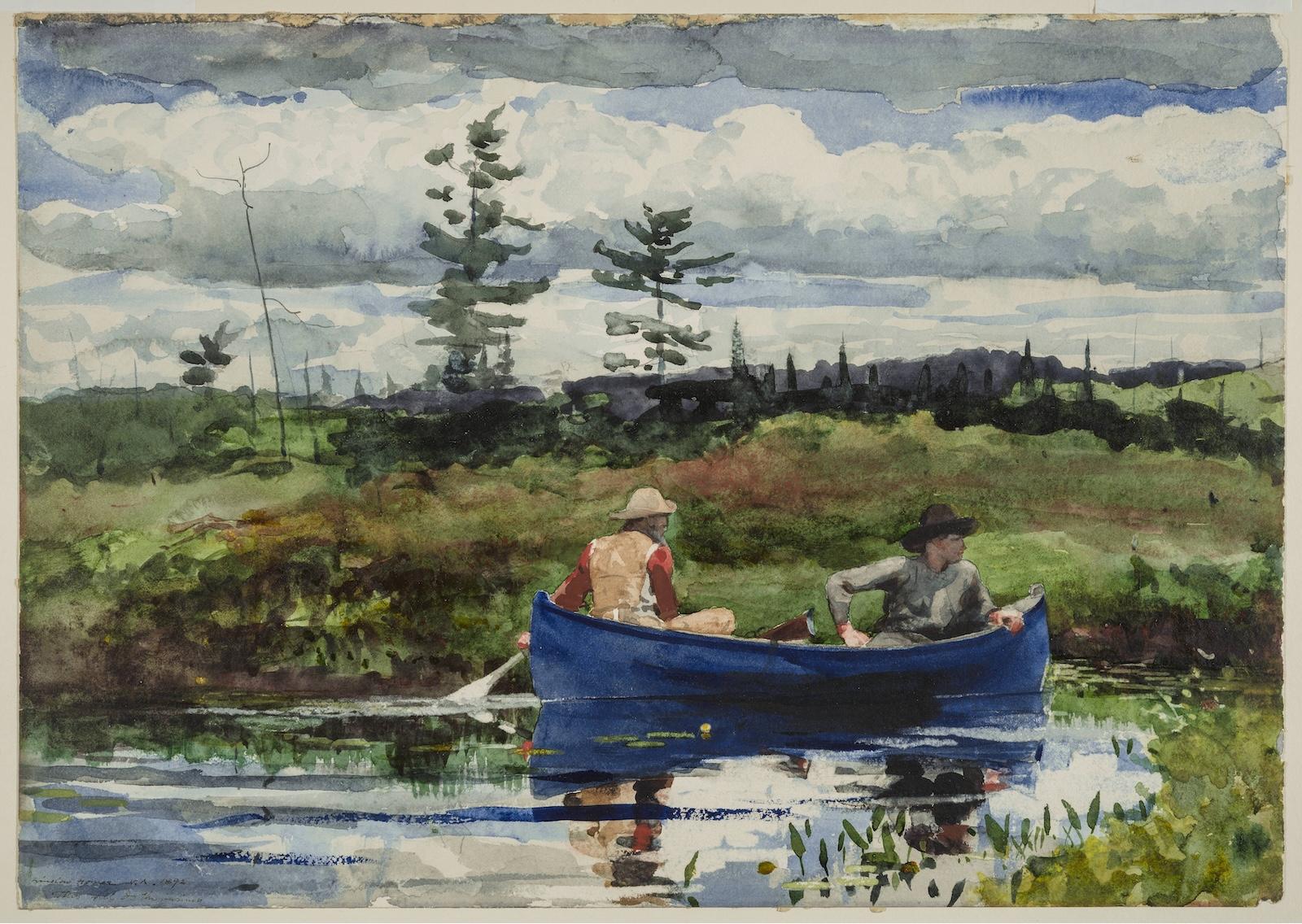
Homer painted some of his first oils and began experimenting with watercolor after the war. He enjoyed increasing success as an oil painter, regularly exhibiting and selling his work to collectors in Boston and New York. In the 1870s, watercolor became a critical part of his art practice. As he honed his technique, Homer traveled widely to the Hudson Valley, the Adirondacks, Massachusetts, Maine, Florida, the Caribbean, England, and Canada—drawing inspiration from the landscapes and communities he encountered. From 1884 until his death in 1910, he lived and worked in his Prouts Neck studio in Maine.