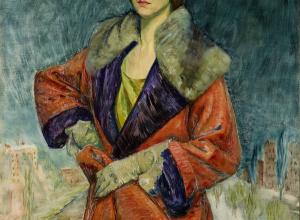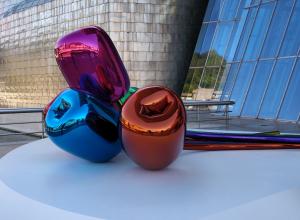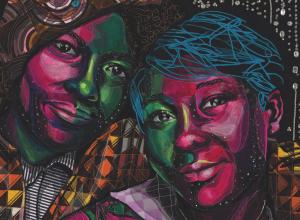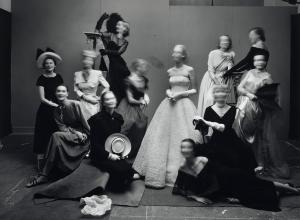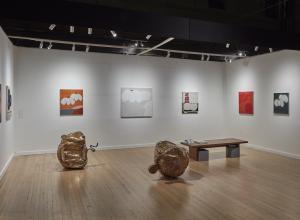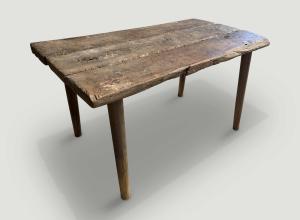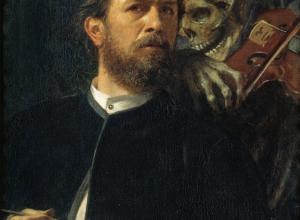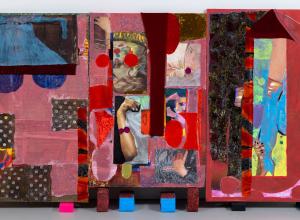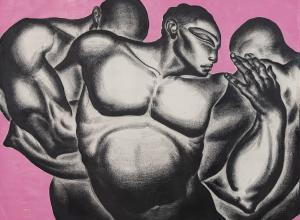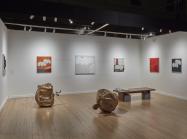
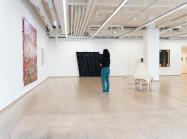
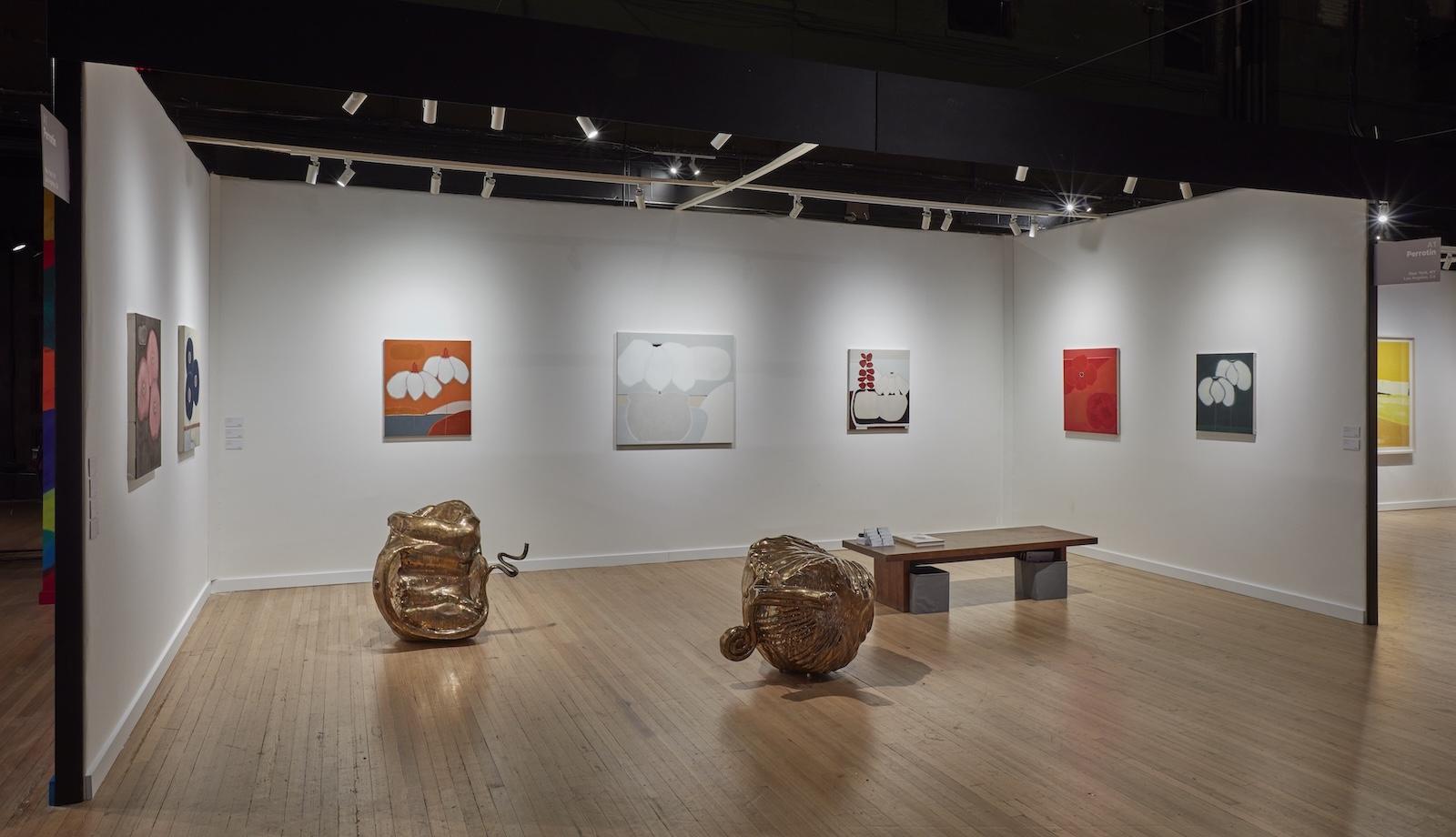
Perrotin, with Alma Allen and Susumu Kamijo, ADAA Fair 2026.
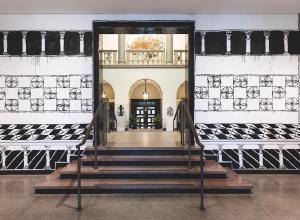
After a year off to reimagine its future, the Art Dealers Association of America returned to the Park Avenue Armory for its inaugural, newly named ADAA Fair. Known for its focused, highly curated approach, the 2026 edition, held November 13–16, featured 63 ADAA member galleries from across the United States. Benefiting the Whitney Museum of American Art with a Preview Gala on November 12, the fair continued its long-standing tradition of excellence and connoisseurship, a hallmark of the Association and its members.
“We are deeply honored to be named as a beneficiary of the ADAA Fair,” said Scott Rothkopf, the Alice Pratt Brown Director of the Whitney Museum of American Art. “The ADAA has long played an essential role in supporting the nation’s leading galleries, all of whom are deeply committed to advancing the work of artists, and shares our belief in the important role that institutions and communities play in shaping the cultural life of this country.”
Reflecting the breadth and depth of ADAA’s national membership, the roster brought together established leaders, multigenerational gallery businesses, and emerging voices. Mixing solo booths with group presentations, abstraction with figuration, and artists of all ages and backgrounds, the inaugural ADAA Fair heralded a new era for the Association’s annual expo.
These are our favorite artworks at ADAA Fair 2026.
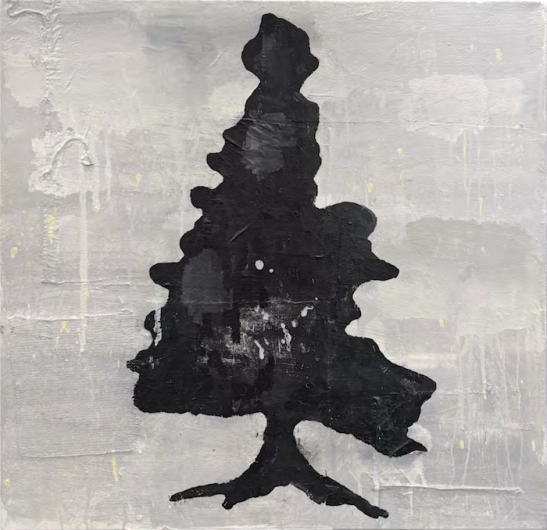
An influential American painter, sculptor, and collage artist who rose to prominence in New York's 1980s Downtown Art Scene, Donald Baechler is best known for his layered collage paintings, figurative sculptures, and colorful works on paper featuring flowers, trees, ice cream cones, skulls, beach balls, globes, and human faces. At the fair, the gallery exhibited How It's Done, a 2003 black-and-white acrylic tree painting—part of a series he explored from the 1980s through 2010. Blending expressionism with minimalism, the stylish canvas offers a childlike depiction of a black, shadowy pine tree on a deliberately splotchy gray-and-white ground of painted and fabric-collaged surfaces, creating a profound, melancholic tone.
Image: Donald Baechler, How It's Done, 2003. Acrylic and fabric collage on canvas, 36 x 36 in.
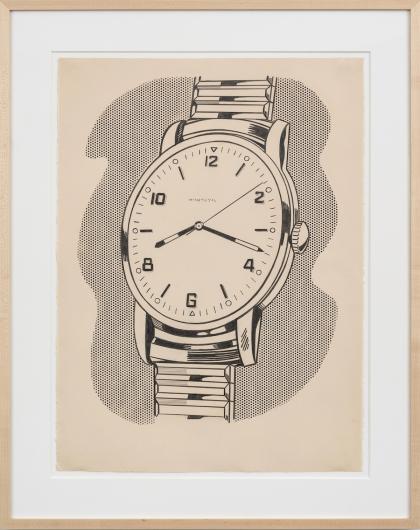
Roy Lichtenstein was a prominent American artist and a leading figure in the 1960s Pop Art movement. He was best known for paintings, drawings, and prints that appropriated and transformed imagery from comic books, advertisements, art history, and mass media. By bringing low-brow commercial and pulp imagery to the monumental scale of traditional fine art, he challenged the serious, gestural style of Abstract Expressionism that dominated the era. Created in 1963 during his breakthrough early-1960s period, Shockproof is a distinctive Pop Art drawing that brings advertising aesthetics into fine art through hand-stenciled Ben-Day dots. With an arresting Whitney Museum survey currently on view, this dynamic drawing stood out among several of his works at the fair.
Image: Roy Lichtenstein, Shockproof, 1963. Graphite pencil, stenciled lithographic rubbing crayon on paper, 30 x 22 in. (76.2 x 55.9 cm).
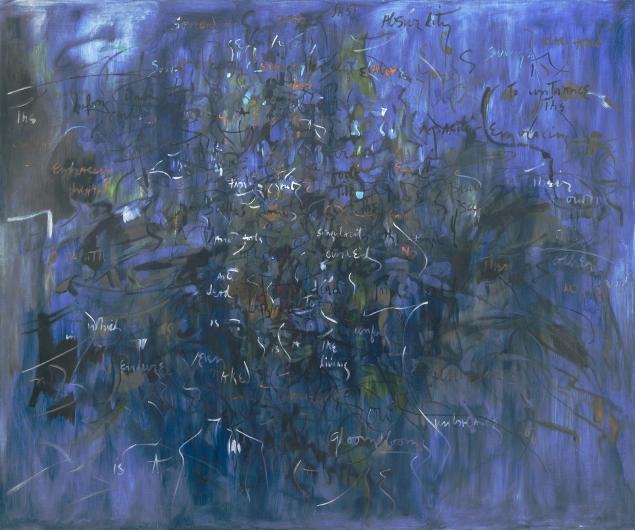
An American painter and poet known for blending calligraphy and verse into abstract visual art, Elise Asher created calligraphic paintings that suggest rather than depict literal, legible text. Associated with the New York School movement, she connected literature and painting, transforming poems into dense, colorful compositions. She drew on a variety of sources, including her own poetry, as well as the works of her husband, Poet Laureate Stanley Kunitz, and of W. B. Yeats, John Keats, and William Blake. In The Last Absurdity, Asher’s poem is immersed in a field of blue paint. In her signature style of the period, words and phrases appear across the canvas, sometimes repeated. Asher would hold a poem in her mind as she worked on her composition, capturing its mood or energy in a visual counterpart.
Image: Elise Asher, The Last Absurdity, 1964–65. Oil on canvas, 50 x 60 in. 127 x 152.4 cm.
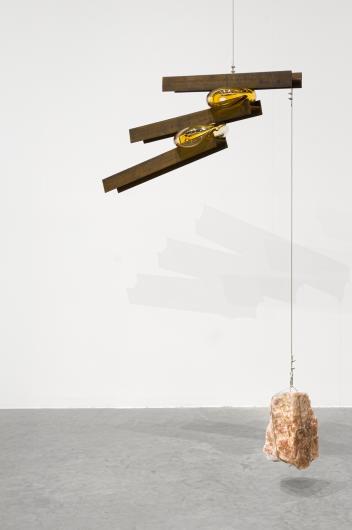
Túlio Pinto is a Brazilian sculptor and installation artist who creates gravity-defying sculptures and site-specific installations, placing opposing materials—such as heavy industrial steel beams and fragile, hand-blown glass bubbles—into precarious balance. Rather than carving or molding traditional forms, Pinto acts as an articulator of physical forces, arranging raw materials so their natural weight, density, and tension hold them in place without fasteners. His 2026 sculpture, Complicity #52, made of steel, glass, and stone and featured in his striking solo booth presentation, explores how invisible physical forces—especially gravity, tension, and equilibrium—operate by placing contrasting industrial and fragile materials in risky, mutually dependent arrangements.
Image: Túlio Pinto, Complicity #52, 2026, Steel, glass and stone, 90 x 190 x 22 cm.
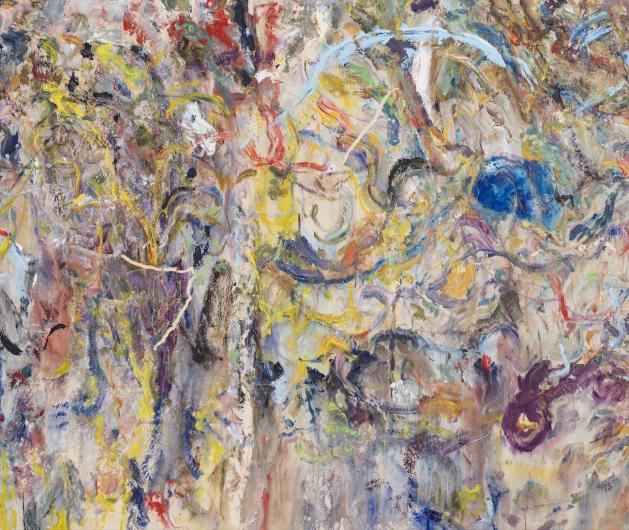
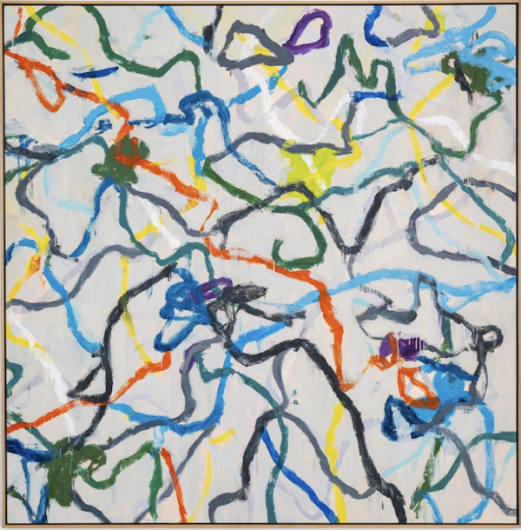
Larry Poons is an American abstract painter celebrated for his contributions to Op Art, Color Field painting, and Lyrical Abstraction. Over more than six decades, his work has evolved from mathematically plotted optical dot paintings to heavily textured, gestural abstractions. Rather than settling on a single signature style, Poons has continually reinvented how he applies paint to canvas. He first rose to fame with monochromatic canvases covered in colored dots, discs, and ellipses, then left grids and brushes behind to pour, splash, and fling buckets of acrylic paint across large canvases. In the 1990s, he returned to brushwork, stapling massive rolls of canvas across all four walls of his studio so he could paint immersively, then cropping the individual compositions, as in 22nd Floor, one of several lively paintings in his solo booth show.
Image: Larry Poons, 22nd Floor, 2026.
An acclaimed American conceptual and installation artist, Fred Wilson creates museum interventions, sculptures, and mixed-media installations that reframe historical artifacts, revealing hidden narratives about race, power, and institutional bias. Wilson often acts more like a curator and archaeologist, reshaping how viewers interpret existing cultural objects rather than creating them from scratch. At the 2003 Venice Biennale, Wilson represented the United States, exhibiting black Murano glass chandeliers alongside historical paintings to explore the African diaspora in Venice.
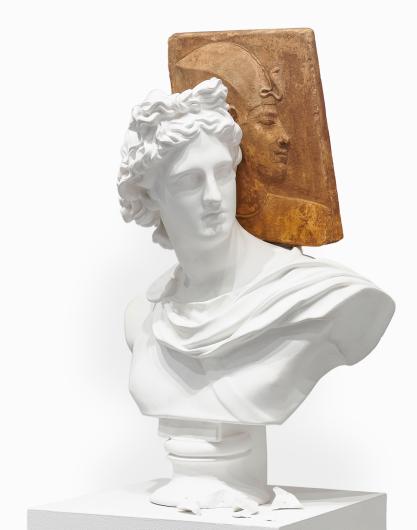
At the fair, the gallery exhibited an untitled 1992 sculptural assemblage from his Mining the Museum series. It combines a white plaster bust of the Greek god Apollo with a brownish painted plaster low-relief plaque depicting an Egyptian pharaoh, critiquing how Western museums separate and rank classical Greek and ancient Egyptian art.
Image: Fred Wilson, Untitled, 1992. Unique sculpture of commercially produced painted plaster reproductions and fragments. 23 12 x 15 3/4 in, 59.7 x 40 x 27.9 cm.
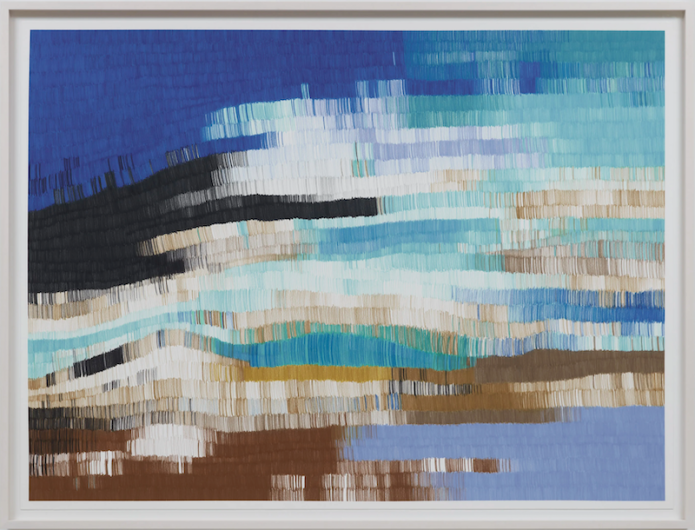
Born in Israel and based in New York, Zipora Fried is a multidisciplinary visual artist best known for her meticulous, labor-intensive colored-pencil drawings and ceramic sculptures. Fried combines drawing, sculpture, installation, and photography to explore emotion, endurance, and the subconscious. She is known for large-scale drawings built from dense, repetitive pencil strokes, sometimes layered over months or years into luminous fields of color. She also creates ceramic sculptures and repurposes household items—such as tables, bottles, and baseball bats—stripping them of their original function. Her solo booth at the fair featured a series of new large-scale colored-pencil drawings, including All Bells Are Ringing, with hundreds of vertical lines converging to form a colorful composition.
Image: Zipora Fried, All Bells Are Ringing, 2026. Colored pencil on archival museum board. Framed: 64 1/2 x 84 1/2 inches (163.8 x 214.6 cm).
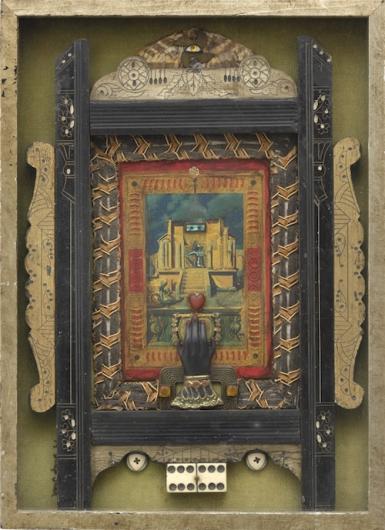
Betye Saar was an influential American visual artist and assemblage art pioneer associated with the Black Arts Movement. Born in Los Angeles in 1926, she turned discarded objects, flea-market finds, and racially charged American folk artifacts into powerful political, spiritual, and personal statements. Saar worked in printmaking, design, and site-specific installation, but is best known for her assemblage boxes, framed windows, and mixed-media sculptures. Part of her museum-quality solo exhibition at the fair, her 1974 mixed-media wall assemblage Journey to Zimbabwe marks a pivotal turning point in her career: the moment she began linking African American identity with ancestral memory, mysticism, and Pan-African spirituality. It was featured earlier in Saar's landmark 1975 solo exhibition at the Whitney Museum, where she made history as the first African American woman to hold a solo show at the institution.
Image: Betye Saar, Journey to Zimbabwe, 1974. Mixed media assemblage, 15.5 x 11.25 x 1.5in, 39.4 x 28.6 x 3.8cm.
Kikuo Saito was best known for combining Color Field painting and Lyrical Abstraction with choreographed, wordless stage productions. After studying traditional Japanese art and training under avant-garde artists associated with the Gutai Art Association, he designed sets for modern dance before emigrating to New York in 1966. There, he worked as a studio assistant for leading Color Field and abstract painters, including Helen Frankenthaler, Kenneth Noland, and Larry Poons, while developing his own studio and painting practice. At the fair, the gallery exhibited two of his abstract canvases, including the striking Blue Wave, a large-scale wavy abstraction from a pivotal late period in Saito's career, when he returned to acrylics and found renewed energy and fluidity in the medium.
Image: Kikuo Saito, Blue Wave, 2012. Acrylic on canvas, 72 x 72 inches, 182.9 x 182.9 cm.
Paul Laster
Paul Laster is a writer, editor, curator, advisor, artist, and lecturer. New York Desk Editor for ArtAsiaPacific, Laster is also a Contributing Editor at Raw Vision and Whitehot Magazine of Contemporary Art and a contributing writer for Art & Object, Galerie, Artforum, Artsy, Ocula, Family Style, Sculpture, and Conceptual Fine Arts. Formerly the Founding Editor of Artkrush, he began The Daily Beast’s art section and was Art Editor at Russell Simmons’ OneWorld Magazine. Laster has also been a Curatorial Advisor for Intersect Art & Design and Unique Design, as well as an Adjunct Curator at P.S.1 Contemporary Art Center, now MoMA PS1.