
At Large  June 23, 2026  Blythe Grossberg

How Fashion Pioneer Paul Poiret Brought Couture To The Modern Age

© Les Arts Décoratifs / Christophe Dellière

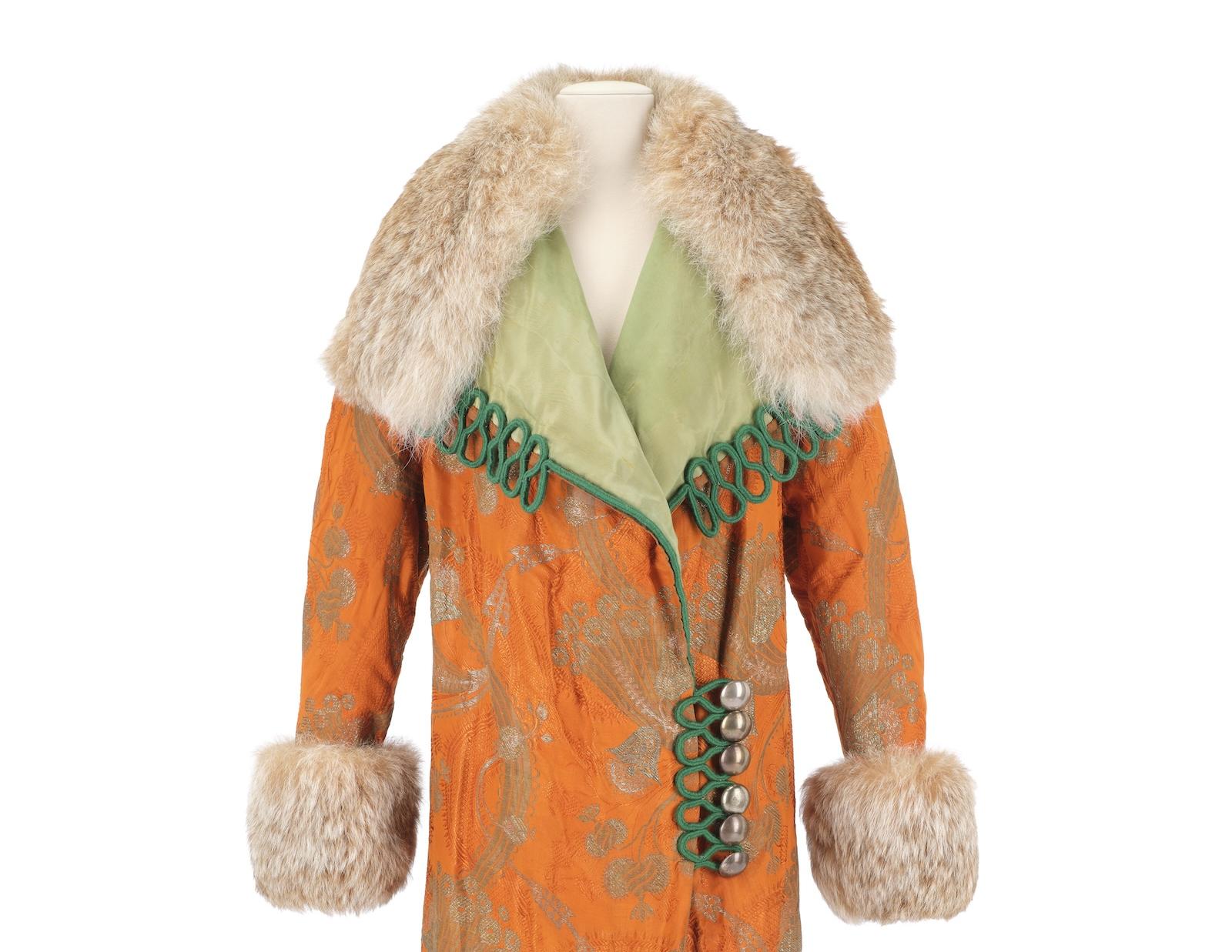
Paul Poiret, Evening coat, circa 1910, Gros de Tours trimmed with gold thread and silver-plated brocade, taffeta, trimmings, and silver-plated metal.

Long before Dior became a worldwide fashion house, branching from haute couture into perfume and later into shoes and accessories, there was French designer Paul Poiret (1879-1944). The legendary couturier, now celebrated in the first exhibition devoted solely to his work, at the Musée des Arts Décoratifs in Paris (June 25, 2025-January 11, 2026), was a master of branding and publicity in the early 1900s, when he hosted lavish parties that advertised his revolutionary style. Indeed, the exhibition is subtitled “La mode est une fête,” or “fashion is a feast,” signifying not only the excitement of his designs but also the excesses of his prime creative years, stretching from the Belle Époque into the 1920s.

There is much to feast one’s eyes on amid the 550 works on view, which include not only clothing and accessories but also decorative objects, artworks, and photographs of Poiret’s family. The designer’s pieces are properly understood as works of art rather than as mere garments. He once wrote, “Am I a fool when I dream of putting art into my dresses, a fool when I say dressmaking is an art?” Unlike the later house of Dior, Poiret sought to free the female body from the constraints of the corset, opting instead for Empire-style waists circled by fabric, reminiscent of the Directoire style of the Neoclassical period.

His designs are studies in luxury—one striking black and white silk evening gown from 1910 features glass tubes studded along its flattering V-shaped neck and a bell-shaped skirt, referred to as a “hobble skirt.” The woman of this era was emerging from centuries of wearing devices that contorted her figure into fresh fashions that freed her to move and breathe with the rapidly changing times. 

Poiret dressed his clients, culled from the uber-rich, in draped fabric that called on Eastern influences, such as harem pants. He did not fear color or bold graphics, and many of his designs feature the bright hues of the contemporaneous Fauvist movement, such as the green silk chiffon Mosaïque evening dress (circa 1908) bedecked with gold braid, silk embroidery, and pearls with mink fur circling the cuffs. These pieces are featured in the exhibition alongside more modern designs by Christian Dior by John Galliano and by Schiaparelli that at once highlight Poiret’s lasting influence on fashion, including the use of ornament such as gold thread on silk, and the ways in which his designs were truly radical in their freer-flowing silhouettes.

BIBLIOTHÈQUE Historique De La Villa De Paris. Photograph by Thérèse Bonney.

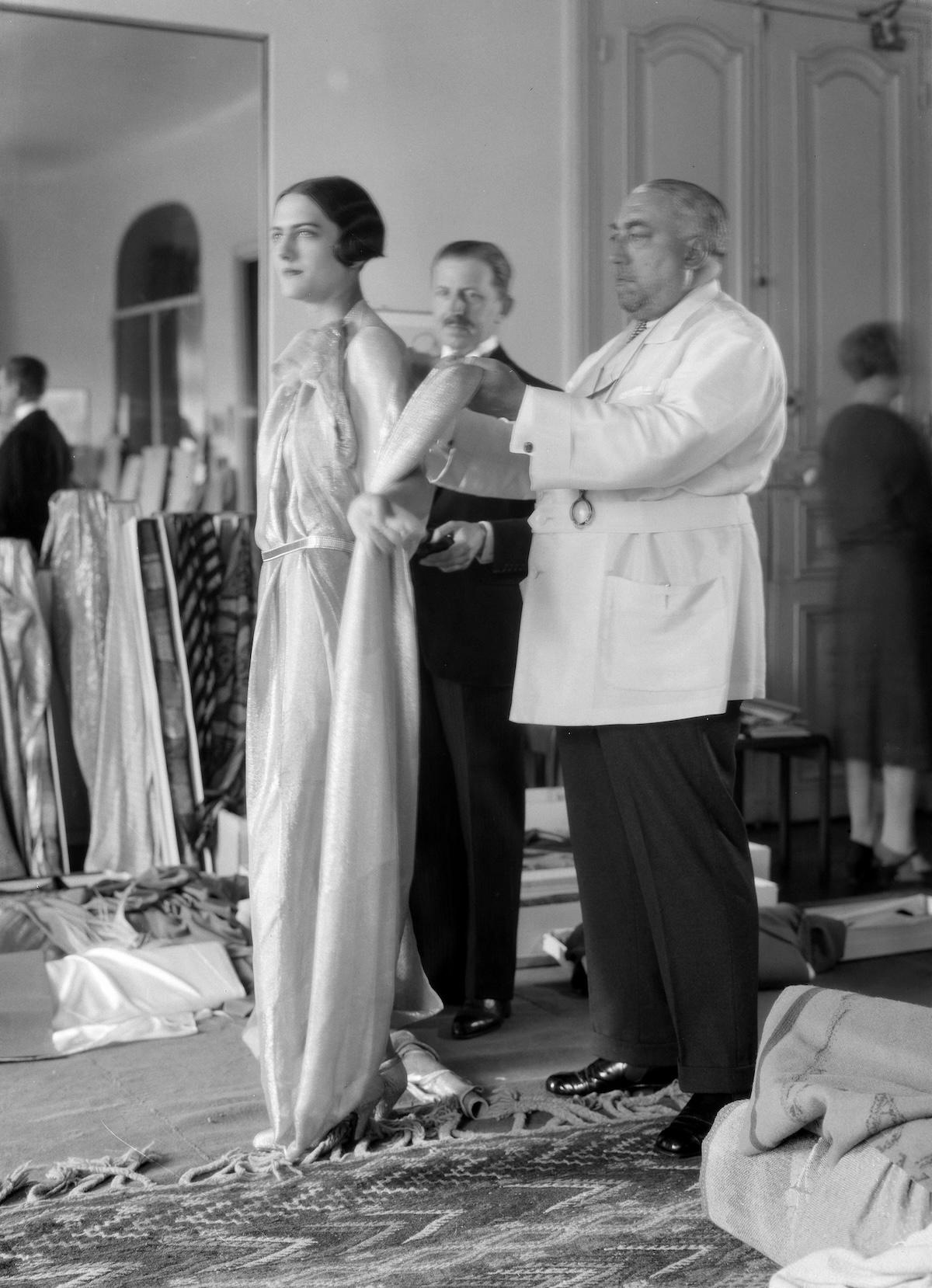
Paul Poiret and his model Renée in the salons of his fashion house, 1927. Poiret, the son of cloth merchants, envisioned his designs as part of a larger world of decorative art.

Poiret had an unlikely rise to fame. The son of poor cloth merchants, he apprenticed at a young age to an umbrella maker and used stray bits of cloth as inspiration for his first designs—which were for his sister’s dolls. Later, he worked with the Parisian designer Jacques Doucet and then  with the House of Worth, where his designs were controversial for their modernity. In 1903, he founded his own house, Martine, and later introduced “Parfums de Rosine,” named after his daughter. 

He was the first Paris couturier to branch into scent and lifestyle, designing three barges for the 1925 International Exhibition of Modern Decorative and Industrial Arts (the show that kicked off the Art Deco movement and gave it its name): one barge for his fashion designs, one containing a high-end restaurant, and the last featuring his interiors. The lavishly painted boats were appointed in rich upholstery. Poiret’s penchant for self-promotion and living the high life was perhaps most in evidence during his June 1911 party, which he titled “The Thousand and Two Nights.” The fête marked the debut of his famous harem pants and showcased his love of exoticism and the East. Guests were greeted by a Persian orchestra and parrots, and the press spread tales of the party across the globe. Poiret socialized with many of the most famous figures of the day, including the dancer Isadora Duncan, and with artists of the time such as Fauvist painter Raoul Dufy.

Alas, in keeping with the dissipated spirit of the Roaring Twenties, Poiret outpartied—and outspent—himself. His barges at the 1925 exhibition were constructed at his own expense and, though remarkable, caused his financial ruin. He had to sell his fashion house in 1924, and, at the end of 1929, as the world around him collapsed into financial chaos, he left the house entirely. In his later years, he lived in poverty and obscurity, but the free lines of his designs and the brilliance of his lifestyle brand would be re-created in the postwar years, first by Dior and later by countless other brands that fall short of his artistry and daring.

*This article originally appeared in Art & Object Magazine's Fall 2025 issue.

About the Author

Subscribe to our free art newsletter!

Webform
Art and Object Marketplace - A Curated Art Marketplace