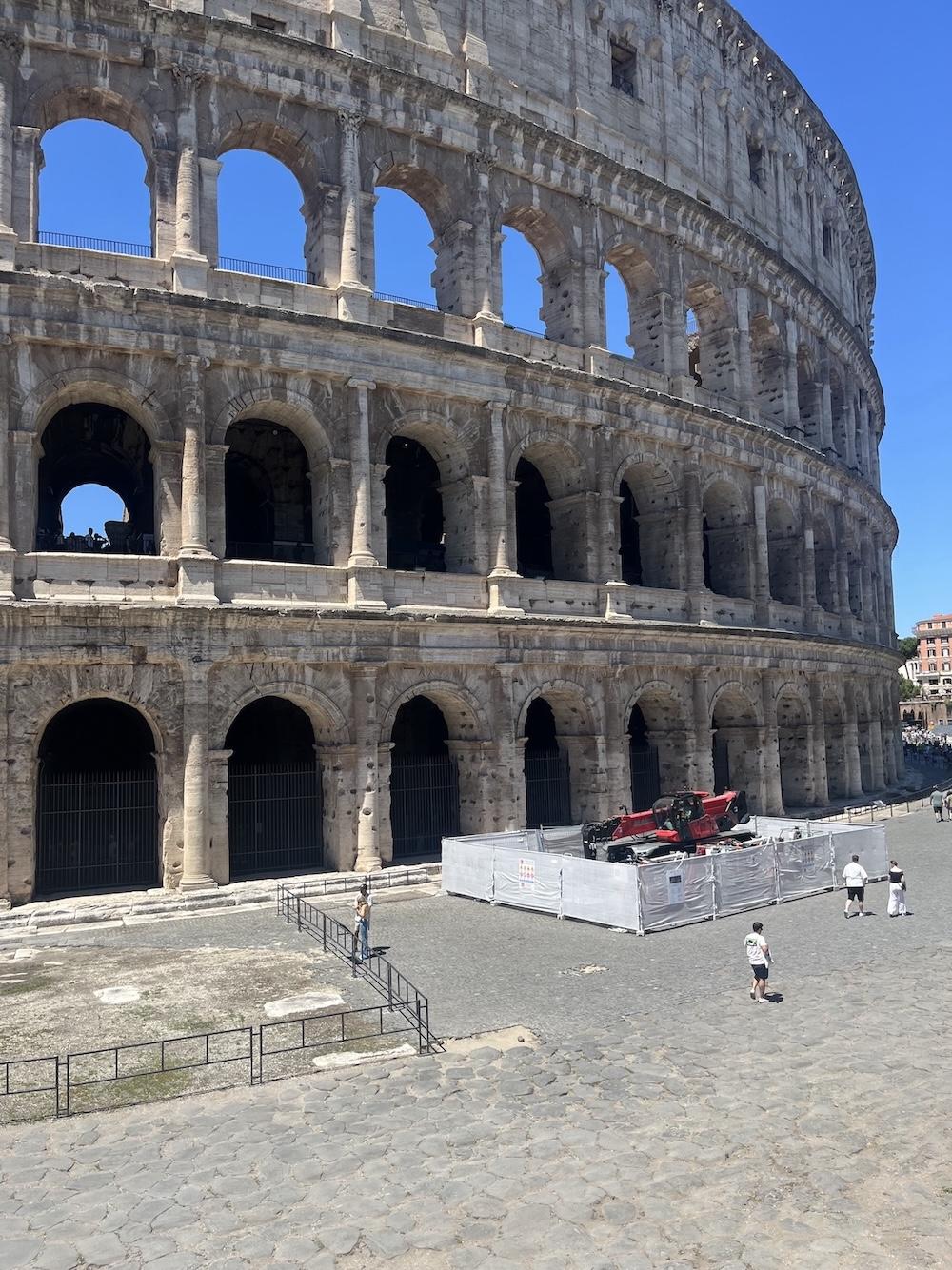


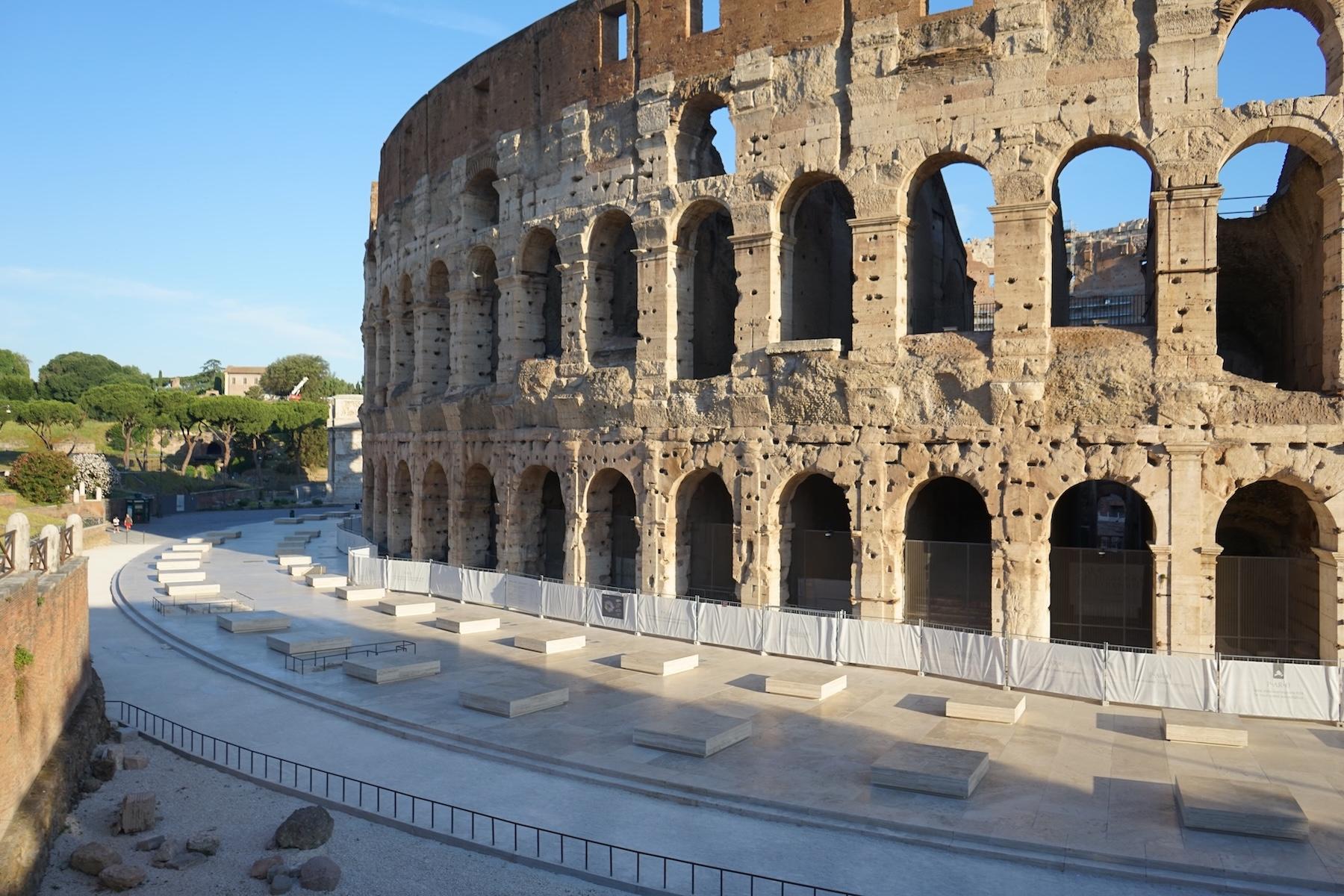
The largest amphitheatre in the Roman world, once measuring 545 meters around and rising 48 meters high, its facade comprised a series of stacked arcades, with 80 arches at ground level providing access to the arena. In the late Middle Ages, long after the Colosseum had ceased to be a venue for gladiatorial matches and animal hunts, the outer perimeter of the south side collapsed, probably in an earthquake. Over the subsequent centuries, the stone was carted off to be reused for building the churches and palaces of Renaissance Rome. It is this more ruined and neglected part of the monument which has been the focus of the recent work.
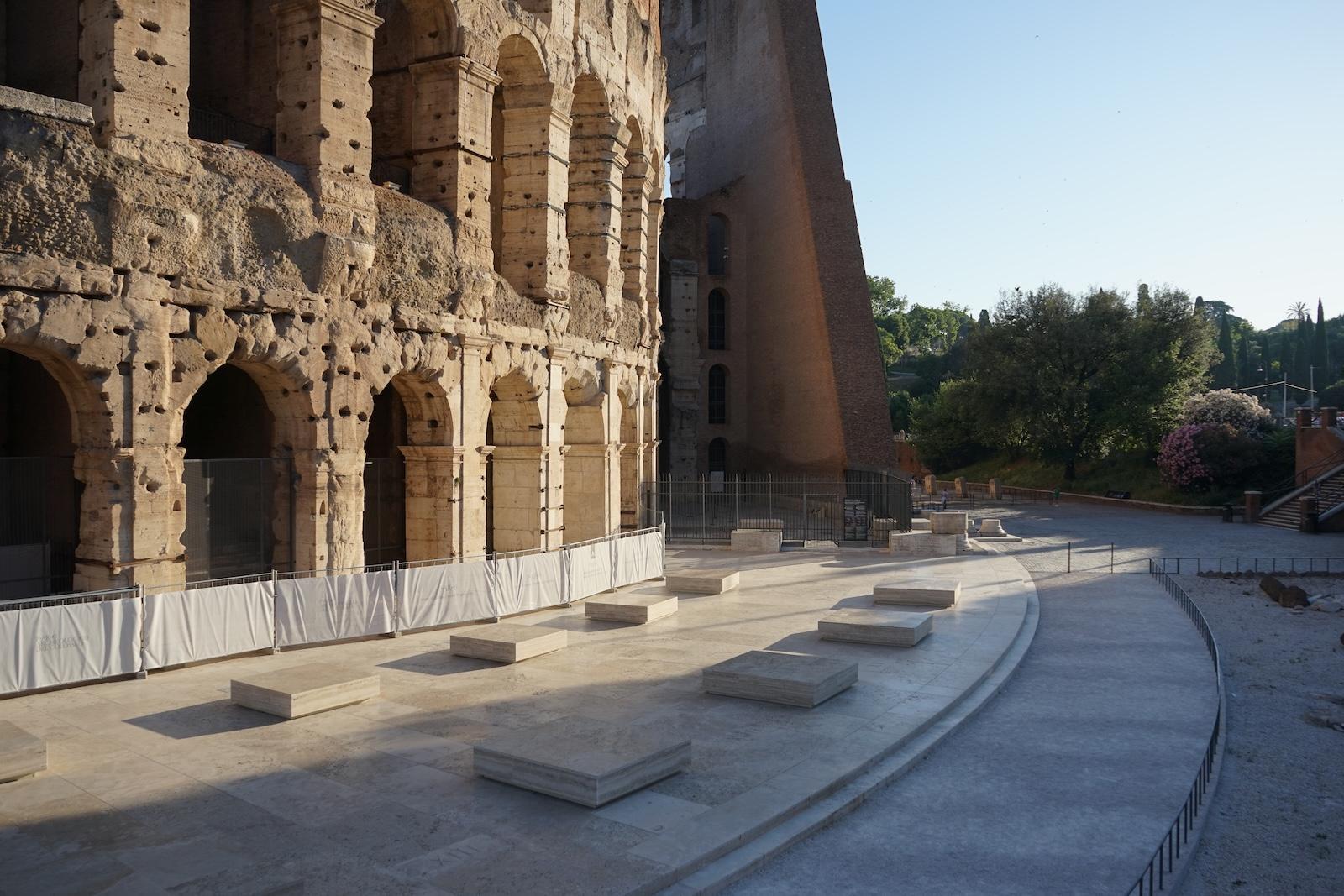
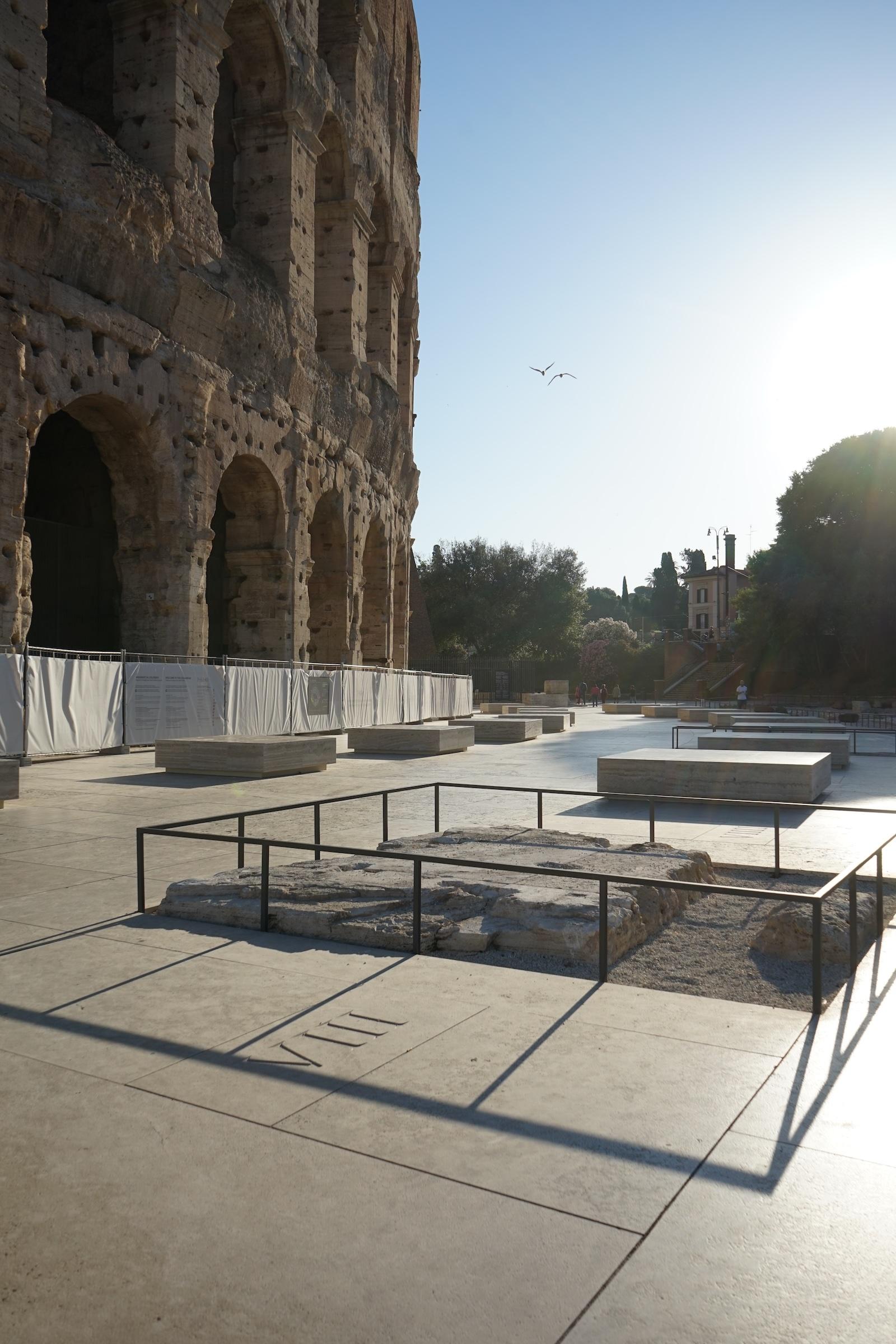
Designed by the Italian studio Stefano Boeri Interiors, the layout of the piazza is subtle and visually elegant, modern but intentionally respectful of the ancient building. The previous pavement of black, basalt cobbles (Rome’s iconic sampietrini) has been replaced with slabs of local, white limestone (travertine), as used for the amphitheatre’s original paving. Over 40 square benches, also of travertine, mark the position of the piers of the long-vanished arcade, and their level is reached by two steps running around the perimeter, again in accordance with the original design.