


For this is not a diminishing activity. Despite the shocks of the global financial crisis in 2008 and the 2020 pandemic, when offices worldwide closed and employees shifted to work from home, corporate art collections have not lost momentum. Bloomberg reported that in 2020, 78 percent of IACCCA members continued to acquire art during Covid, with only half of its members cutting their budgets. All of them maintained their arts programs.
The justifications for these significant outlays have evolved. In the beginning, collections were often the inspiration of one person. At the London law firm Clifford Turner, for instance, one senior partner was entrusted with money to decorate the partners’ dining room. He put together an excellent collection of original prints by Howard Hodgkin, David Hockney, Joan Miró, Georges Braque, and Elizabeth Frink. In 1990, when the company merged with Howard Chance to become Clifford Chance, Nigel Frank (now of FHAC Art Consultants) was brought in to give advice. Originally, Frank explains, the brief was “to make the day go better” for the firm’s employees.
But soon partners saw that the idea of prints, as a relatively affordable, democratic medium but one requiring great technical expertise, resonated with the company ethos, and that the collection served well to communicate those values to clients. Indeed, Frank reports, when in 2008 “there was talk about stopping the acquisition bud- get,” the partners were persuaded “to continue to show their commitment to print-making” with a focus primarily on contemporary British printmakers.
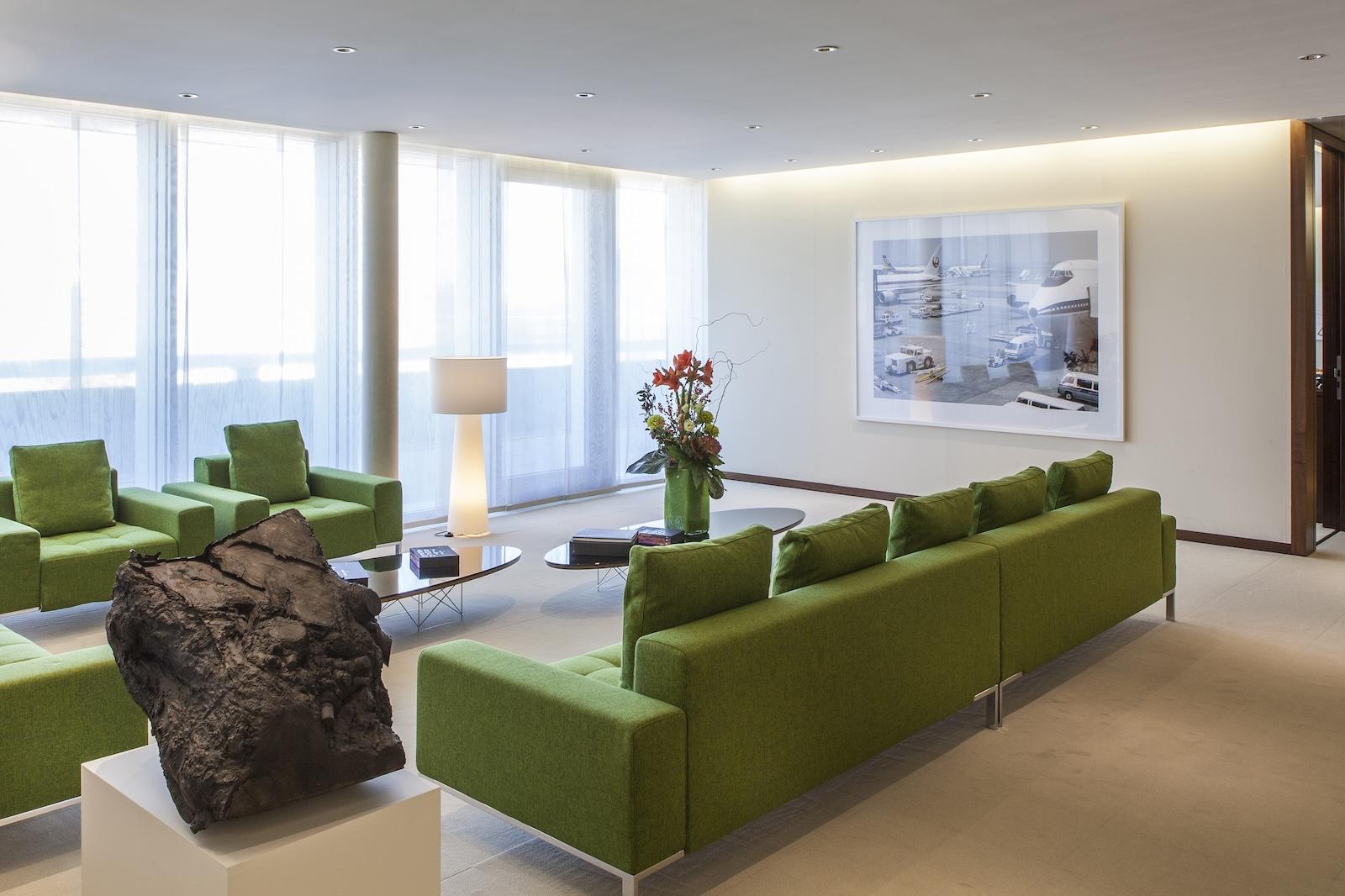
Deutsche Bank, too, specializes in works on paper. While it has significant sculptures by Max Bill, Anish Kapoor, and Tony Cragg, it is above all known as one of the world’s most significant postwar collections of drawings and photographs. Färber explains that the commitment to paper was partly practical: such works are flat, portable, and easy to conserve and do not invade the work space. More importantly, however, she suggests a metaphorical connection between the immateriality of the bank’s primary focus, which is about ideas and concepts, and drawing. “Drawings capture the first idea, caught at the moment of conception and can represent many other art forms,” she says. In this way, the DB Collection arises out of a commitment to the idea of art as a “think tank for the future,” Färber says.
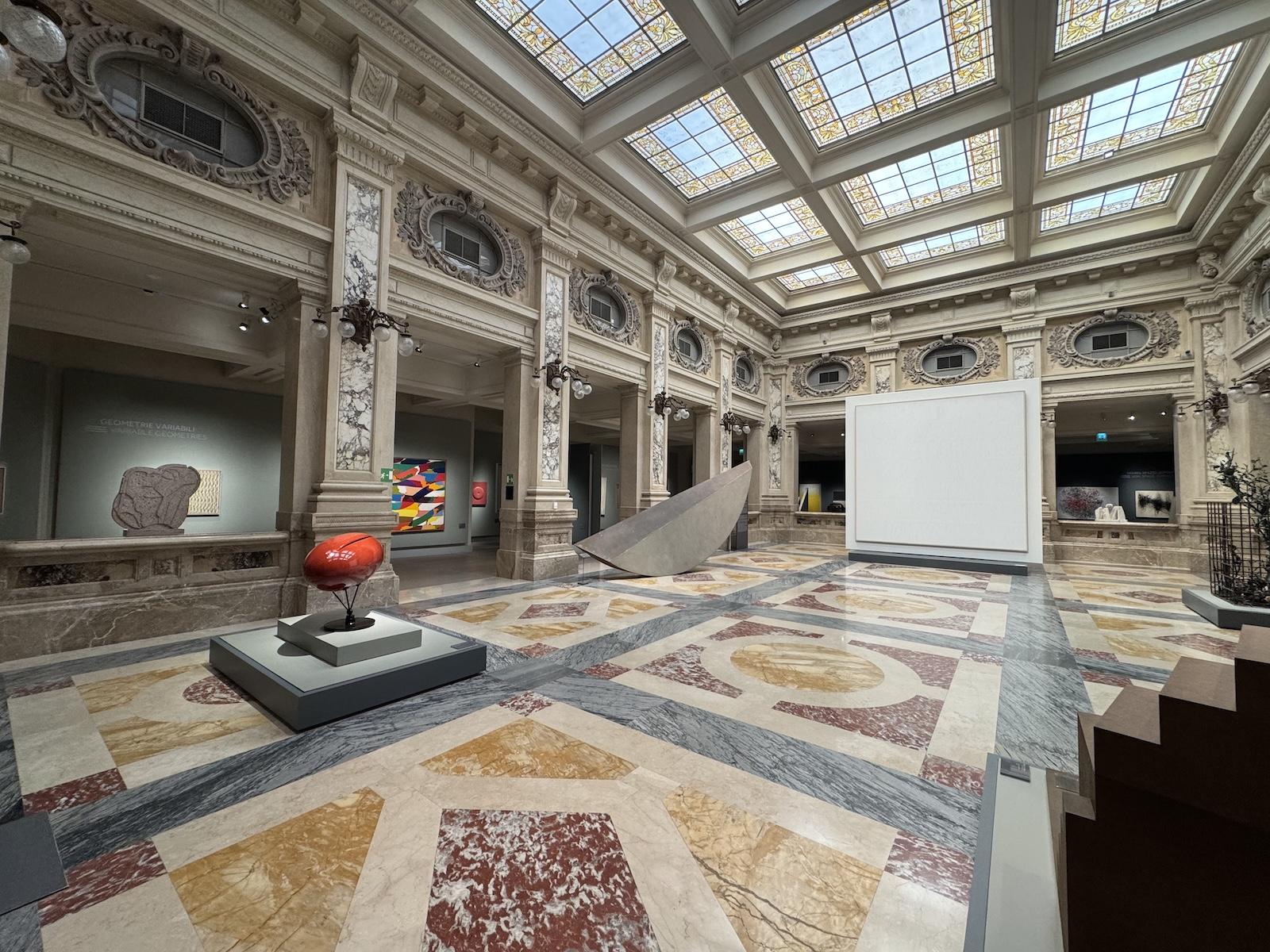
As Deutsche Bank’s activities have expanded, so has the scope of its collection, which now includes 2,700 artists from more than 40 countries, including some in Africa, Asia, and South America. The bank does sell artworks, in response to changes in curatorial priorities and in office architecture—glass walls and open-plan offices, for instance, reduce hanging space dramatically and regional sensitivities can direct judgments about what it is appropriate to hang. Katharine Richardson, Vice President, Museum and Corporate Art Group at Sotheby’s, says, “You do see a premium and higher demand for works from a respected corporate collection.” This releases money for new, site-specific commissions of contemporary artists. The major installations commissioned from the artists Simeon Barclay, Claire Hooper, Rene Matić, and Jaki Irvine in the new 21 Moorfields London headquarters, unveiled last September, which include wallpapers developed by artists, make the most of available wall space to address ideas about trade, metamorphosis and migration.
When invited to establish an art collection for the Pictet Group in 2004, the year before the Geneva-based wealth management company turned 200 years old, the Danish-born curator Loa Haagen Pictet primarily saw it as an opportunity to reflect the company’s corporate values: a long history behind, with an attitude towards wealth and asset management looking into the far future. Pictet says, “We wanted to have a patrimony that could accompany our history.” To achieve this, she has focused on works by Swiss artists across all media from 1805 to the present day, building a highly respected collection of 1,100 works by 180 artists.
Her definition of “Swiss” is broad, encompassing artists who now see Switzerland as their home. Pictet has bought in depth, building representative bodies of work by leading Swiss artists such as John M. Armleder, Ugo Rondinone, Urs Fischer, and Iranian-born Shirana Shahbazi. The company is happy for the artists they support to borrow works for exhibitions: “We don’t want to be a black box,” Pictet says. While the art is educative and life-enhancing for employees, the curator suggests that clients, too, remember their visits more clearly if there is a striking piece of art in the room.