


Why We Need Corporate Art Collections

Courtesy of Intesa Sanpaolo

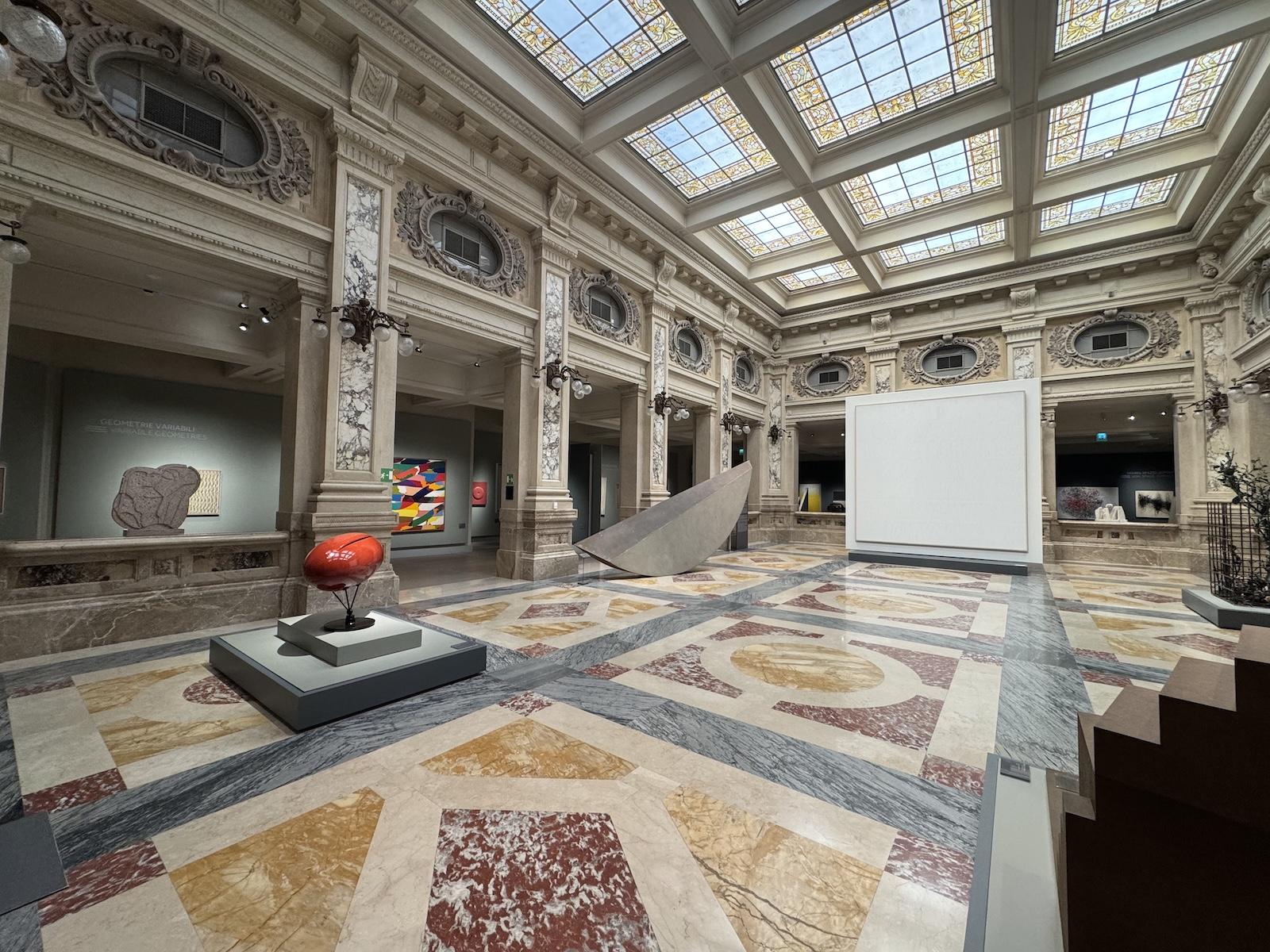
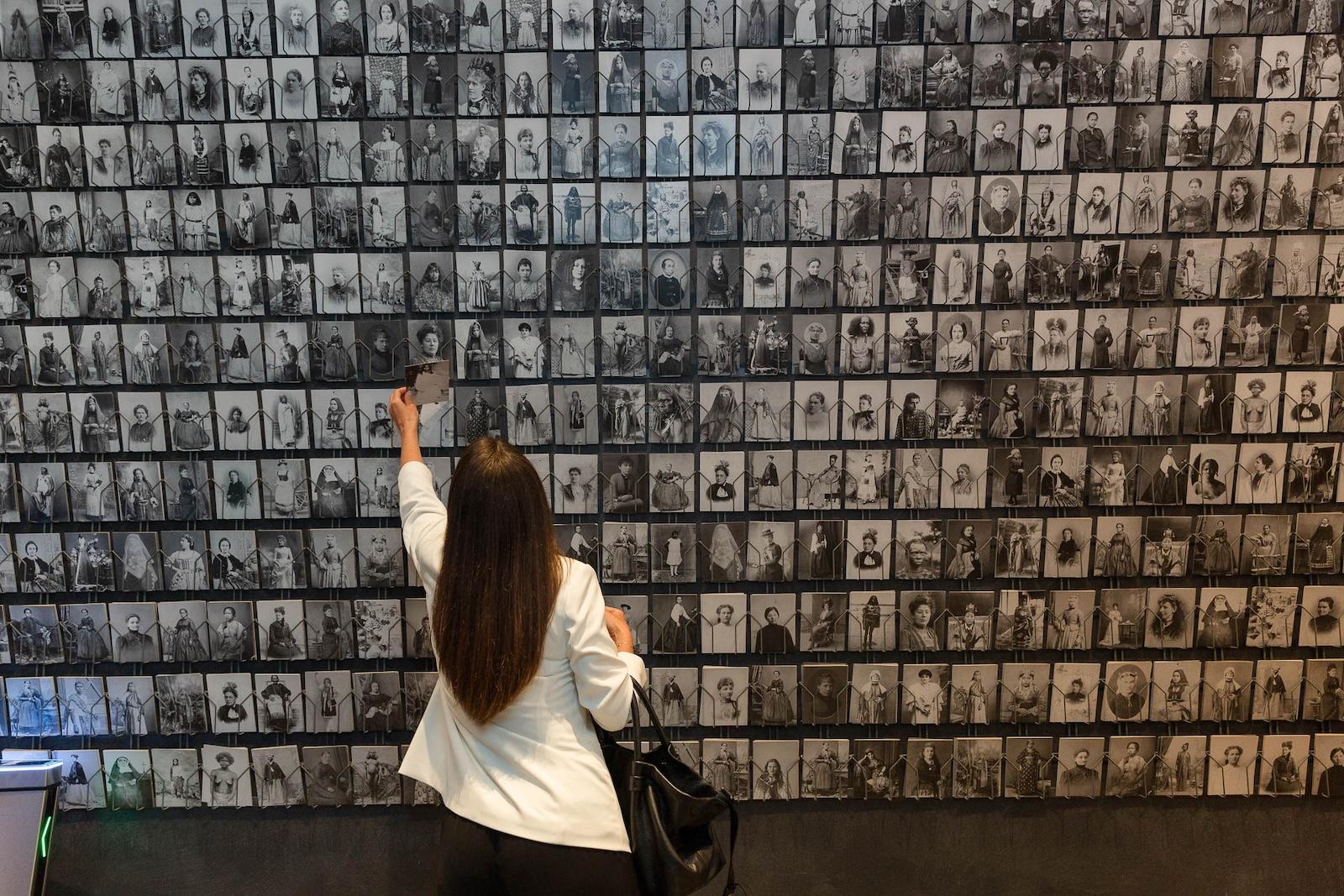
View inside the Gallerie d’Italia museum in Milan, one of four museums that showcase the collection of Intesa Sanpaolo.

In the late 1970s, Herbert Zapp, an executive board member of Deutsche Bank, then headquartered in Düsseldorf, West Germany, fell in with the maverick artist and teacher Josef Beuys. Beuys was in the midst of creating his seminal installation “Das Kapital: 1970-1977” for the 1980 Venice Biennale, articulating his belief that art, as an expression of human creativity, is the true capital. Despite being, in the words of Deutsche Bank’s Global Head of Art and Culture, Britta Färber, “a very straight business man,” Zapp became “excited” by these ideas, which included Beuys’ emphatic democratic vision of art as a force which could change people and society. 

Together with fellow board member Hermann J. Abs, Zapp bought 57 early Beuys drawings for the bank, before formally initiating the Deutsche Bank Collection in 1980. As the Deutsche Bank Twin Towers rose in Frankfurt in the early 1980s, the acquisition of art to display in the workplace was embedded in the company’s DNA. Today, the Deutsche Bank Collection is one of the most significant corporate art collections in the world, numbering over 57,000 objects displayed in 500 locations in 40 countries. For each new office, art is commissioned and installed for the pleasure and edification of the bank’s employees, and as part of what has become a much  wider cultural strategy that includes sponsorship of the Frieze Art Fair.

One might say that rather than reordering cultural values, the collection exemplifies the intimacy between wealth and art that was once embodied by the Medici of Florence. But through its outward-facing public exhibitions and support of contemporary artists, it has become central to Deutsche Bank’s image as a company open to diversity, complexity, and the generation of new ideas.

Banking and art collecting have been intertwined from the beginning. The world’s oldest surviving bank, Banca Monte dei Paschi di Siena, founded in 1472, commissioned local artists to beautify its offices and reflect the institution’s glory, mirroring the behavior of popes and princes. Giovanni Bazoli, President Emeritus of Intesa Sanpaolo, another Italian bank with roots dating back to the Renaissance, summed it up at the opening in Milan in 2023 of the bank’s exhibition “From the Medici to the Rothschilds— Art Patrons, Collectors, Philanthropists: “Without the support of bankers, myriad works of art would never have seen the light.”

It was the American banker David Rockefeller, himself a sophisticated collector, who is credited with triggering the modern renaissance of corporate art collecting. In 1959, he formally inaugurated the Art at Work program at Chase Manhattan Bank, where he was Chairman and CEO. Besides enhancing the lives of employees with works by artists such as Andy Warhol, Robert Rauschenberg, and Joan Mitchell, he urged his peers at the National Industrial Board Conference in the U.S. in September 1966 to consider that “the arts are a vital part of the human experience, and surely our success as a civilized society will be judged largely by the creative activities of our citizens in art, architecture, music and literature. ... The corporate community as a whole has a long way to go in accepting the arts as an appropriate area for the exercise of its social responsibility.” 

Many companies took heed. In the United States, besides banks such as Chase (now JPMorgan Chase), UBS (sponsors of Art Basel), and Bank of America, there are hundreds of art collections held by businesses as various as insurance broker Progressive, global law firms Fried, Frank, Harris, Shriver & Jacobsen LLP and Arnold & Porter LLP, tech titan Microsoft and telecom service provider AT&T. In Europe, the International Association of Corporate Collections of Contemporary Art (IACCCA) boasts 60 members based in 19 countries, looking after (at the present moment) 188,707 artworks. A digital tally is kept on their home page.

Photo credit: Aurélien Bergot

Collection Pictet

For this is not a diminishing activity. Despite the shocks of the global financial crisis in 2008 and the 2020 pandemic, when offices worldwide closed and employees shifted to work from home, corporate art collections have not lost momentum. Bloomberg reported that in 2020, 78 percent of IACCCA members continued to acquire art during Covid, with only half of its members cutting their budgets. All of them maintained their arts programs. 

The justifications for these significant outlays have evolved. In the beginning, collections were often the inspiration of one person. At the London law firm Clifford Turner, for instance, one senior partner was entrusted with money to decorate the partners’ dining room. He put together an excellent collection of original prints by Howard Hodgkin, David Hockney, Joan Miró, Georges Braque, and Elizabeth Frink. In 1990, when the company merged with Howard Chance to become Clifford Chance, Nigel Frank (now of FHAC Art Consultants) was brought in to give advice. Originally, Frank explains, the brief was “to make the day go better” for the firm’s employees.

But soon partners saw that the idea of prints, as a relatively affordable, democratic medium but one requiring great technical expertise, resonated with the company ethos, and that the collection served well to communicate those values to clients. Indeed, Frank reports, when in 2008 “there was talk about stopping the acquisition bud- get,” the partners were persuaded “to continue to show their commitment to print-making” with a focus primarily on contemporary British printmakers.

Deutsche Bank, too, specializes in works on paper. While it has significant sculptures by Max Bill, Anish Kapoor, and Tony Cragg, it is above all known as one of the world’s most significant postwar collections of drawings and photographs. Färber explains that the commitment to paper was partly practical: such works are flat, portable, and easy to conserve and do not invade the work space. More importantly, however, she suggests a metaphorical connection between the immateriality of the bank’s primary focus, which is about ideas and concepts, and drawing. “Drawings capture the first idea, caught at the moment of conception and can represent many other art forms,” she says. In this way, the DB Collection arises out of a commitment to the idea of art as a “think tank for the future,” Färber says.

As Deutsche Bank’s activities have expanded, so has the scope of its collection, which now includes 2,700 artists from more than 40 countries, including some in Africa, Asia, and South America. The bank does sell artworks, in response to changes in curatorial priorities and in office architecture—glass walls and open-plan offices, for instance, reduce hanging space dramatically and regional sensitivities can direct judgments about what it is appropriate to hang. Katharine Richardson, Vice President, Museum and Corporate Art Group at Sotheby’s, says, “You do see a premium and higher demand for works from a respected corporate collection.” This releases money for new, site-specific commissions of contemporary artists. The major installations commissioned from the artists Simeon Barclay, Claire Hooper, Rene Matić, and Jaki Irvine in the new 21 Moorfields London headquarters, unveiled last September, which include wallpapers developed by artists, make the most of available wall space to address ideas about trade, metamorphosis and migration.

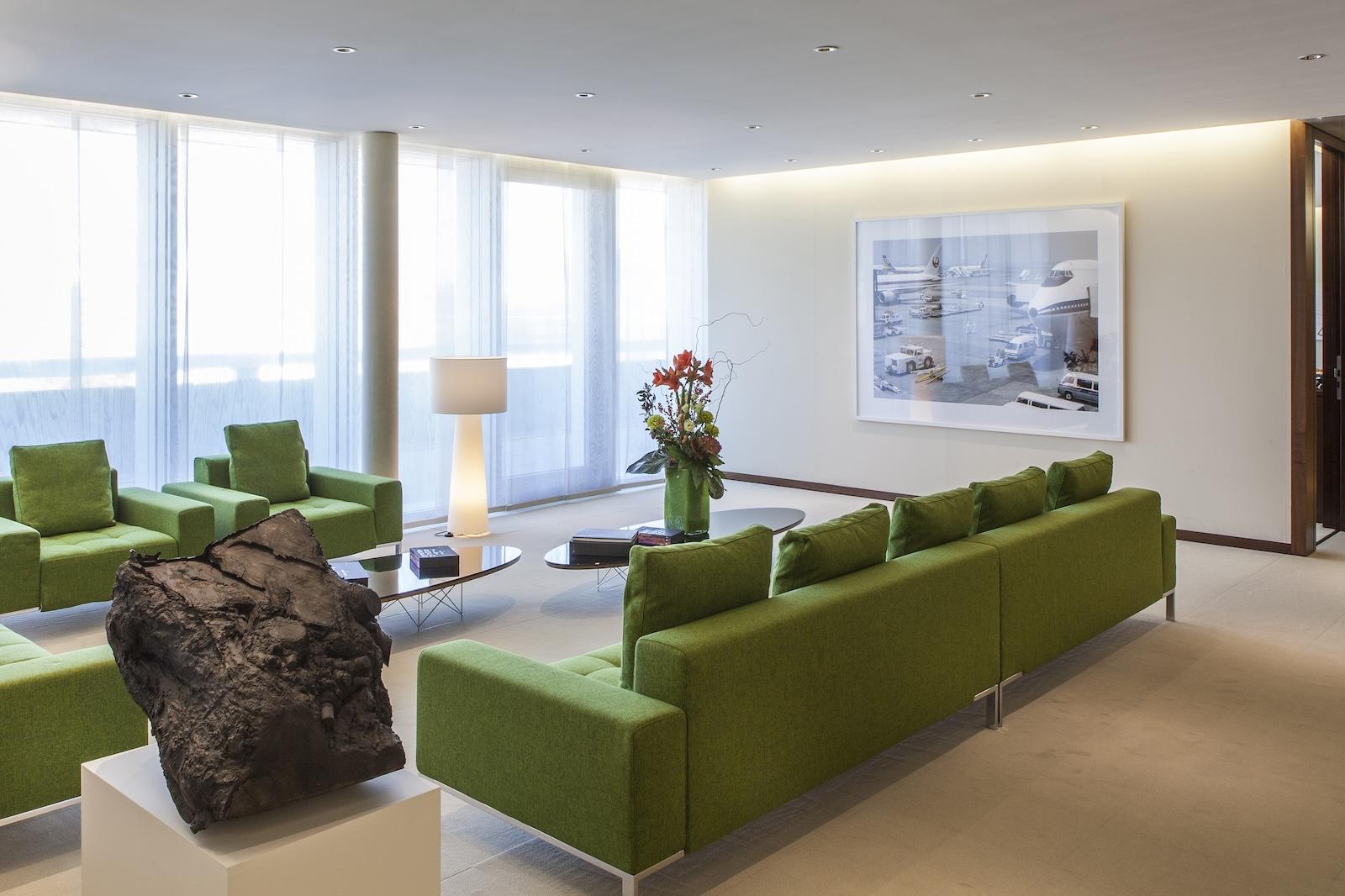
When invited to establish an art collection for the Pictet Group in 2004, the year before the Geneva-based wealth management company turned 200 years old, the Danish-born curator Loa Haagen Pictet primarily saw it as an opportunity to reflect the company’s corporate values: a long history behind, with an attitude towards wealth and asset management looking into the far future. Pictet says, “We wanted to have a patrimony that could accompany our history.” To achieve this, she has focused on works by Swiss artists across all media from 1805 to the present day, building a highly respected collection of 1,100 works by 180 artists.

Her definition of “Swiss” is broad, encompassing artists who now see Switzerland as their home. Pictet has bought in depth, building representative bodies of work by leading Swiss artists such as John M. Armleder, Ugo Rondinone, Urs Fischer, and Iranian-born Shirana Shahbazi. The company is happy for the artists they support to borrow works for exhibitions: “We don’t want to be a black box,” Pictet says. While the art is educative and life-enhancing for employees, the curator suggests that clients, too, remember their visits more clearly if there is a striking piece of art in the room.

Courtesy of Deutsche Bank

Mathilde ter Heijne, Woman To Go, 2005 - present.

Christie’s Amelie Sarrado, Director of EMEA President’s Office, looking after private family offices and corporate clients, confirms the psychological benefit. “Bankers and lawyers are dealing with their clients on a very narrow range of things. Art is a way to get to know your client better,” she says. “It can also be a great buffer when you have bad numbers to discuss.” Many clients, moreover, are collectors themselves.

What has changed, according to current IACCCA chair Delphine Munro, is that “companies are increasingly commissioning or exhibiting works that align with their social values and contribute to meaningful narratives about their identity and mission.” She observes a “growing focus on diversity, sustainability, and local engagement, reflecting wider ESG [Environmental, Social, and Governance] commitments.” As collection curator at the Luxembourg-based European Investment Bank, Munro has supported contemporary artists based in Europe, while encouraging art that tackles issues as various as climate change, post-colonialism and decolonization, eco-feminism, the refugee crisis, food security, and more. The EIB’s parallel commitment to education and public access has transformed the collection, Munro suggests, “into a living communication tool between the Bank, its staff, stakeholders, and European citizens.”

David Knowles, Director of U.K.-based art advisory Artelier, notes more generally that whereas previously, “corporate art collections were often seen primarily through the lens of investment,” now “there’s much more emphasis on corporate responsibility, community engagement, and diversity—both in terms of the artists represented and the audiences engaging with the art.” Meanwhile, Michele Coppola, Executive Director of Art, Culture and Historical Assets at Intesa Sanpaolo and General Director of Gallerie d’Italia, has driven the bank’s project to create four public gallery spaces to display the collection, alongside a raft of educational and restoration projects. He says, “The collection is a key element of Intesa Sanpaolo’s cultural strategy...to promote art as a driver of social, economic, and cultural development.”

This echoes the recognition by the Bank of America, articulated by Global Arts, Culture and Heritage executive Brian Siegal, that “investing in the arts has a positive impact on society, contributing to a vibrant, thriving economy, creating jobs, attracting tourism and generating revenue for cultural institutions that often act as the cornerstone of their communities. The cultural sector also helps build communities, bringing people together through shared experiences, and promoting mutual understanding, dialogue and debate.” The bank’s program has expanded accordingly, from collecting to arts sponsorships and partnerships. 

The mission of the Fundación la Caixa in Spain, by contrast, began with a more precise goal. In 1980, five years after the death of Francisco Franco, there were no contemporary art museums in Spain and few opportunities for Spanish artists or the Spanish public to see contemporary art. The Fundación was set up by its parent bank to change that situation, building a notable collection of international contemporary art, which is rotated for public display in four CaixaForum spaces across the country. As many countries face a crisis in public funding for the arts, it seems that more than ever, we need corporate art collections, owners of considerable global cultural assets, to fill the gap, perhaps enabling their glorious ornaments to become, as in Beuys’ vision, true seeds of change. 

*This article originally appeared in Art & Object Magazine's Fall 2025 issue.

About the Author

Subscribe to our free e-letter!

Webform
Art and Object Marketplace - A Curated Art Marketplace
Loading categories...