A Century of Inventing Artists at the American Folk Art Museum

American Folk Art Museum, New York, Collection of Frank S. Tosto

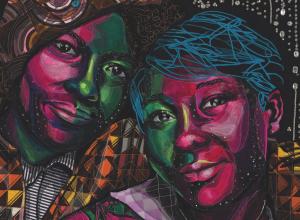
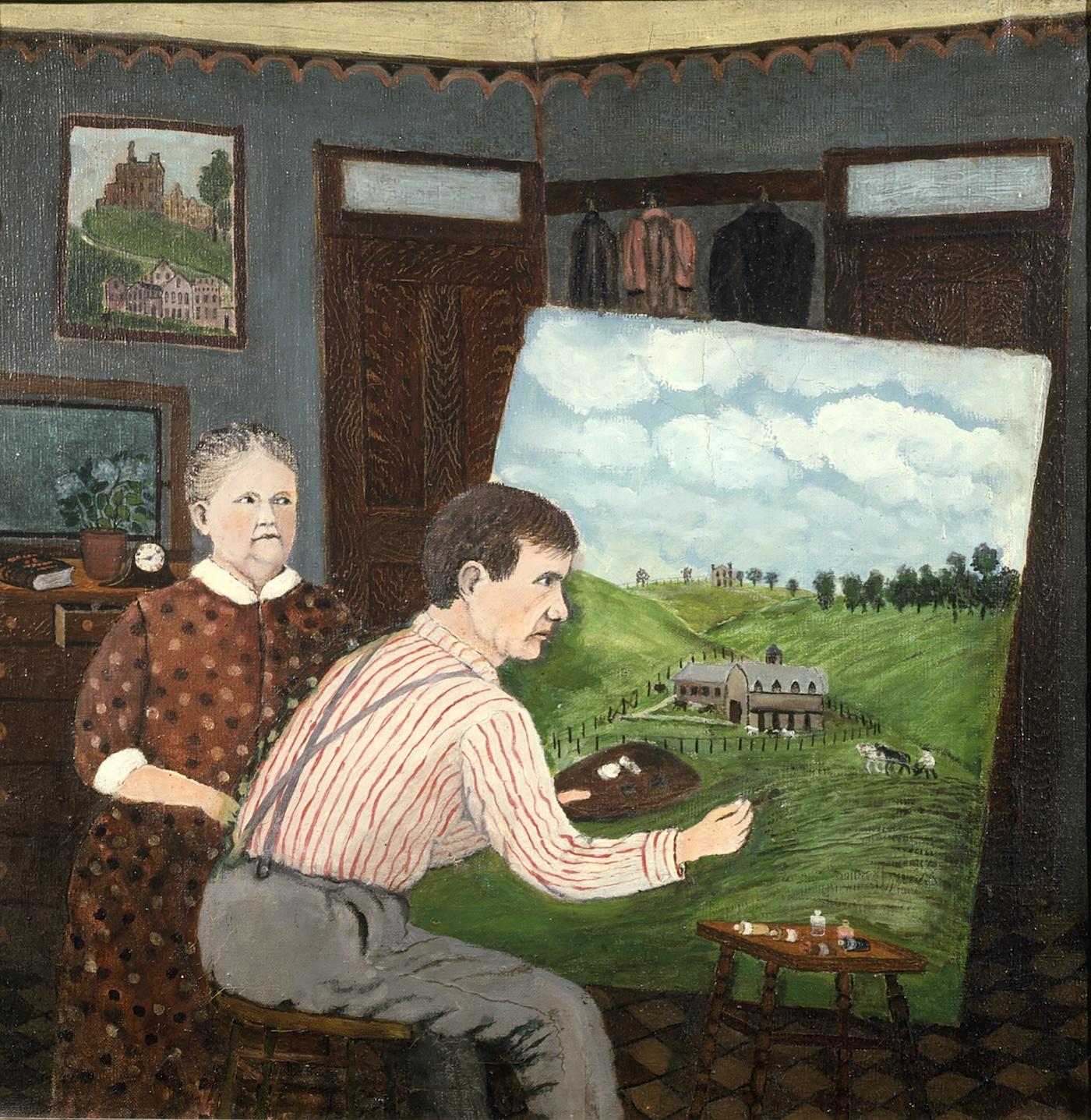
John Kane, John Kane and His Wife, c. 1928. “Untrained” doesn’t mean unskilled.

In the United States, the historical formulation of the “self-taught artist” is loaded with assumptions about class, race, and mental health that have obfuscated the figure of the maker. Because these artists practiced outside of conventional art school, gallery, museum, and peer-exchange systems, their works have oftentimes been interpreted through the lens of their discoverers and collectors.

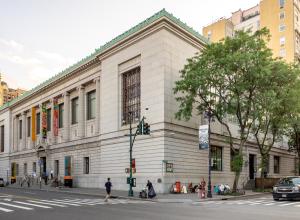
The exhibition Self-Made: A Century of Inventing Artists, on view at the American Folk Art Museum in New York (April 10–September 13, 2026), investigates, for the first time, how formally untrained artists have depicted, conceptualized, and identified themselves on their own terms. Looking at key artists from the first half of the 20th century to present time, this presentation addresses questions of artistic status, creative aspirations, positionality, and agency. Approaching each object as a primary document—a firsthand account of the self, authored by the self—the show focuses on three types of self-representation: self-portraiture and art-historical dialogues; depictions of alter egos and spirit guides; and autobiographical work and signature pieces. Across painting, drawingsculpture, photographs, videos, and artists’ notebooks, the 60 artists in Self-Made use their work to say “look at me, in this way that have chosen.” From this angle, this project aims at challenging reductive interpretations that have long misconstrued these makers as amateurs or isolated geniuses working out of time, without lineage, precedent, influences, or artistic networks.

Many self-portraits in Self-Made show the artist in the act of creating, while other artworks display the common visual strategy known as the “picture within a picture,” reinforcing an art-historical affiliation. A painting by Morris Hirshfield (1872, Russian Poland–1946, Brooklyn, New York) intervenes directly into the history of canonical Western self-portraiture, bringing together several academically sanctified fine art genres: self-portraiture; depictions of the female nude; and a genre scene animated by a playful feline. Hirshfield presents himself as a painter, holding a palette and paintbrushes, elevated on a platform as if he too were a work of art. The painting links the revered benchmarks of artistic style with the artist’s own expertise. A tailor by trade, he emphasizes textile patterns in a rug, scarf, and striped pants.

American Folk Art Museum, New York, Gift of Thomas Whitehead in Memory of Ora Garland Williams, 2005.16.1.

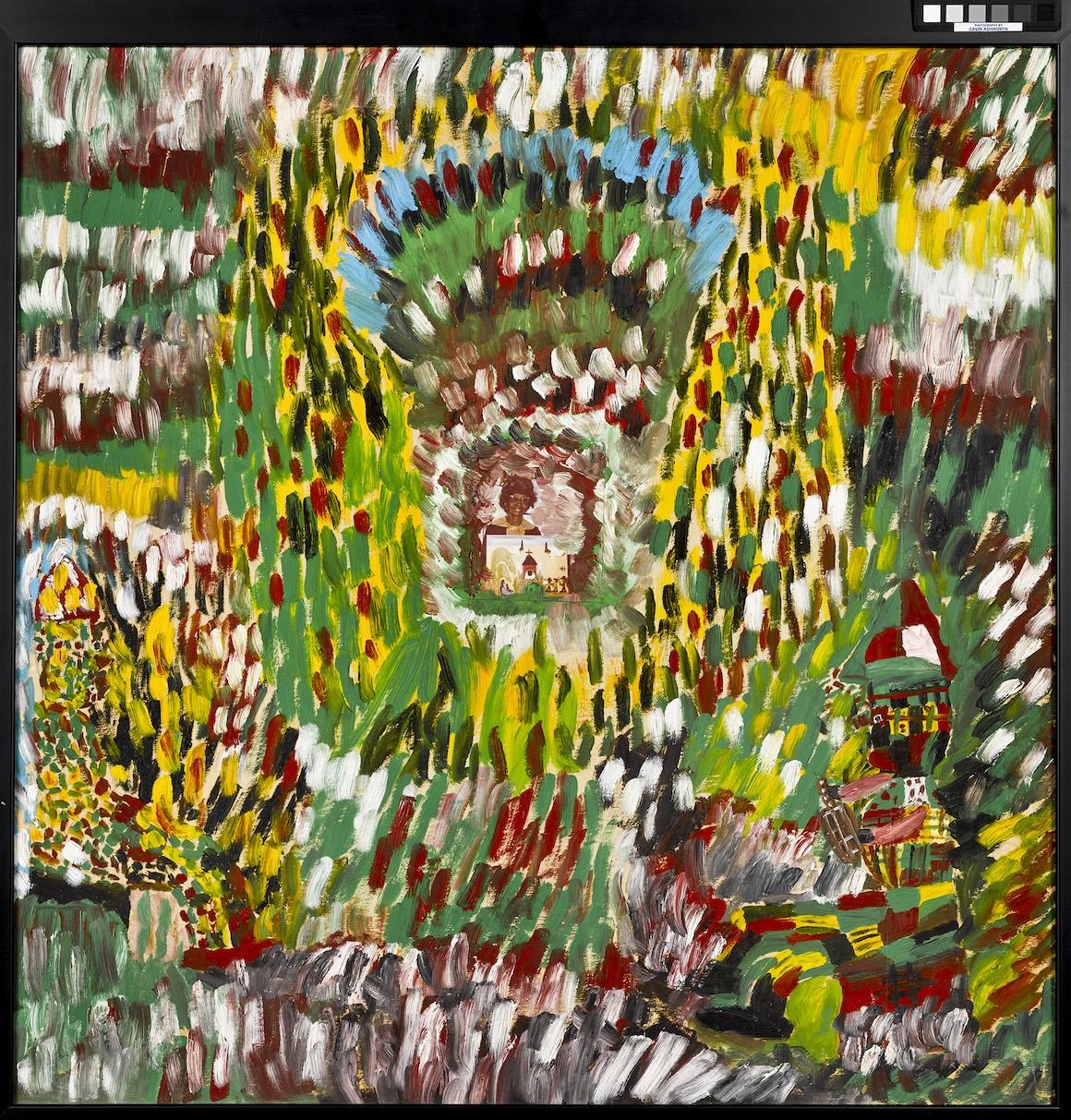
Clementine Hunter, Untitled, 1975.

The bulk of the artist Clementine Hunter’s (1887–1988, Natchitoches Parish, Louisiana) works depicts scenes from the Melrose Plantation in Louisiana, where, starting when she was a teenager, Hunter had labored picking cotton, cleaning, and cooking. As Hunter recalled, “I paint the history of my people. My paintings tell how we worked, played, and prayed.” But later in her life, Hunter abandoned this style, stating such images “hurt me too much. I get dizzy.” Self-Made exhibits a 1975 self-portrait from the new aesthetic she adopted. Completed when she was in her 80s, she centered a photograph of herself holding one of her earlier paintings. Exuberant, expressive dashes of paint radiate outward, crowning her picture in blue within a personal, vibrantly blooming landscape. Here, she is an artist in a world of her own making. 

For British artist Madge Gill (1882–1961, London, England), spirit guides offered a way to explore the self. Gill leaned deeply into Spiritualism after the traumatic losses of her son in the influenza pandemic of 1918 and the birth of a stillborn daughter in 1920. The artist stated in 1937 that “I felt I was definitely guided by an unseen force, though I could not say what its actual nature was.” Yet, the female figure she repeatedly depicted looked remarkably similar to the artist herself, hosting an oval face, circular eyes, pointed chin, delicate nose, and small lips. She named her spirit Myrninerest—sometimes interpreted as “my inner rest” or “my innerest”—who she said led her hand while creating.

Artistic practices of autobiography offered a way to challenge official historical records. Horace Pippin (1888–1946, West Chester, Pennsylvania) served in the all-Black 369th Infantry Unit, nicknamed the “Harlem Hellfighters”, and began painting scenes from his experience serving in World War I on his return. The war left permanent traces on his art-making: in 1918, a sniper’s bullet pierced his right shoulder, and his right arm had to be supported by his left hand whenever he worked at his easel. In Outpost Raid: Champagne Sector, Pippin paints a member of his infantry—possibly himself—confronting a snarling, disarmed Nazi soldier within a trench. Similar scenes were recorded in his wartime journal. At the time, images of The Great War often excised the contributions of Black soldiers, but in Pippin’s work, their victories and struggles are centered. He would later declare, “I don’t go around here making up a whole lot of stuff. I paint exactly the way it is and exactly the way I see it.”

As the United States celebrates its semi-quincentennial, Self-Made is a reminder that individuals can chart paths of their own making. Agency can be the seed of revolution. The artists gathered here draw on their personal experiences to forge the stories we inhabit and inherit.

*This article originally appeared in Art & Object Magazine's March/April 2026 issue.
40.773182713695, -73.98139755

Self-Made: A Century of Inventing Artists
Start Date:
April 10, 2026
End Date:
September 13, 2026
Venue:
American Folk Art Museum

Subscribe to our free e-letter!

Webform
Art and Object Marketplace - A Curated Art Marketplace