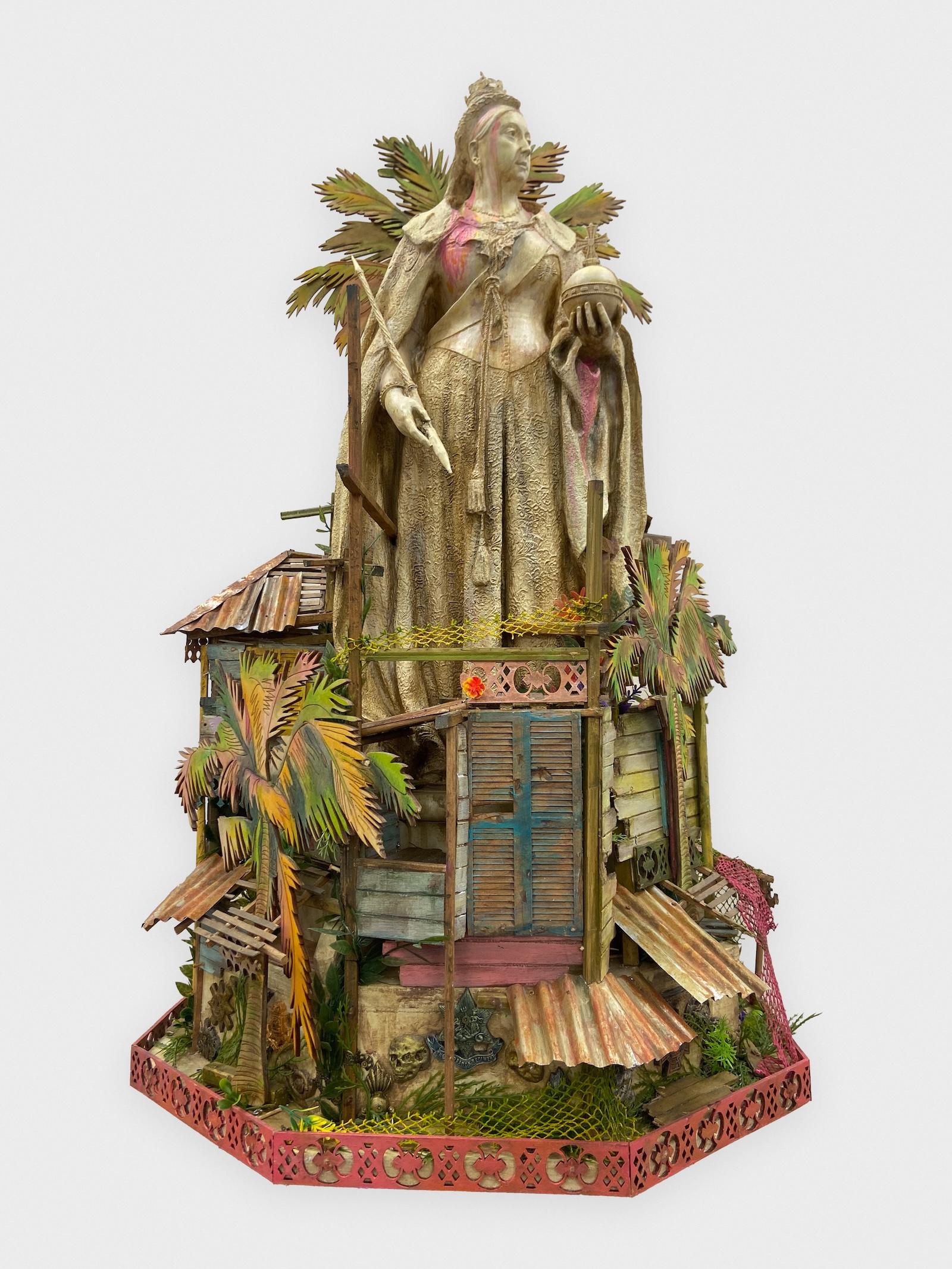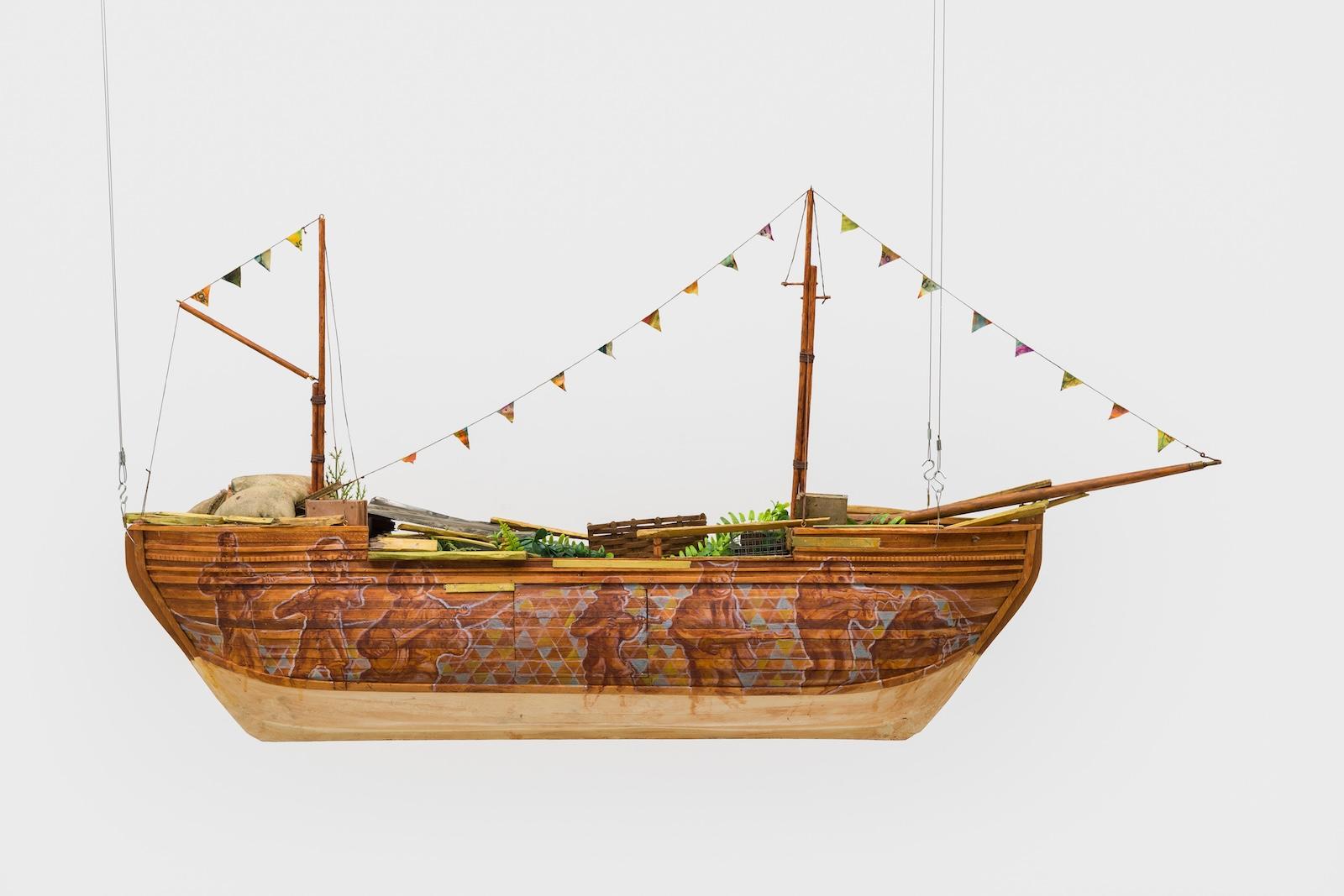



Since the financial crash in 2008, Locke has been painting on bonds and share certificates, and was excited a few years ago to find some Confederate war bonds. His use of share certificates as the base for paintings and as components of his sculptures and installations makes it impossible to ignore just how deeply finance, war, and colonialism are entwined. “War, as we all know, is an expensive venture,” shares Locke.
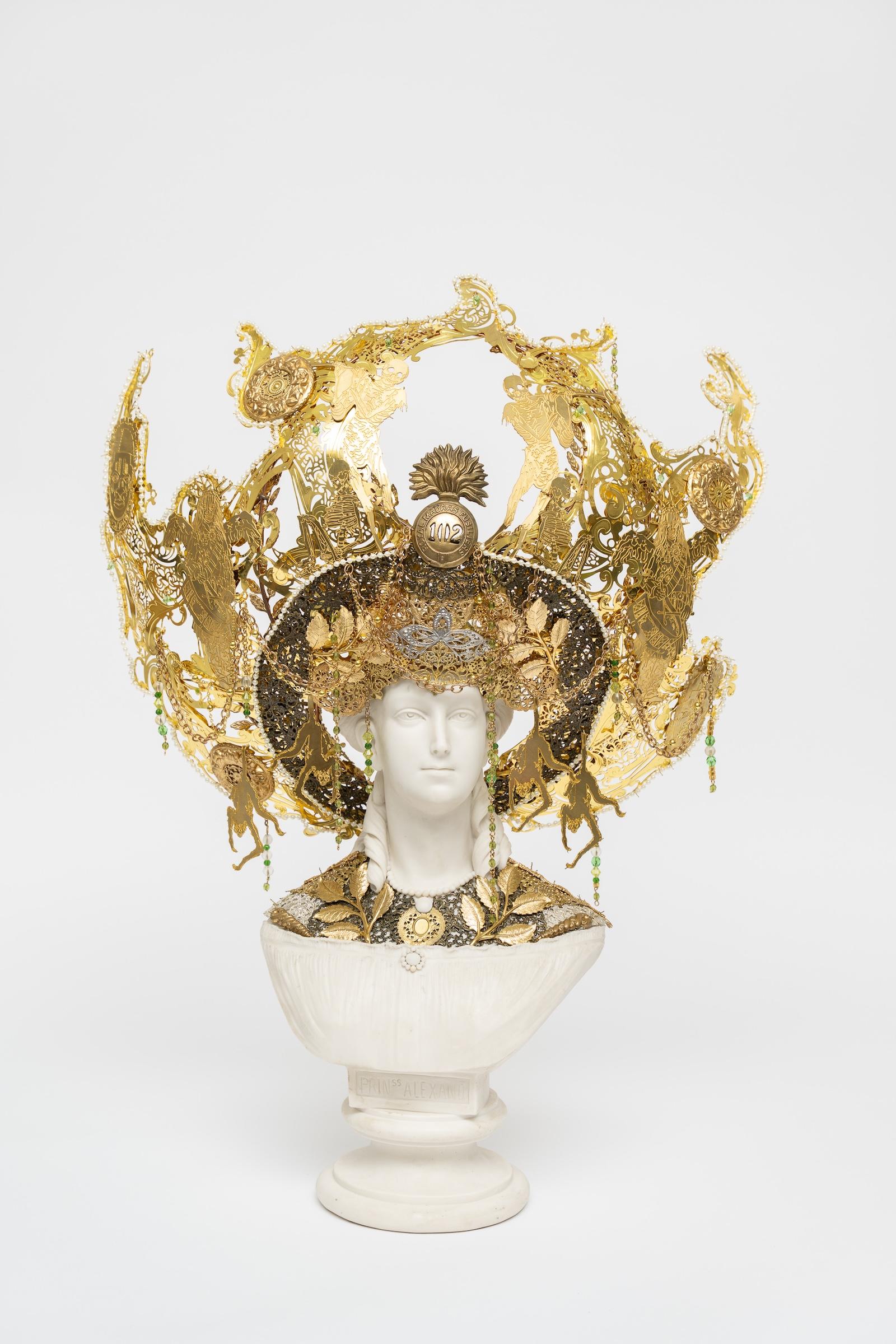
In his sculptural series Souvenirs, Locke interrogates the imagery of wealth and power through elaborately adorning 19th-century Parian ware busts of historical figures—created for a middle-class market who wanted affordable versions of marble busts. One of Locke’s favorites is a bust of George Washington, who disappears “under an encrustation of stuff” resembling a tricorn hat shaped like the Eiffel Tower, built of silver filigree, strings of metallic beads, ornamental mirrors, and East India Company coins. The coins deliberately reference the massive impact of the East India Company on colonialism, war, and the economy—think of the Boston Tea Party.
Meanwhile, the layered adornments transform the bust from a coldly impersonal portrait into a carnival masquerade, integrating riotous celebration while transforming emblems of colonialism and greed into beautiful embellishments, illustrating how art transmogrifies experience. Locke’s layers of collage have an almost magical effect, completely transforming the original object without hiding its origins, creating a work he calls “meticulously unfinished.”