Studio  August 31, 2026  Cynthia Close

Master Printmaker Sarah Amos Maps Her Past and Designs Her Future

Courtesy of CUE Art Foundation

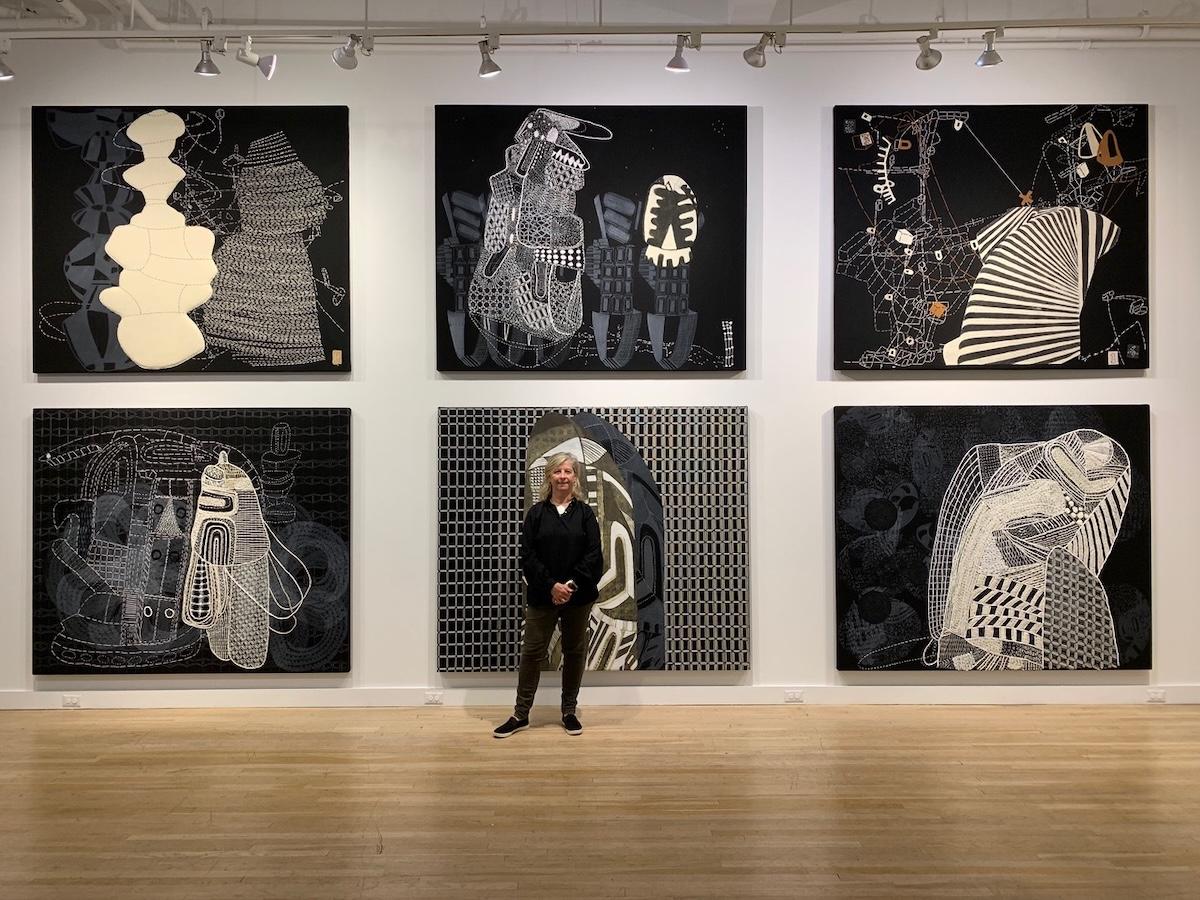
Sarah Amos in front of "Sarah Amos: Chalk Lines" at CUE Art Foundation

It had been seven years since this writer first heard the distinctive Aussie-inflected English of innovative master printmaker Sarah Amos. “This is your life, Australia style,” she joked, as she began an illustrated lecture in conjunction with Unique Multiples, her solo exhibition of monumental print-based, multimedia works at Burlington City Arts, one of Vermont’s most respected venues. Later that same year, in New York, CUE Art Foundation presented Chalk Lines, another solo exhibition curated by Barbara Takenaga. That exhibition was accompanied by a catalogue providing a level of visibility signaling Amos had reached a milestone in her career, somewhere between “emerging” and fully arrived. 

Courtesy of Sarah Amos

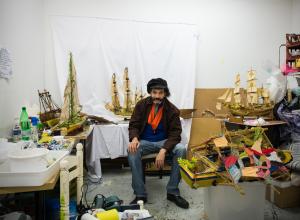
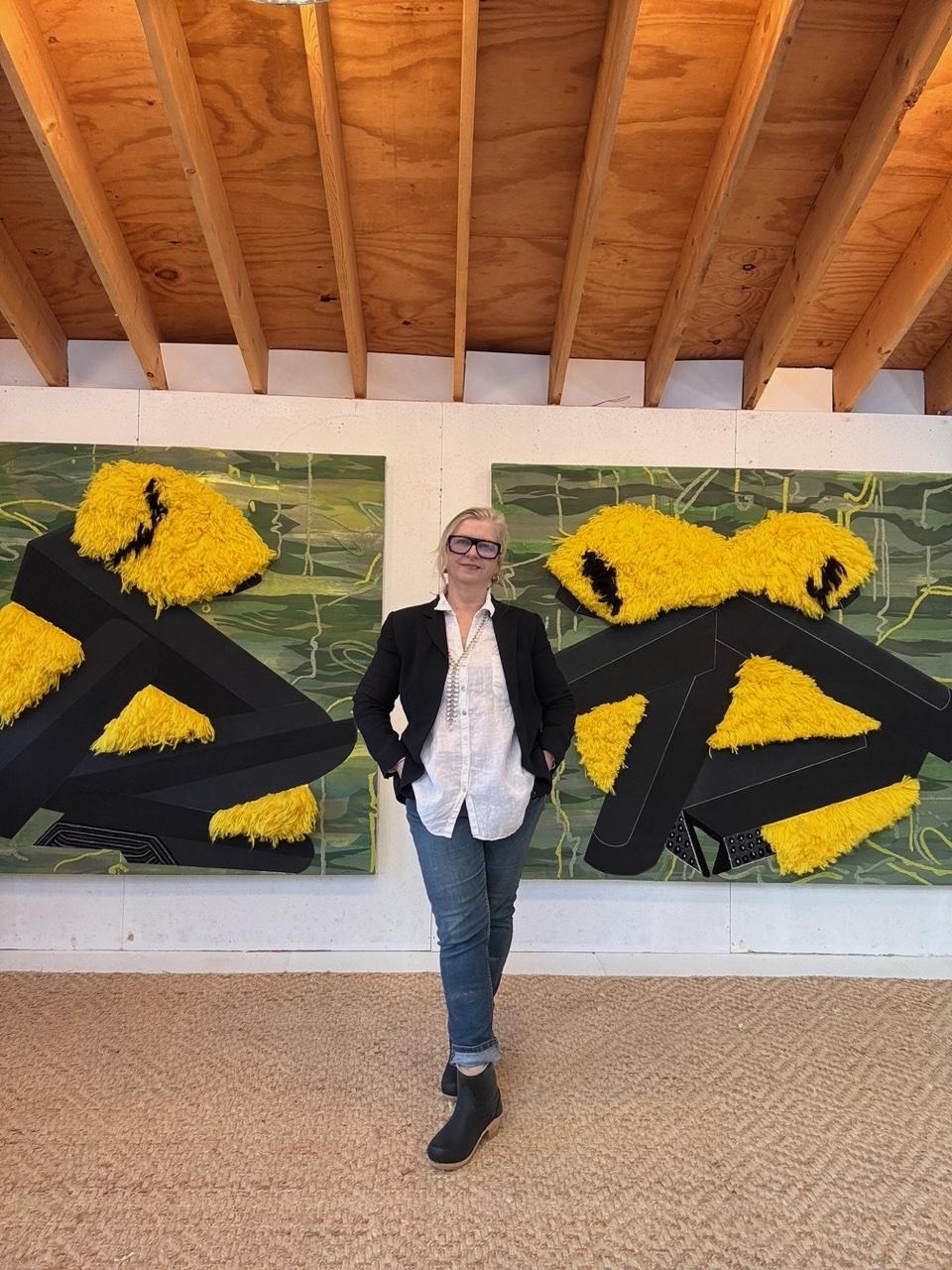
Sarah Amos in her studio

Since then, Amos has racked up an impressive list of achievements, including the Adolf and Esther Gottlieb Foundation Individual Support Grant in 2020, the Joan Mitchell Foundation Artist Residency in New Orleans in 2022, and her home state’s highest visual arts award, the Vermont Prize, in 2024. So, a perfect late-summer day in 2026 seemed like the right time to see how Amos was taking stock of her past and designing her future. After bumping down a long, dusty dirt road in rural Vermont, a rustic wood-frame building came into view. Amos appeared by a gate to a charming patio, before giving a tour of her airy, light-filled studio, big enough to hold a large printing press, worktables, and some of her most recent multi-layered abstractions that command attention on the far wall.

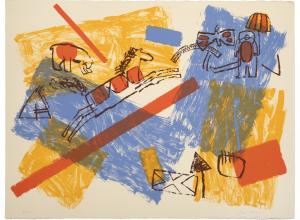
When asked how Amos saw herself at this pivotal moment in her career, she hesitated, “What does it mean to say, ‘you’ve arrived’? It’s a big, ongoing conversation. I’ve spent years doing this—I don’t have to iron out the technical process. I’m in this sweet spot where I don’t want to let [the work] go. I’m looking for a good museum-level thing.” Although her exceptional skills were earned as a master printmaker at Tamarind Institute, her current work defies categorization. When challenged to define what she does, Amos replies, “They’re printmaking-based, but I don’t know what to call them. Somebody once said I’m a printmaker disrupter.” To demonstrate the evolution of an idea, Amos showed off stacks of 16 x 20 inch gouache and acrylic paintings on paper that she calls her “nursery.” “When I have a gut reaction to one of them, I know it can metamorphosize into the larger work.”
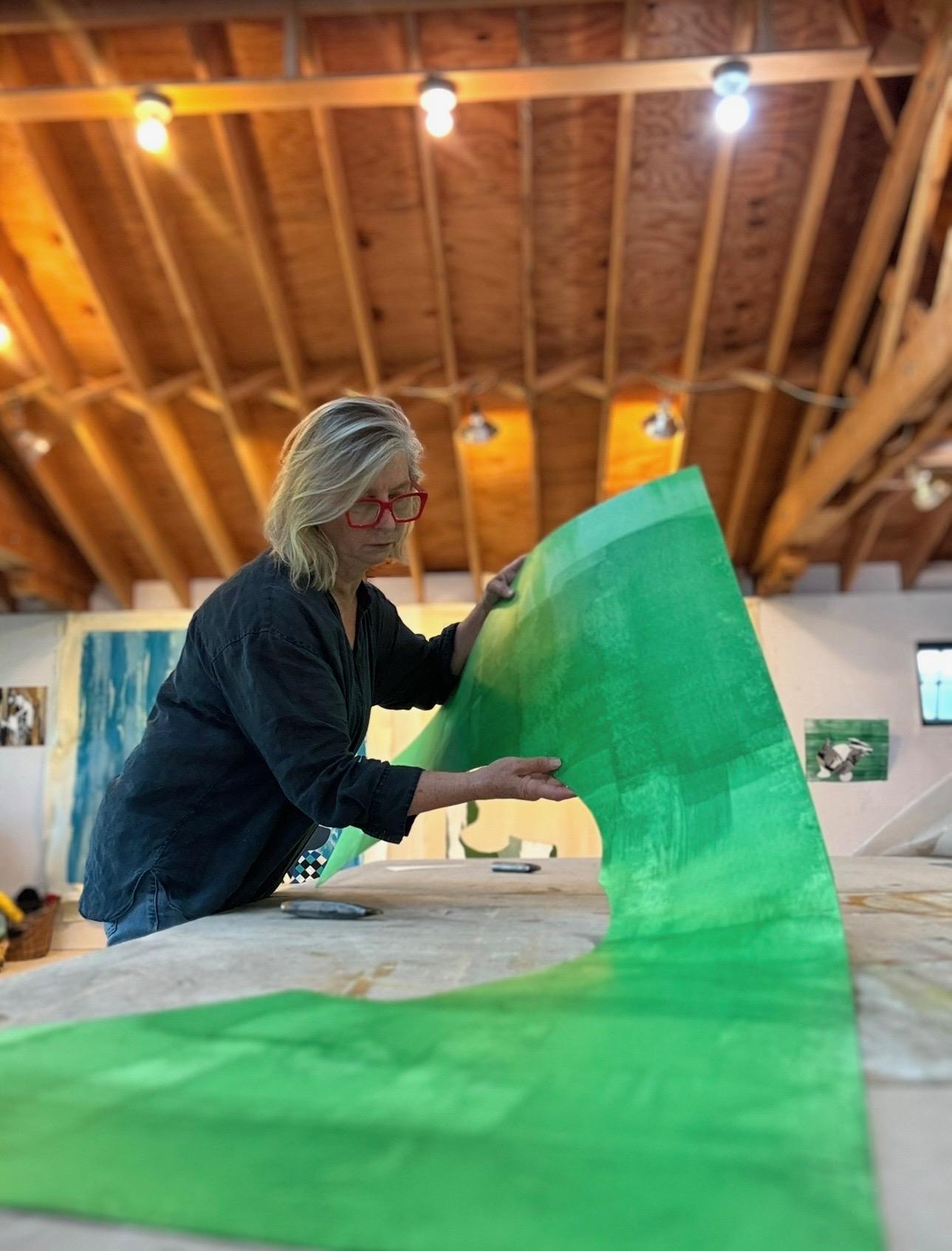
Courtesy of Sarah Amos

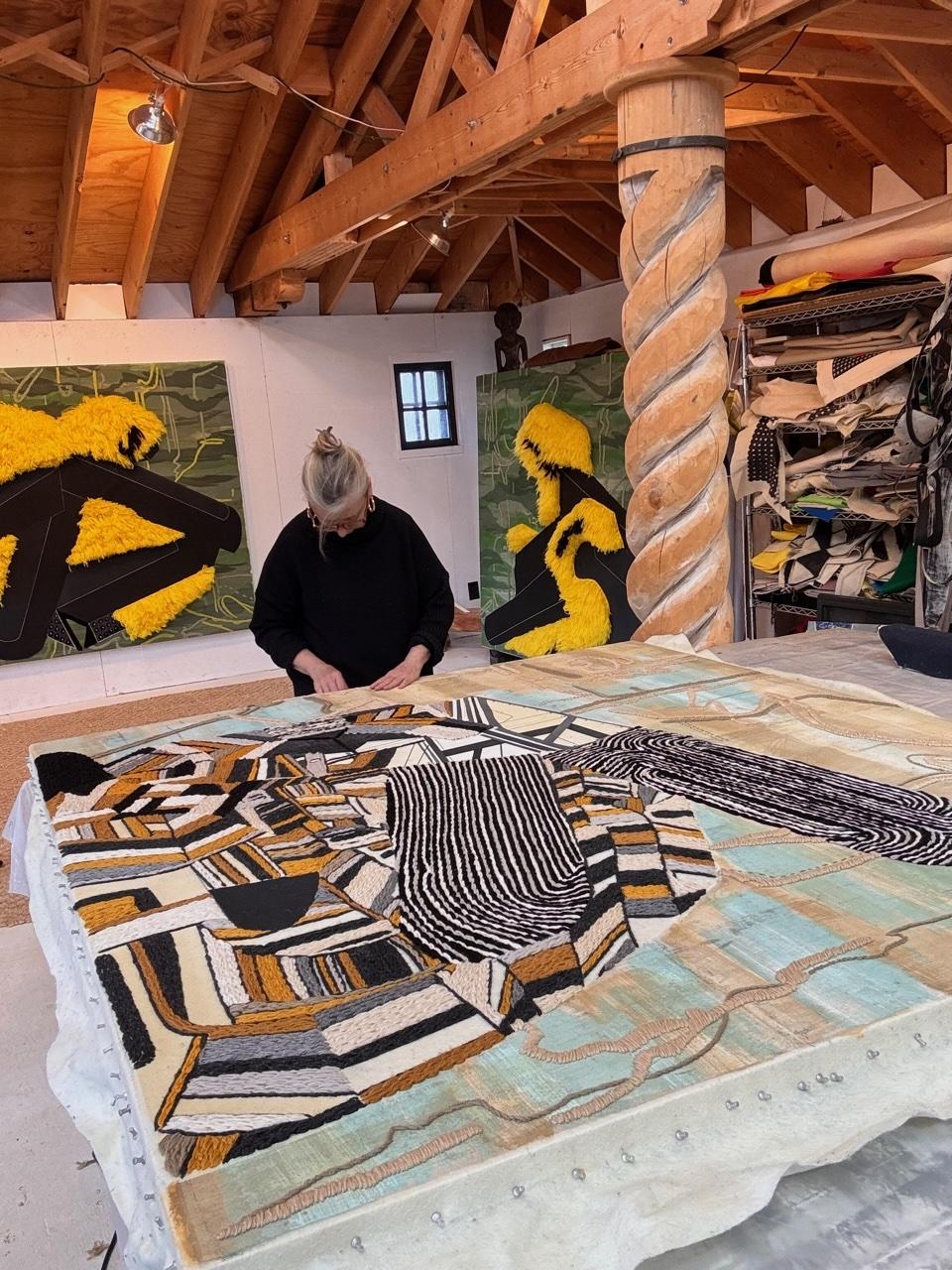
Sarah Amos in her studio

These wall reliefs—“operatic compositions” is an apt description—are layered with meaning. A mindboggling network of hand-done stitchery, similar to maps or pathways of history, resonate with the indigenous artwork of her homeland. Recently, the threads and yarn have been teased out from the surface in a cascade of growth in brilliant yellow, like some newly discovered life form. This larger work demands larger spaces, and higher prices, even more so now that Amos has conceived the new work in series of four—which creates a challenging situation for her gallerist, who would prefer to show one at a time, to test the market. 

Courtesy of Sarah Amos

Sarah Amos in her studio

The demands of current economic conditions put even well-credentialed artists in a difficult position. Many, including Amos, rely on teaching to fill in the gaps. Amos has held Visiting Artist positions back in Australia and in the U.S. at the College of Charleston's School of the Arts, Dartmouth, Bennington College, and Williams College in New England.

Amos currently has her work in several galleries but reflects on a trend that many other artists have begun to recognize. “The white cube gallery model is not working anymore. An artist can’t afford to have an exclusive relationship with a dealer.” The days when gallerists would invest in an artist, nurturing them while they built a career, seem to be over. Artists, by necessity, are becoming more entrepreneurial. Though, Amos is better positioned than most to handle the future. She has assembled a chronology of her work, beautifully photographed and documented in catalogues, waiting for the right space to accommodate them. When that offer of a museum retrospective comes her way, she will be more than ready.  

About the Author

Cynthia Close

Cynthia Close holds a MFA from Boston University, was an instructor in drawing and painting, Dean of Admissions at The Art Institute of Boston, founder of ARTWORKS Consulting, and former executive director/president of Documentary Educational Resources, a film company. She was the inaugural art editor for the literary and art journal Mud Season Review. She now writes about art and culture for several publications.

Subscribe to our free art newsletter!

Webform
Art and Object Marketplace - A Curated Art Marketplace