
Essay  October 5, 2026  Sarah Housh

What It’s Really Like To Be A Nude Figure Model

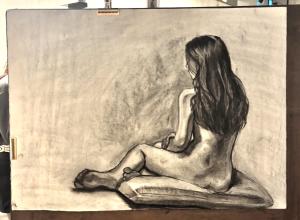
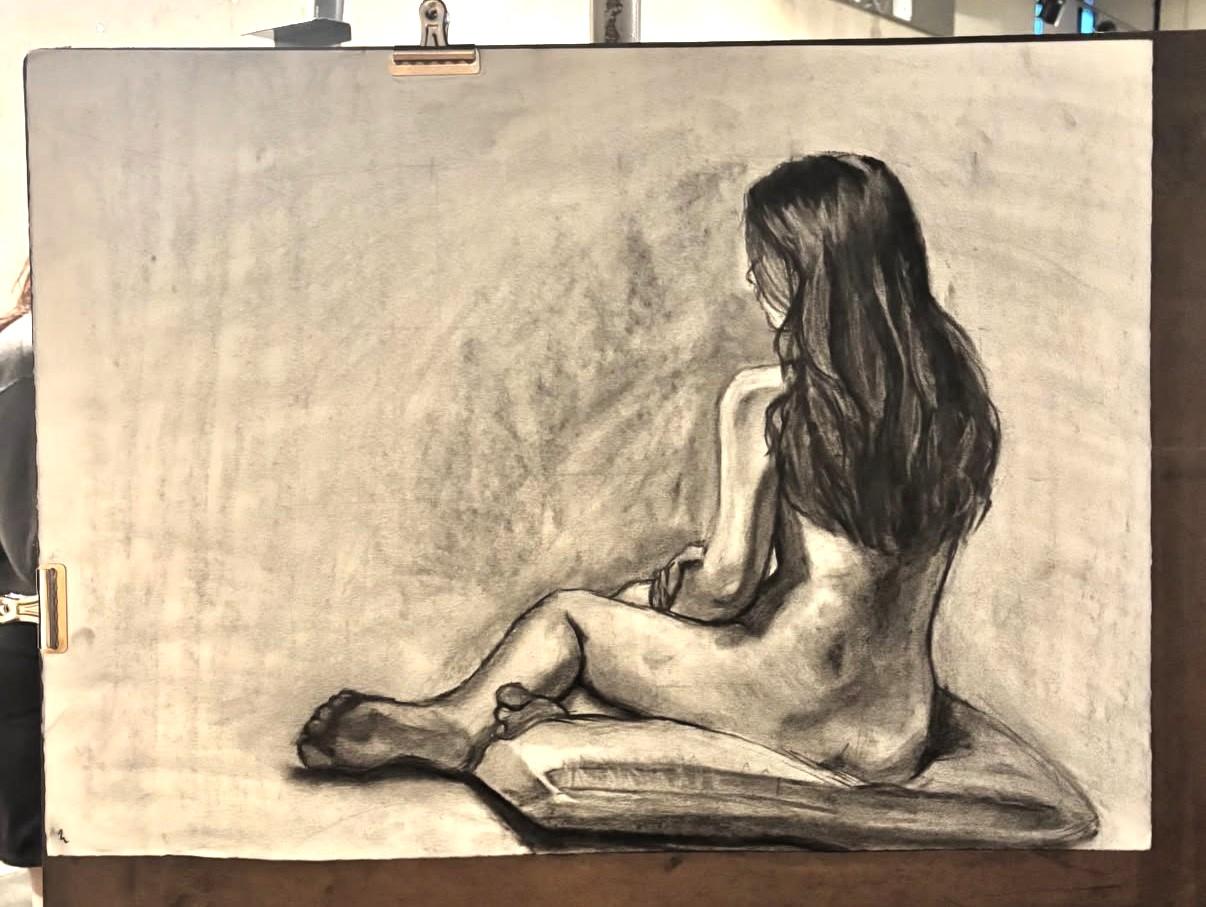
Photo by Sarah Housh/Artwork by an Eastern Illinois University student

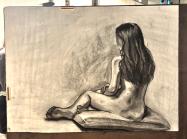
An Eastern Illinois University student’s charcoal figure drawing of Sarah Housh during a life-drawing session. 

One might naturally assume the hardest part of nude figure modeling is being at your most vulnerable, on stage in front of a room full of people, many of whom are complete strangers. However, I am an extrovert who loves to chat, and as absurd as it sounds, I consider the inability to speak, laugh, or react as conversations flow around me to be, by far, one of the most difficult aspects of the job. 

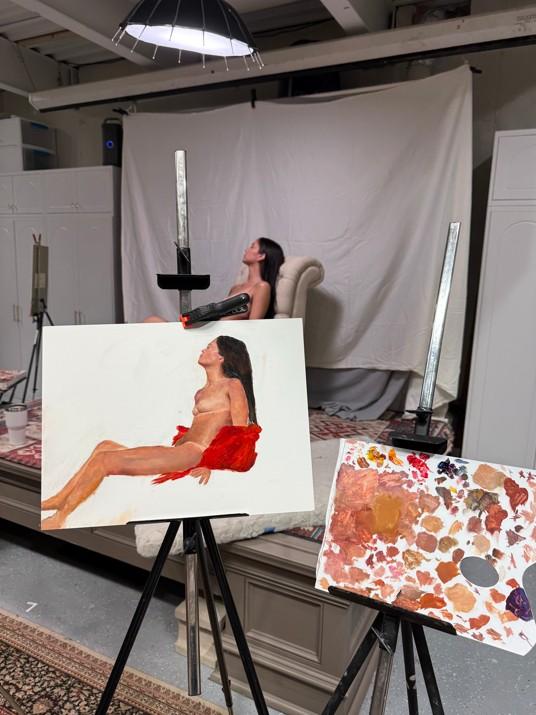
Photo by Saanvi Seela

Fine art model Sarah Housh poses during a four-day painting workshop led by artist Timothy Rees at East Oaks Studio in Cary, North Carolina. A student's painting of the pose is shown in progress in the foreground. 

Figure modeling requires total stillness for extended periods of time, most commonly 20- to 25-minute intervals followed by five-minute breaks. Remaining motionless as a muscle begins to ache, a strand of hair tickles my neck, or my foot slowly falls asleep poses—no pun intended—yet another challenge. A position that felt perfectly comfortable five minutes ago can suddenly become excruciating. 

Meanwhile, there’s a room full of artists studying you closely enough to notice the precise angle of your shoulder or the way the light casts shadows across your skin. Many people might be averse to that scrutiny, but for me, it is simply routine feedback on my job performance—no different from a supervisor pointing out a typo on a PowerPoint slide. 

Despite the physical challenges, I have found figure modeling to be one of the most rewarding jobs I’ve ever held. As an art history student, I have long been accustomed to studying the human figure from the viewer’s perspective, whether painted, drawn, sculpted, or otherwise. Over time, however, I grew curious about experiencing that relationship from the opposite side of the easel. Rather than studying figurative art, I wanted to be the figure. I wanted to know what it was like to be the girl inside the painting, to have a literal sculpted body, to be the eyes that follow you across the room. Of course, getting there required taking my clothes off. 
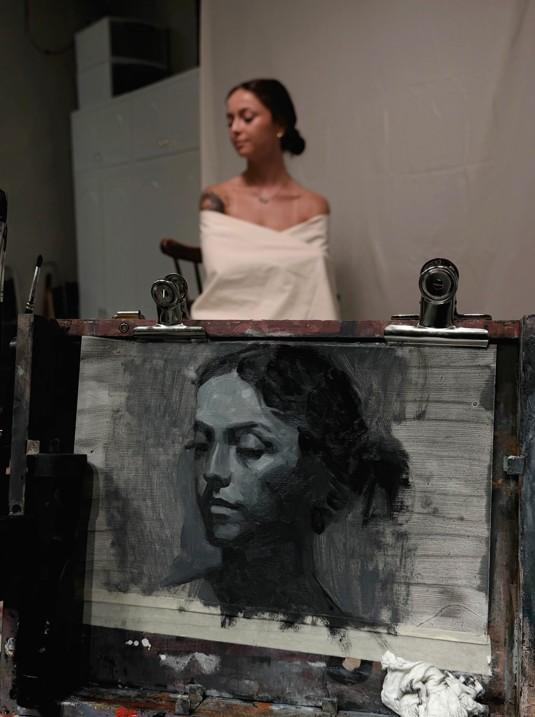
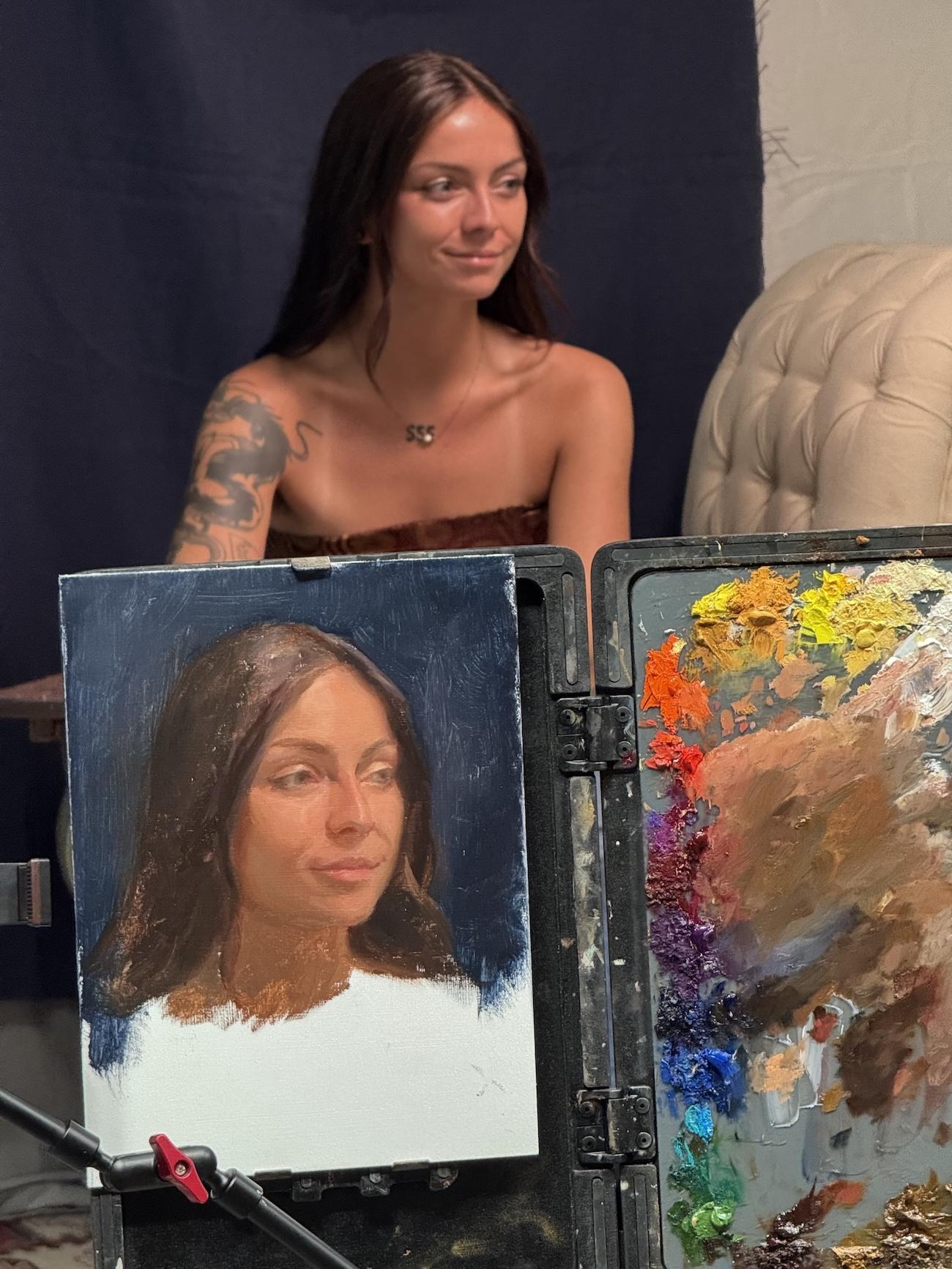
Photo by Jacob Duncan

Sarah Housh poses during a portrait modeling session at East Oaks Studio in Cary, North Carolina. Artist Jacob Duncan’s portrait of the pose is shown in the foreground.

Surprisingly, that part never really bothered me. I approached my first session confidently, and any expectation that posing nude would feel embarrassing or uncomfortable disappeared almost immediately. If anything, I found the experience far less vulnerable than it appears from the outside. In a figure studio, nudity is simultaneously the most obvious thing about the model and one of the least remarkable things in the room.  

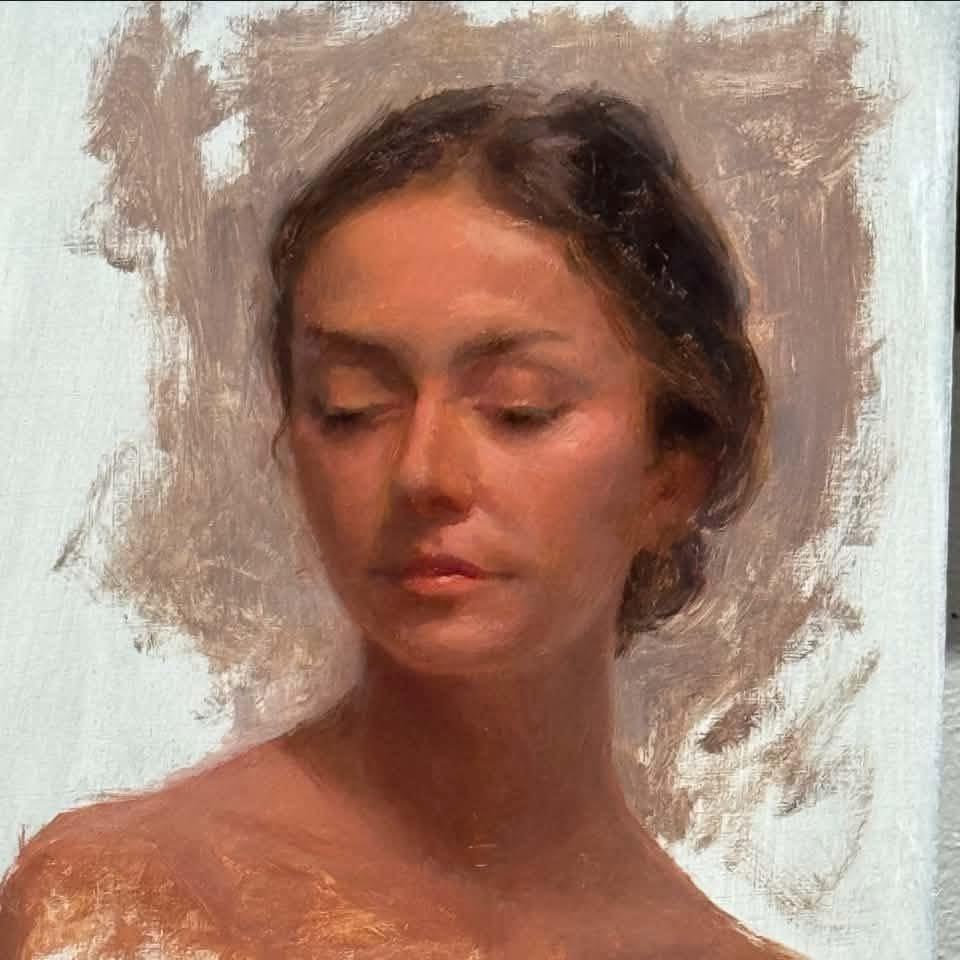
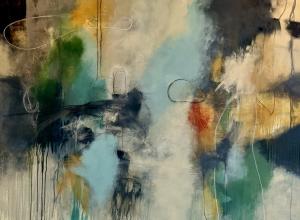
Painting by Louis Carr

Portrait of Sarah Housh painted by artist and East Oaks Studio co-founder Louis Carr during a portrait session at the Cary, North Carolina, studio. 

Once the timer starts, I am usually more concerned with whether the pose I have chosen will still feel like a good idea 20 minutes later. Part of becoming a better model has been learning that a pose can be visually interesting without being complicated. A slightly raised arm or too much weight on one leg may seem harmless at first, but the body has a way of making you regret those decisions. 

Not to mention, after every break, I have to return to the same position as closely as possible, remembering where I placed my hands and feet, how I turned my head, and where my weight was distributed. A change that feels insignificant to me can be much more obvious to an artist who has spent the past hour studying that exact pose.

One of my favorite parts of modeling comes afterward, when I finally get to walk around the room and see what everyone has created. I am always fascinated by how differently each artist sees the same person. From the same pose, one might emphasize color while another focuses on anatomy, gesture, or light. Sometimes, the result looks remarkably like me. Other times, I have to remind myself that I was the person sitting for it. 

Seeing myself through so many sets of eyes has also changed the way I approach figurative art as an art history student. Before modeling, I came at these works from one side: the painting on the wall, the drawing on the page, the sculpture on the pedestal. Now, I am much more aware of the person who existed before the artwork did. 

Photo by Louis Carr

Sarah Housh sits for a portrait session with artist and East Oaks Studio co-founder Louis Carr in Cary, North Carolina. 

I often find myself wondering about the ordinary details that art history cannot always preserve. How long did someone hold that pose? Were they comfortable? Did their foot fall asleep? Were they listening to conversations they desperately wanted to join? These are admittedly not the questions most likely to appear on a museum label, but they are questions I did not think to ask until I became a model myself. 

I originally started modeling because I wanted to experience figurative art from the opposite side of the easel. I still love being on the viewing side, but now, when I look at a figure in a work of art, I see something I did not quite see before: the real person who had to hold still long enough for the artwork to exist.

About the Author

Subscribe to our free art newsletter!

Webform
Art and Object Marketplace - A Curated Art Marketplace