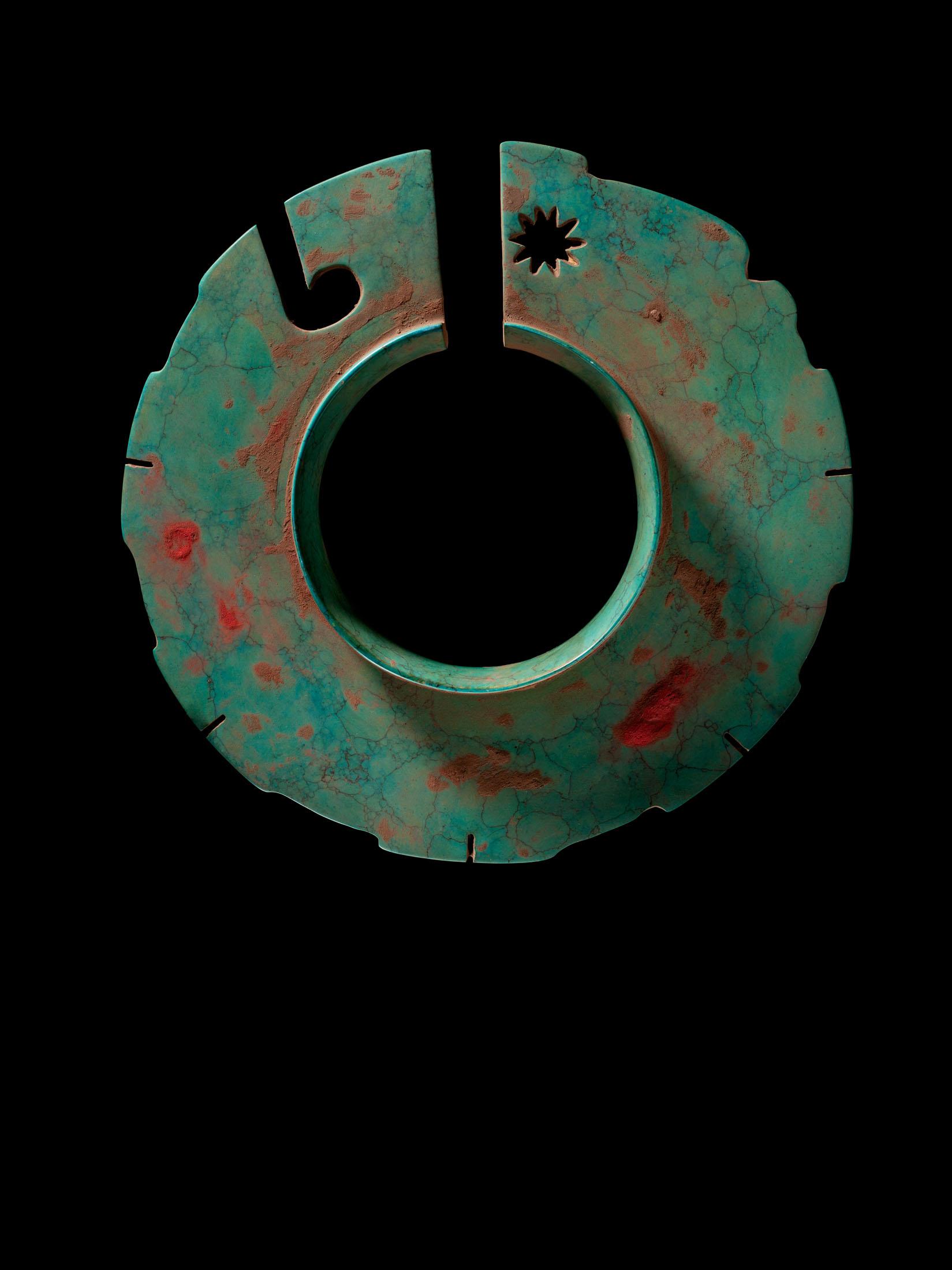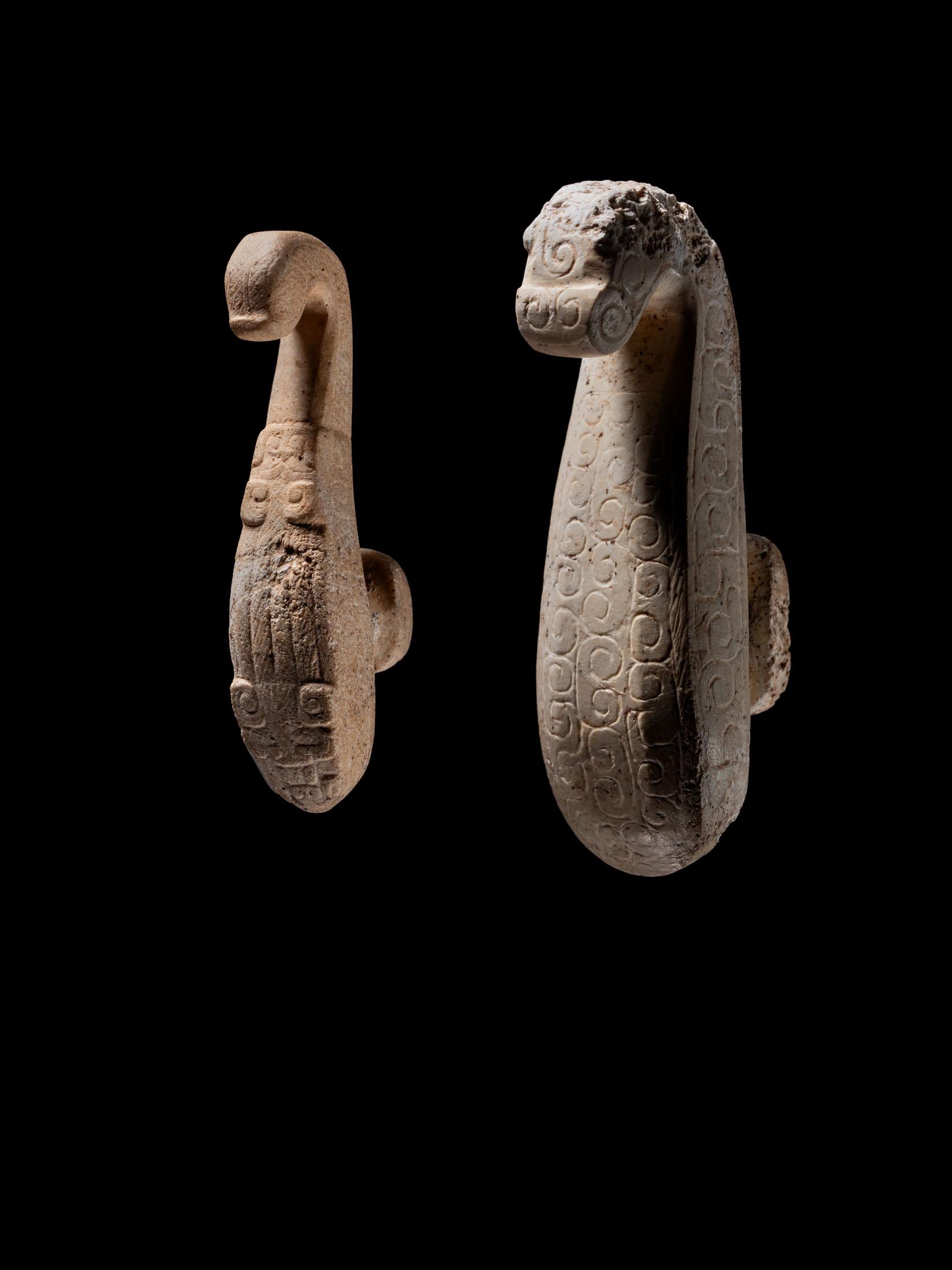


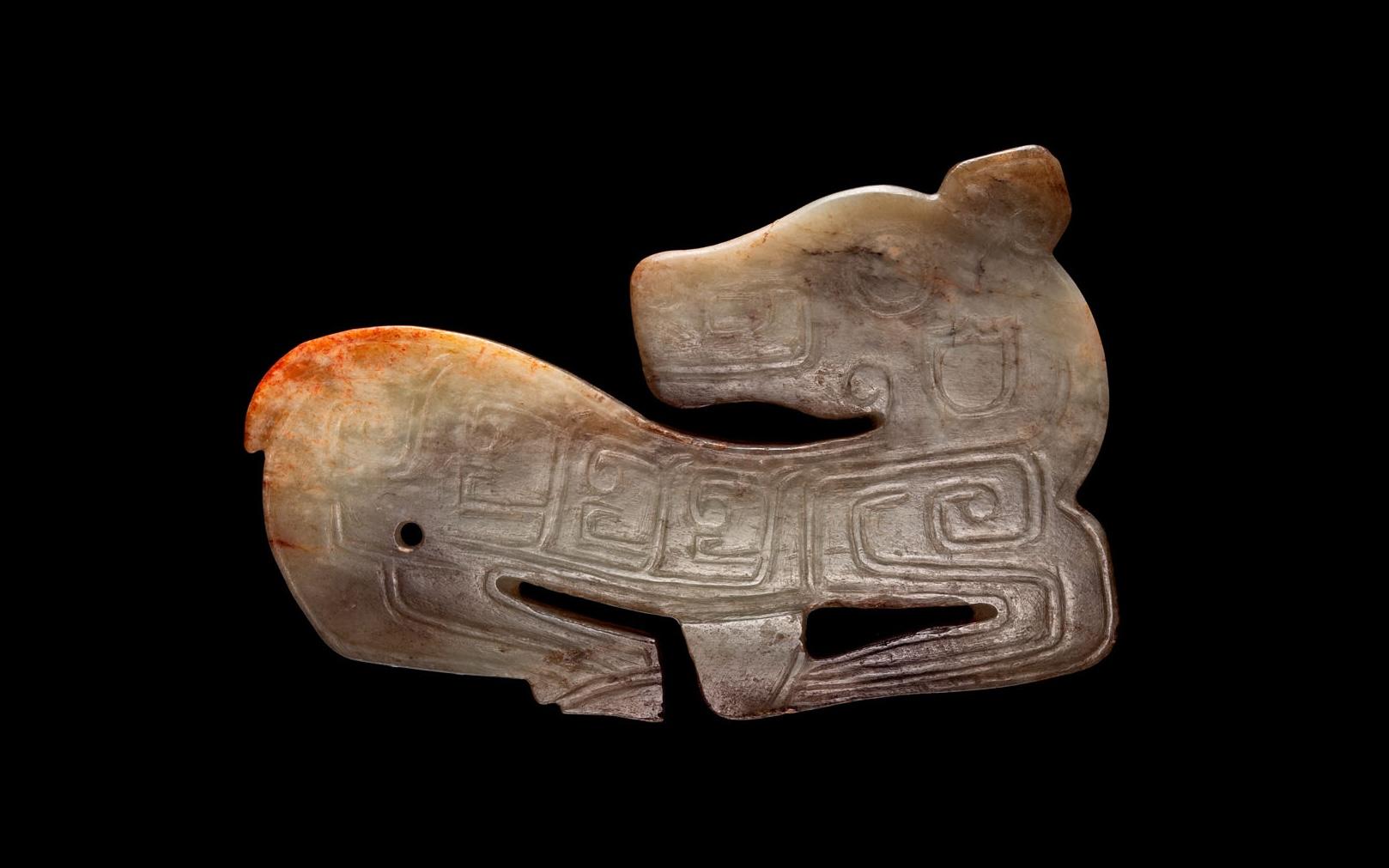
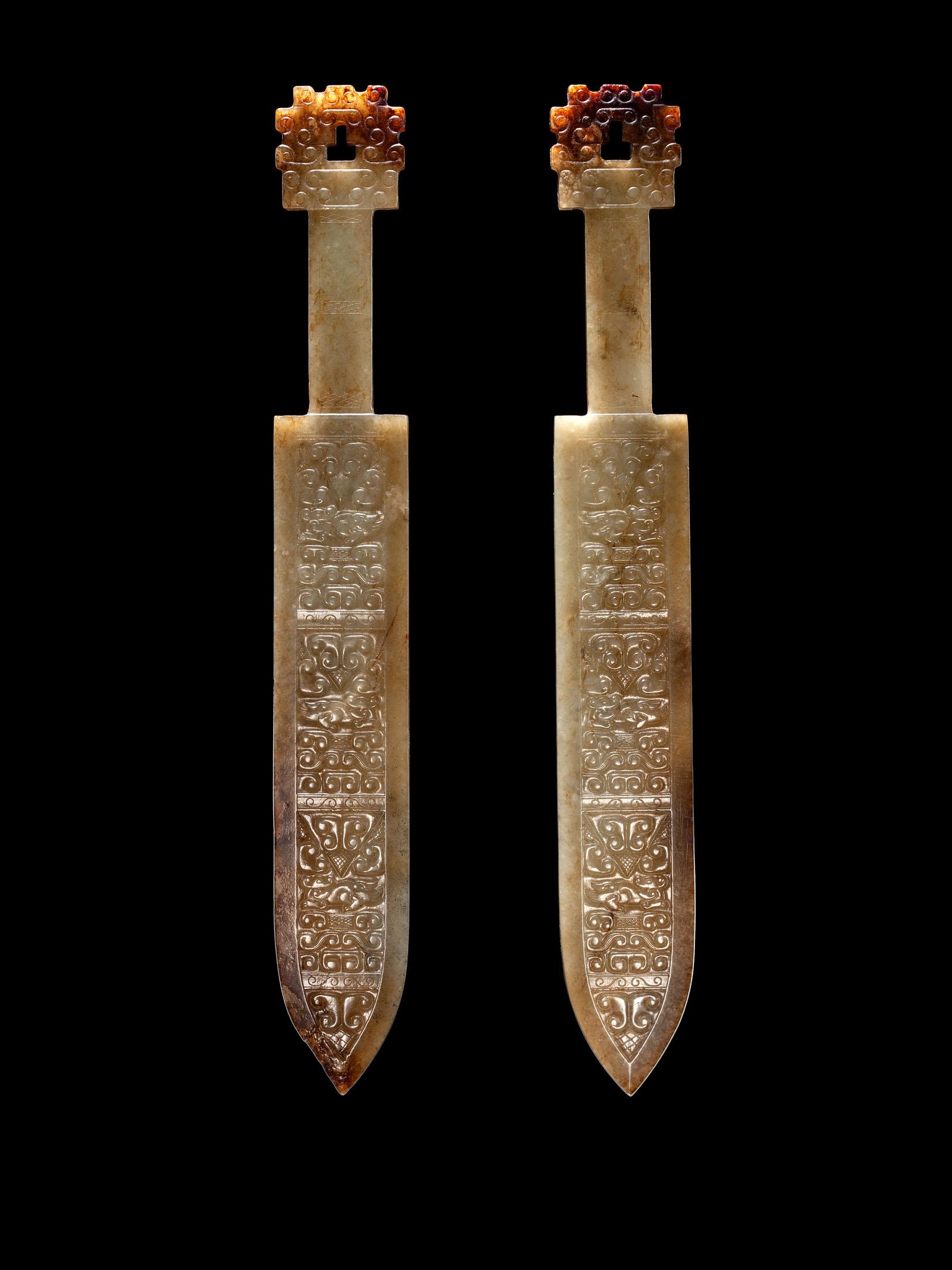
Laboriously and finely carved, the jade ritual objects, ornaments, and utilitarian objects on view are imbued with considerable meaning. These small sculptures are mystical, yet timeless, witnesses to the beginnings of a great civilization. The carvings were meant to be held and remain inviting, all but asking to be handled. Their beauty leads one to understand the Chinese proverb, “A gentleman does not part with his jade without good reason.” Likewise, there is a telling verse from the Chinese Book of Poems, “Thinking of the gentleman, he is as gentle as jade.”
Jade has long been prized. The lengthy Zhou era was central to the development of Chinese civilization when the arts flourished, including, prominently, the carving of jade. The origins of Chinese jade carving can be traced back 8,000 years, when jade objects were primarily tools and simple ornaments. During the late Neolithic period ritual objects were fashioned from jade, including the cong and the bi, whose shapes represent jade’s association with concepts of heaven and earth. During the Shang Dynasty (1600-1046 BCE), jade objects served theocratic rule.