
Gallery  September 29, 2026  Camille Brown

The Art of Hurricane Katrina at The Phillips Collection

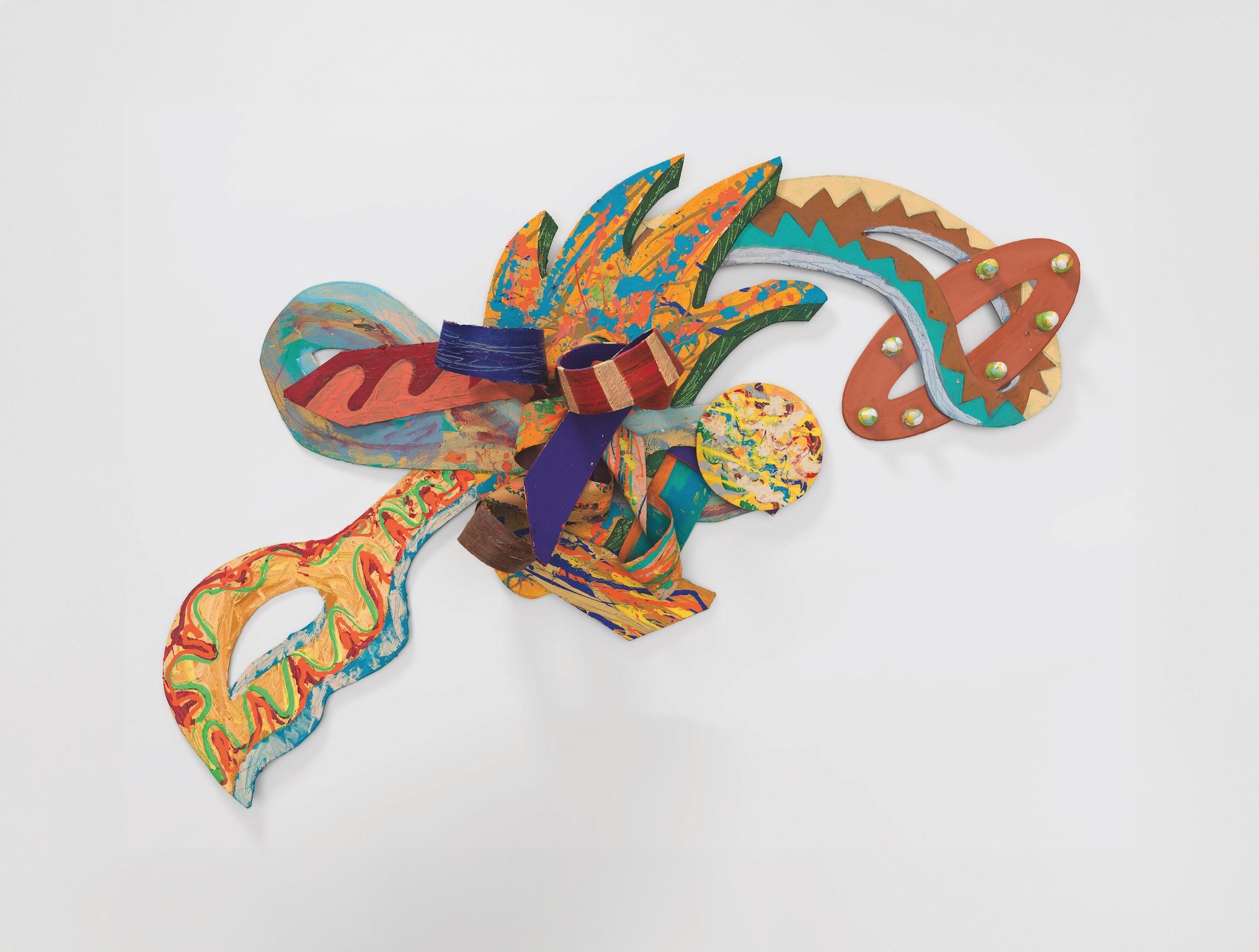
Courtesy of The Phillips Collection

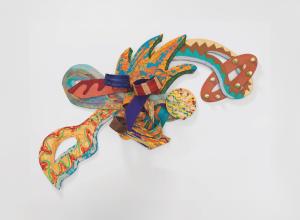
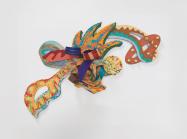
Kevin Cole, Embracing Wisdom, 2006. Kevin Cole used satellite images of Katrina’s path as the inspiration for this work’s shape.

On August 29, 2005, Hurricane Katrina made its second landfall as a Category 4 hurricane, tearing through southeast Louisiana and Mississippi. Whereas New Orleans, situated below sea level, avoided the brunt of the storm winds, the levees containing waters from Lake Pontchartrain and Lake Borge were overwhelmed by the rainwater and storm surge. By the afternoon, 20 percent of the city was underwater; by August 31, that number had risen to 80 percent. In the storm’s wake, tens of thousands of residents were left stranded and without resources, and over a thousand people had died. The impacts of Katrina reverberated nationally and internationally, due in part to the highly visible failure of the federal, state, and local responses. Simultaneously, debates emerged about the role of race in both media responses to the storm and governmental preparedness. The storm itself became part of a distinctly American legacy, one that treads racial, political, and environmental lines.

In the 20 years since Katrina’s devastation across the Mississippi Delta, artists have grappled with the storm’s enduring impact and what it revealed about the American political and cultural fabric. Three such works are on view in Out of Many: Reframing an American Art Collection, an exhibition at The Phillips Collection in Washington, D.C., that reflects on the beauty and complexity of the American experience. Drawing from the museum’s permanent collection alongside works from the historic collections of African American art at Howard University Gallery of Art, The David C. Driskell Center, and other institutions, the exhibition spans the early 20th century to the present, showcasing how generations of artists have interpreted the people, cultures, geographies, and layered histories of the United States. By revisiting Hurricane Katrina, a devastating chapter in the nation’s history, artists confront the storm through works that reflect on trauma, displacement, and resilience.

David C. Driskell Center, Permanent Loan from the David C. Driskell Collection

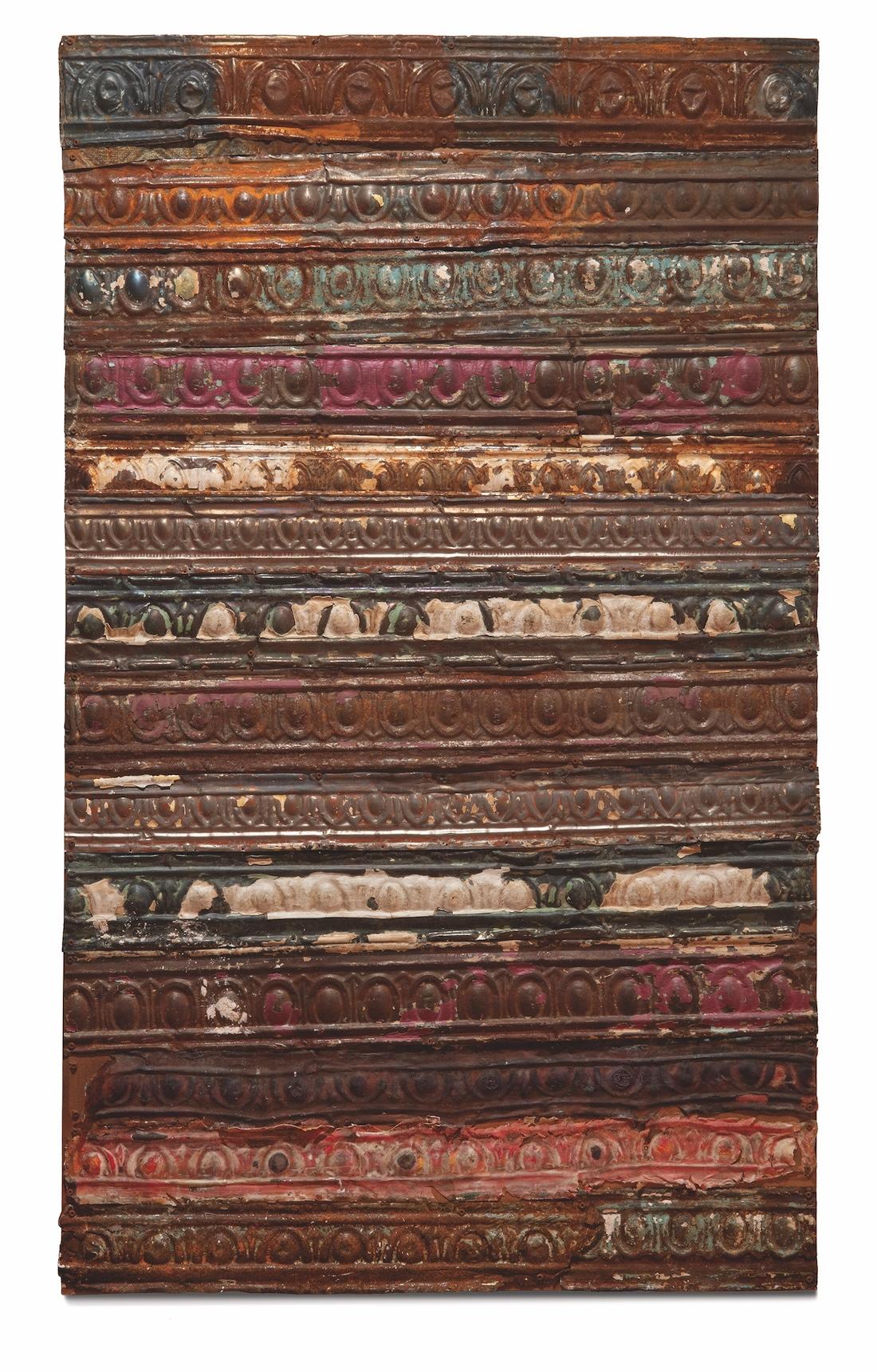
Jefferson Pinder, Katrina, 2005.

Artists Kevin Cole and Jefferson Pinder blend abstraction with materiality in their depictions of the storm. In his 2006 mixed-media assemblage, Embracing Wisdom, Cole replicates a satellite image of Hurricane Katrina. Inspired by conversations with families and friends living in the city at the time, Cole’s work traces, in part, a grid of the Ninth Ward, a neighborhood hit particularly hard by the storm. Bold colors punctuate the assembled shapes, which include folded men’s ties that allude to the legacy of racial violence in the United States, pointing toward contemporaneous criticisms that the poor response to the storm was due to structural and institutionalized racism. Toward the top of the sculpture, the artist uses seven doorknobs recovered from the storm. For Cole, the work responds to the mass evacuations of New Orleans residents to cities across the South, including Georgia, where the artist is based.

Jefferson Pinder, whose practice spans disciplines and considers issues of race, ethnicity, and class, traveled with a group from the University of Maryland to New Orleans to help local artists rebuild their studios after the storm. During his trip, Pinder collected pieces from the dilapidated houses left in the hurricane’s wake to create his mixed-media assemblage Katrina (2006). Created with strips of housing remnants spotted with rust and chipped paint, evidence of the intense battering inflicted by the storm, Katrina evokes the hard-edge abstraction of the 1950s and 1960s. His use of materials sourced directly from the storm’s aftermath functions as a memorial to the homes lost in the destruction of Katrina. A blend between found object and assemblage, the work materializes the experience of loss.

In 2006, artist Kara Walker, whose work explores race, gender, violence, and sexuality, curated an exhibition at the Metropolitan Museum of Art that brought her own work into conversation with objects drawn from the museum’s collection. As she explained at the time, “This show is not simply about the American South or Hurricane Katrina, although it was inspired by the effect of the chaotic storytelling that erupted in the media during the long, ugly aftermath. I pieced this show together as an attempt to think about visual representations of Black life, in particular, but not exclusively, as it is shaped and transformed by external forces such as the sea, the slave trade, and the failure of retaining walls.” 
Courtesy of The Phillips Collection, Washington, DC, Gift of Julia J. Norrell, 2015

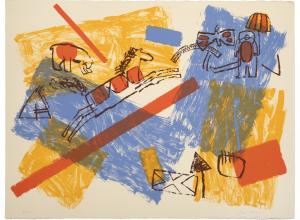
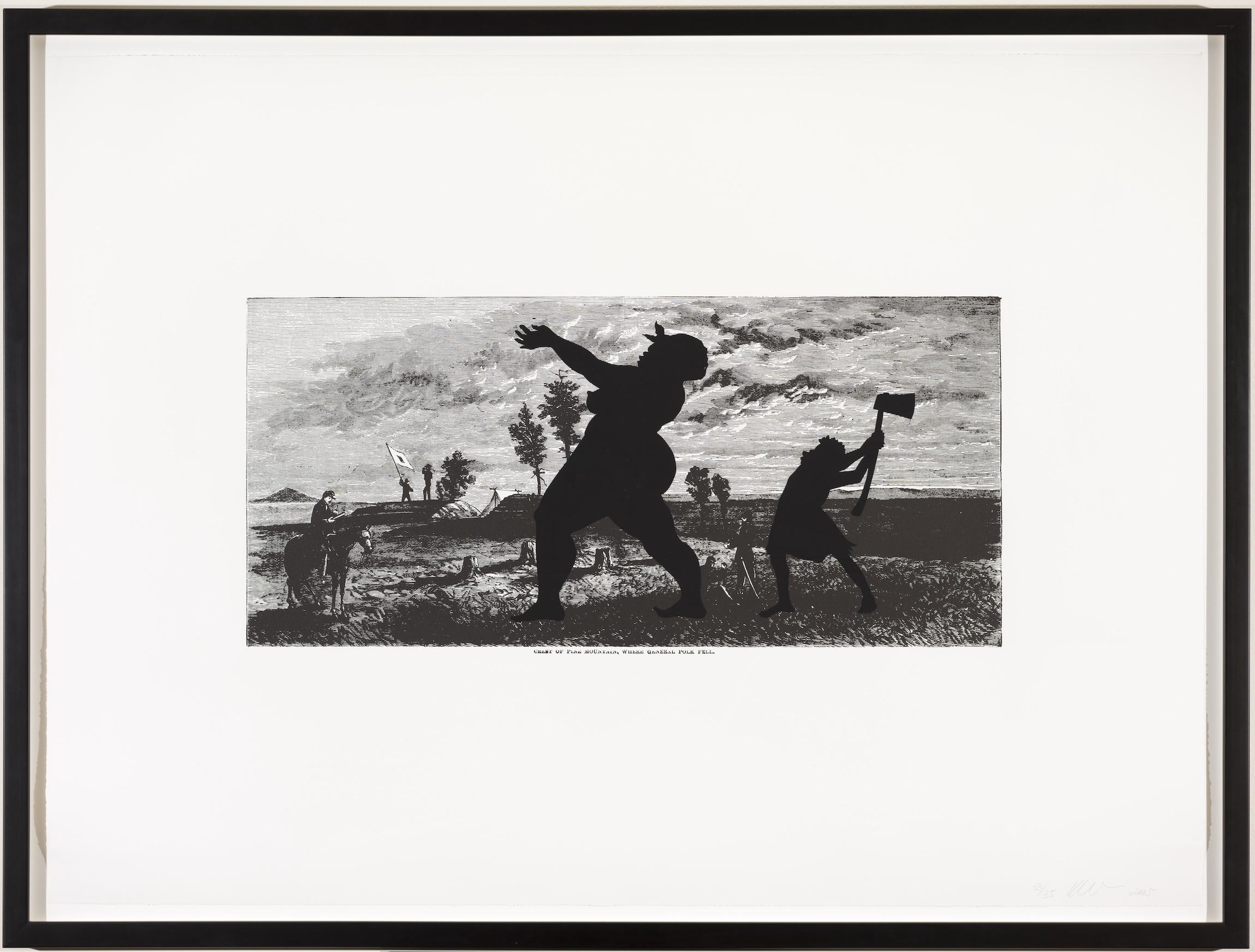
Kara Walker, Crest of Pine Mountain, Where General Polk Fell, 2005, Offset lithograph with screenprint, 39 x 59 in.

Walker’s installation featured works from her Harper’s Pictorial History of the Civil War (Annotated) series, including Crest of Pine Mountain, Where General Polk Fell (2005). Walker inserts two Black women into a scene depicting the Confederate lieutenant general Leonidas Polk, who was killed by Union forces in 1864, underscoring the historical presence of Black women. These images in many ways act as foils to those of the devastation of Hurricane Katrina by foregrounding the agency of Black Americans within historicized narratives.

Hurricane Katrina was an event seared into the collective consciousness, a demonstration of the frailty of our environment and the fragility of life. Work related to the hurricane has been collected by institutions across the country, including The Phillips Collection, recognizing Katrina and its legacy as a distinctly American phenomenon, geographically and politically. The impact was monumental, both because of the mass destruction and devastation it caused as well as for what it revealed about the nation’s weaknesses, prejudices, strengths, fears, and resilience. The tragedy of Hurricane Katrina illustrates how artists respond to the nation’s most urgent social and environmental crises. Taken together, they offer an opportunity to reframe our under- standing of American Art, and, in turn, a vision  of the nation itself.

*This article originally appeared in Art & Object Magazine's Winter 2026 issue.

About the Author

Subscribe to our free art newsletter!

Webform
Art and Object Marketplace - A Curated Art Marketplace