Folk art reflects the stories of survival and heritage among often underrepresented peoples. Its distinction as being a separate entity from fine art was originally due to the class structure of European society since it was classified as “an expression of the common people” in 1932 by Holger Cahill, then-director of the MoMA. Until the 1960s, Folk art was seen as a reflection of the primitiveness of lower social classes, often those disenfranchised by historical and institutional discrimination and lack of access to resources, according to art historian and educator, Elizabeth Manley Delacruz. In the early 1970s, museums and galleries began integrating quilts and other pieces of Folk art with fine artworks. Yet Folk art’s identity struggled to break away from the colonial lens of otherness that had been ascribed to it.
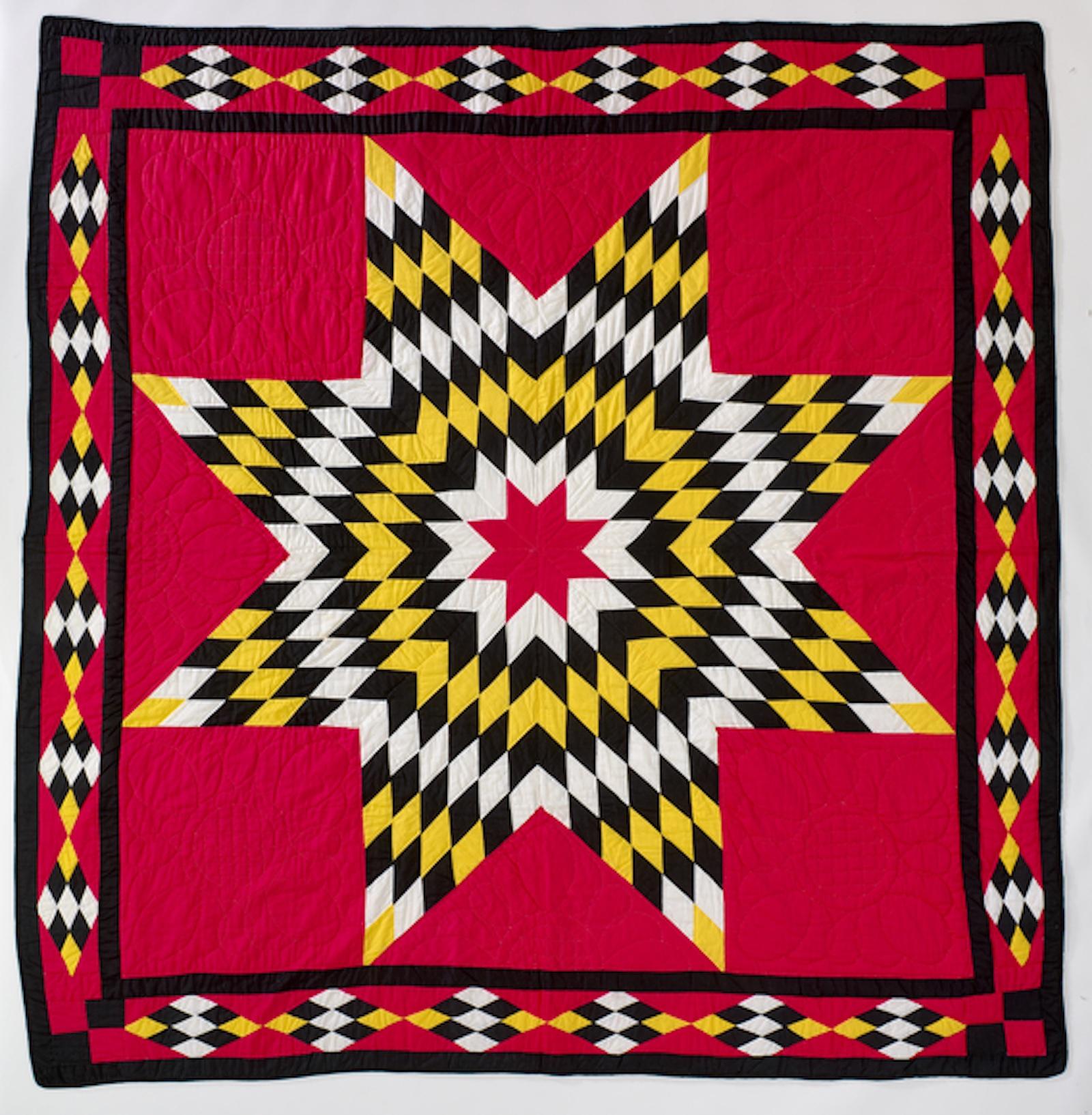
Grace Zimiga, Sundance Star, 1968-1980. Cotton, muslin, and thread, 61.1 x 88.8 in. (155.3 x 225.7 cm.),