

Gallery  August 17, 2026  Michael Klein

Examining Dan Flavin’s Grids of Color and Light

WikiCommons

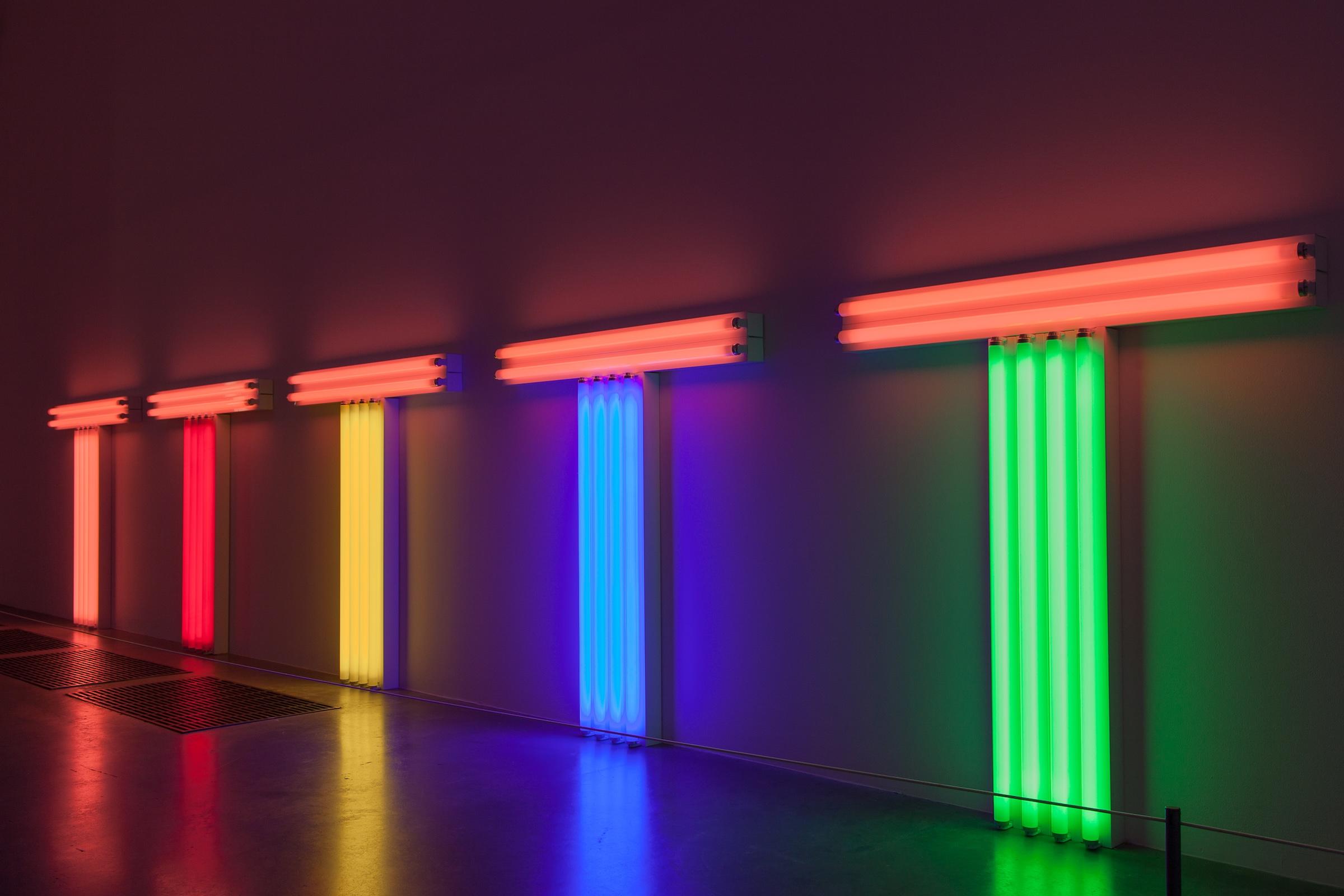
Dan Flavin, Untitled (to Don Judd, Colorist) 1–5 (1987), Tate Modern, London, UK. License

My first exposure to Dan Flavin’s classic fluorescent works was in 1969 at the Whitney Museum of American Art. As a young student, I was mesmerized by the exuberant colors and equally puzzled by the use of commercial lighting. Art or hardware? 

All these years later, Flavin’s work still intrigues many with both its understated beauty and its simple engineering. An exhibition of his grids—Dan Flavin: Grids, currently on view at David Zwirner’s Hong Kong Gallery through September—is a series that began in 1976. With many works dedicated to his dealer, Leo Castelli, these grids are statements both about the character of Minimal art and the rich diversity in its creation. 

WikiCommons

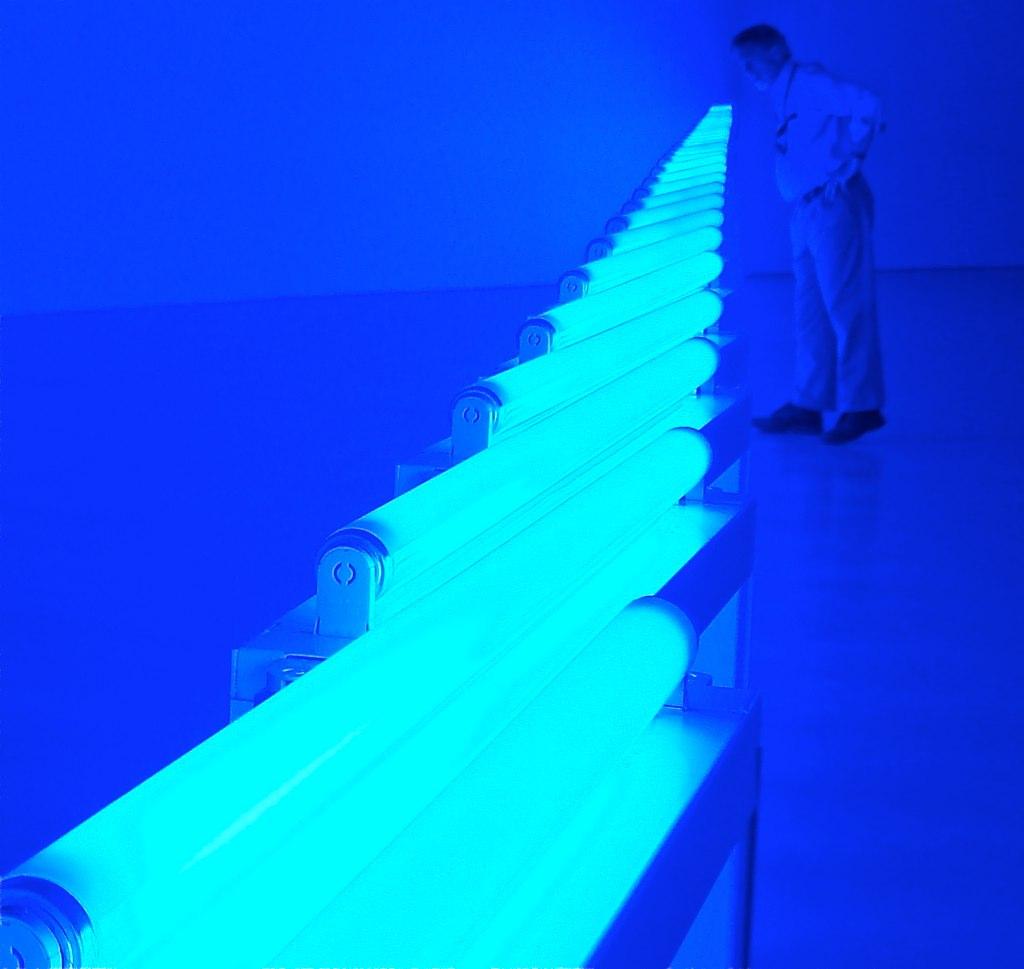
Dan Flavin installation at the National Gallery of Art, 2012. License.

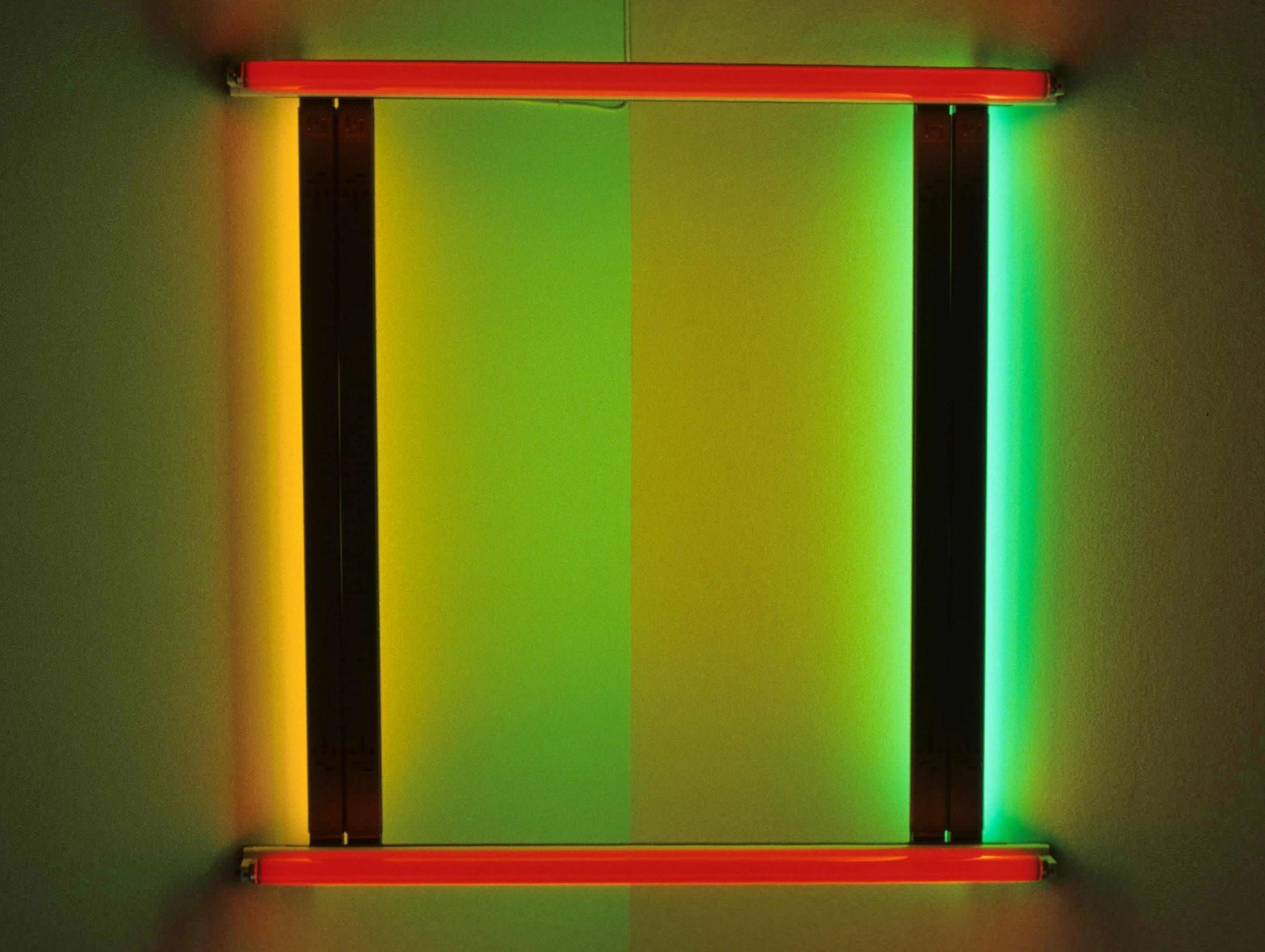
They range in scale from monumental to more intimate works, but all exhibit the bright and dramatic light that is their very constructed nature. The color is twofold: that which is emitted from the front-facing bulbs, and the background light, which is reflected onto the corner wall from rear-facing bulbs.

Of his work, Flavin has said, “The grid has a rich contrast, front over rear, and an optical interplay…all modified by reflected color mixes and shadows of the grid structure itself. As an ensemble, this intense fluorescent light-use abuse seems to me to be rare in my production.” 

The grid was the visual vehicle for the generation that launched Minimal art; it is the simple structure to counter the discordant brushwork and expressionism of an older generation of artists. The grid is about balance, harmony, and a level of equality. The grid is universal and understood by all. And, as defined by the dictionary, a grid is a network of lines that cross each other to form a series of squares or rectangles. It’s the perfect description of a work of Minimal art.

WikiCommons

Dan Flavin, Untitled (to Bob and Pat Rohm), 1980. License.

Like a Rubik’s Cube, there are seemingly endless possibilities here in terms of color combinations and dimensions of the grid. But, beyond the physical nature of the work, there is the effect of the lighting, as Flavin said, “The lights can be glorious, the effects ecstatic.” Flavin often used both terms almost in the sense of religious transport. It is this dichotomy between the physical character of the work lighting from a hardware store and the moving and mysterious quality of lighting that captures viewers' attention.

22.283070206508, 114.1553677

Dan Flavin: Grids
Start Date:
May 28, 2026
End Date:
September 12, 2026
Venue:
David Zwirner, Hong Kong
City:
About the Author

Subscribe to our free art newsletter!

Webform
Art and Object Marketplace - A Curated Art Marketplace