
Christie’s led the season with $1.5 billion in sales, while Sotheby’s followed with $908.6 million and Phillips with $146 million—each up 82% to 116% from last year. The centerpiece of Christie’s offerings was a 16-lot collection assembled by Newhouse that fetched $630 million and far surpassed its presale estimates.
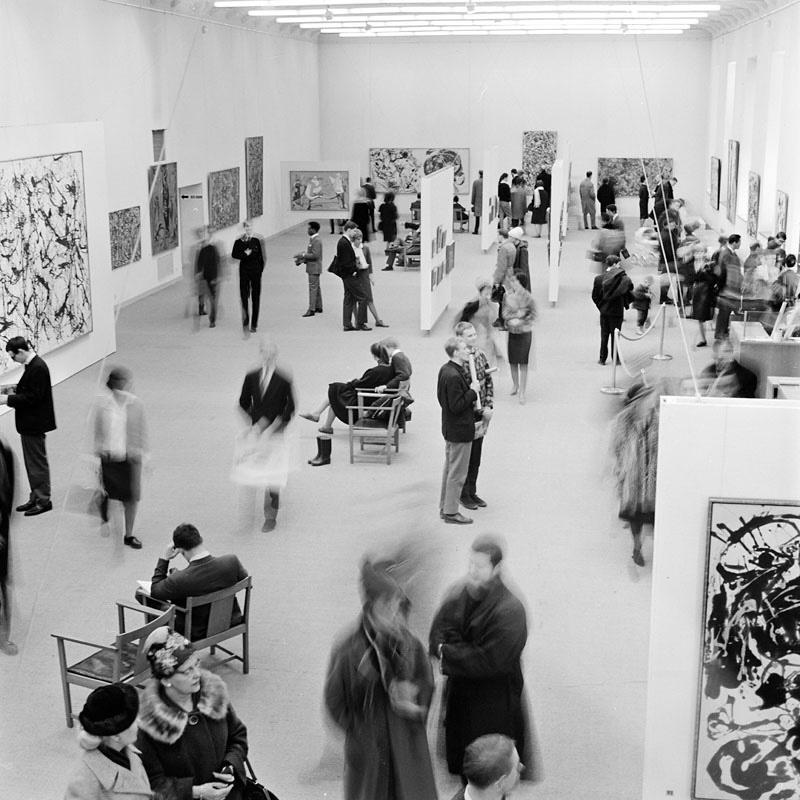
Pollock’s Number 7A, 1948, which was painted on the floor of an East Hampton barn in 1948 and is the earliest of his drip paintings to come to auction since 1961, sold for $181 million after a seven-minute bidding war. Newhouse had acquired the painting in 2000 for $32 million ($61.8 million adjusted for inflation). Constantin Brâncuși’s gold Danaïde sculpture brought $107 million, and Rothko set a new auction record with No. 15 (Two Greens and Red Stripe) at $98.4 million. Sotheby’s sold another Rothko for $86 million.
Yet, more than half of the lots in the spring evening sales carried third-party guarantees, meaning that auction houses effectively pre-sold $1.4 billion worth of art before a single paddle went up. Under these arrangements, a financial backer commits to purchasing a work at a set price, and if a competitive bidding surpasses that figure, the backer earns a financing fee instead. Third-party guarantees significantly reduce risk for auction houses such that the outcomes for many of their most expensive lots are never really in doubt.