



Studio  March 31, 2026

Creative Director Robert Ross on Collecting Prints

Courtesy Robert Ross

Robert Ross

I’d always been interested in Northern European painting, the earliest practitioners like Jan van Eyck, Rogier van der Weyden and all the supernumeraries that circulated around the Eyckian solar system—painting and sculpture from the Netherlands and Germany between 1330 to 1520 or so. As a painter myself during college and after, I had a great interest in the technical underpinnings as well as the subject matter.

I realized I’d never be able to acquire paintings of significance, but I discovered that there were these people called painter-engravers. Guys like Albrecht Dürer and Martin Schongauer did both painting and printmaking, and as I got deeper into it, I found that their prints were the best things about them, even more so than for Goya or Picasso. I realized you can actually buy a masterpiece, a small masterpiece.

When I started visiting print rooms in European and American museums and studying the reference books, I learned that there was a finite number of images from Northern Europe in the 15th century, about 3,000 by about 80 hands, most of which are anonymous. It became a kind of rabbit hole to go down. You start to think about what was done on a such a minute scale. I love it when there’s an inverted relationship between scale and grandeur. 

It was around 30 years ago when I started collecting. When I went to my first International Fine Print Dealers Association show in New York, I had long hair and wasn’t smoking a pipe or wearing a tweed jacket, so I suppose I got short shrift from some of the established dealers. One of them, though, Paul McCarron, was very kind and sold me a Lucas van Leyden Deposition, not terribly expensive, and it got me hooked and proved I could do it. 

The reality is that this kind of material isn’t thick on the ground anymore. What makes it fascinating is when you find a print that turns out to be the only example in the world that’s not in an institution. It’s sort of like going after big game—even though it's very tiny game.

Courtesy Robert Ross

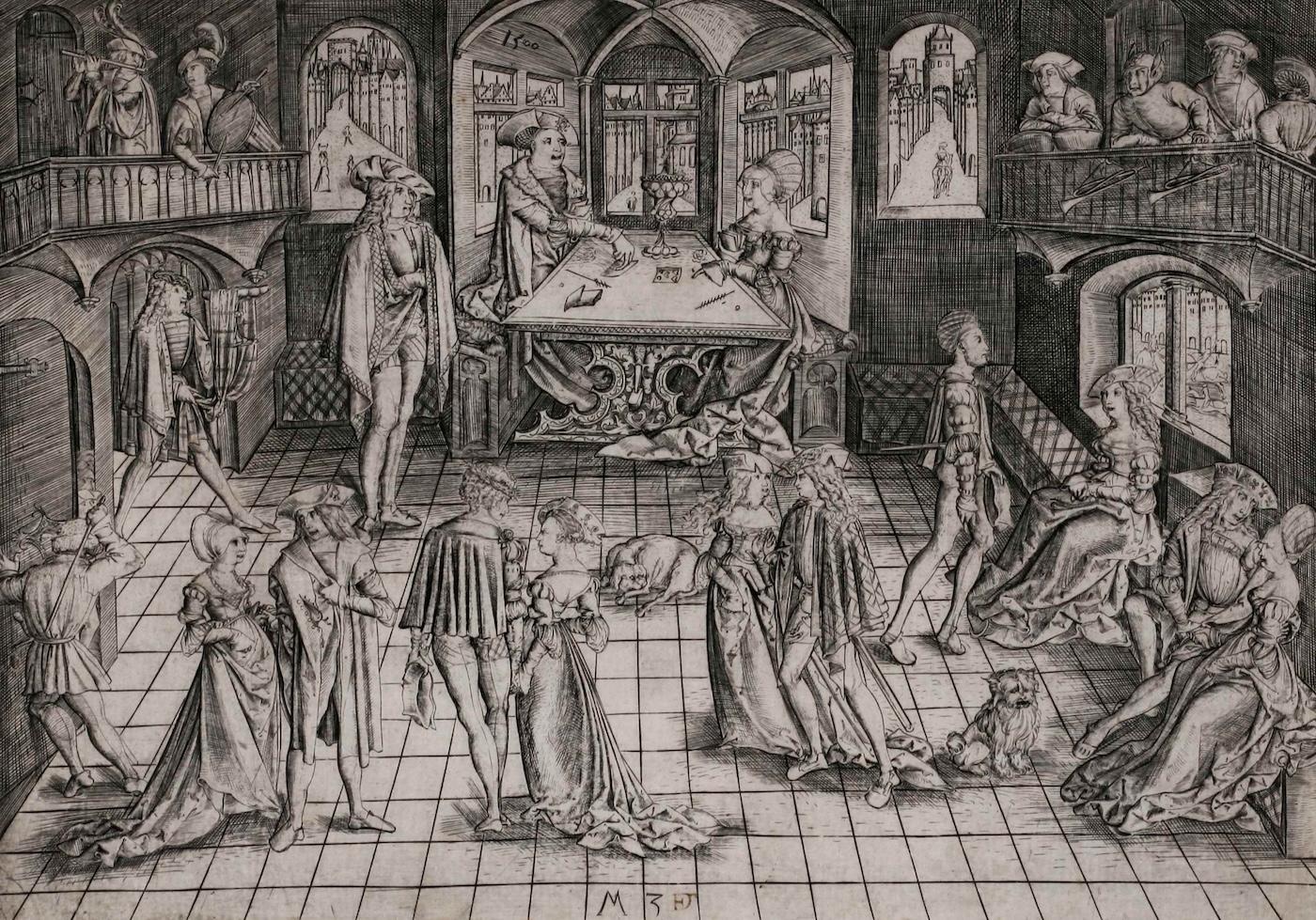
MZ, The Ball, 1500 (detail).

HOMETOWN/RESIDENCE:
Los Angeles.

OCCUPATION:
Creative director.

MAIN AREAS YOU COLLECT:
Northern European prints pre-1520, objects from Oceania.

MOST RECENT WORK YOU BOUGHT:
A Schongauer roundel, bought in 2023. It’s got some great old German provenance, a charming little print that encapsulates the whole ethos of Schongauer’s era because it’s imaginary heraldry—a Moor holding a couple of escutcheons, with a griffon and a rooster’s claw. You can’t make this stuff up. 

THE ONE THAT GOT AWAY:
In 1997, the dealer Nicholas Stogdon had an exhibition at Kennedy Galleries in New York. He had a print I wanted, The Crucifixion by Master IAM of Zwolle. I was talking to Nick and another dealer, Frederick Mulder, walked up and interrupted. I demurred, and after he was gone, I said to Nick, I want to buy this print, and he said he’d just sold it to Mulder! I learned my lesson: don’t be polite or deferential.

FAVORITE PIECE IN YOUR COLLECTION:
An Israhel van Meckenem of rabbits roasting a hunter on a spit. There are so very few of them, and this is unquestionably the best in the world. 

YOUR ADVICE FOR NEW COLLECTORS:
I’d say pick a field where you can actually explore, not something so picked-over that there’s nothing left. Something like German Romantic prints and drawings from the late 1700s through mid-1800s. That stuff’s accessible, affordable and utterly exquisite. Find something that other people aren’t clamoring to own.

*This article originally appeared in Art & Object Magazine's Summer 2025 issue.

Subscribe to our free e-letter!

Webform
Art and Object Marketplace - A Curated Art Marketplace