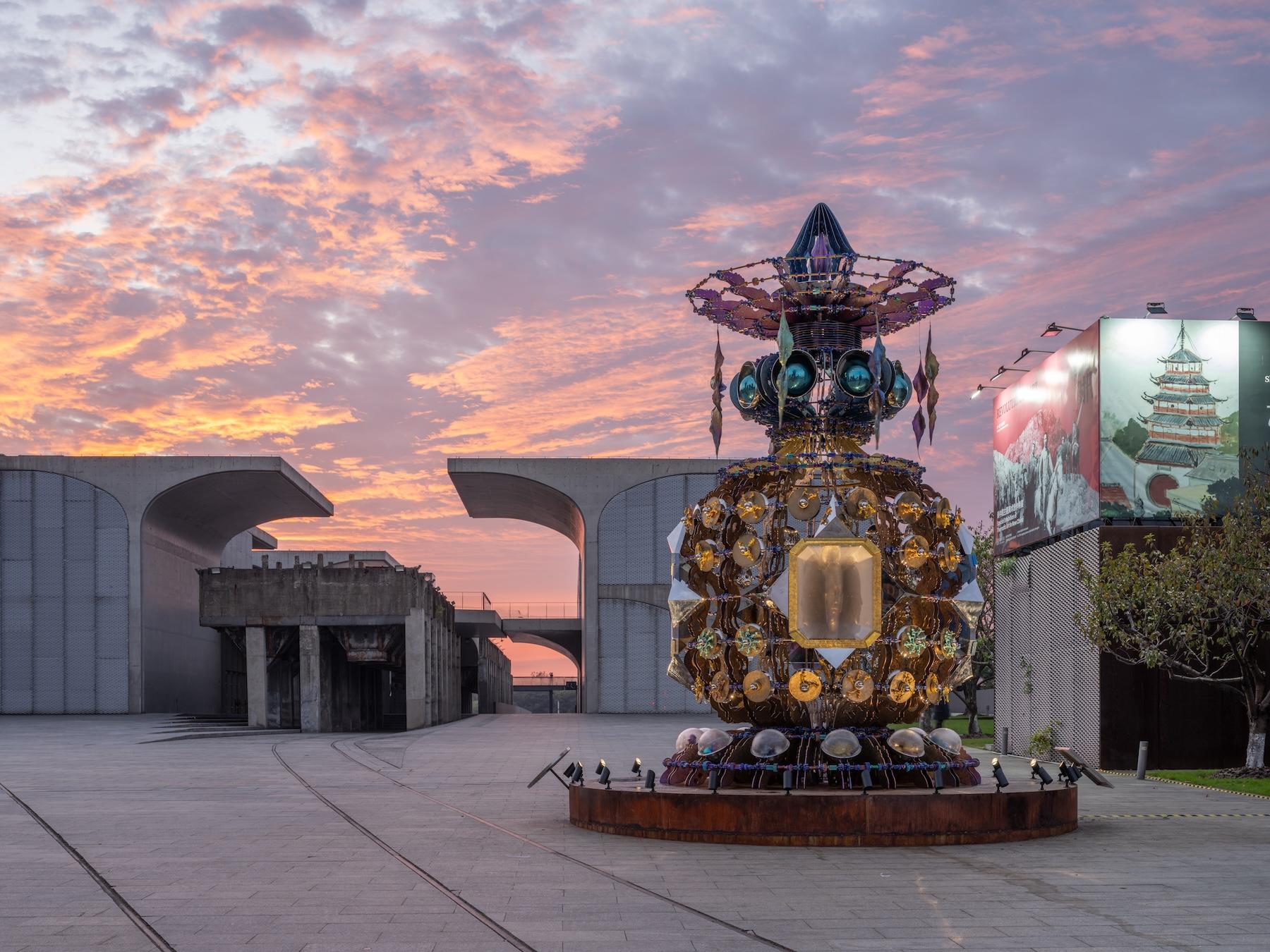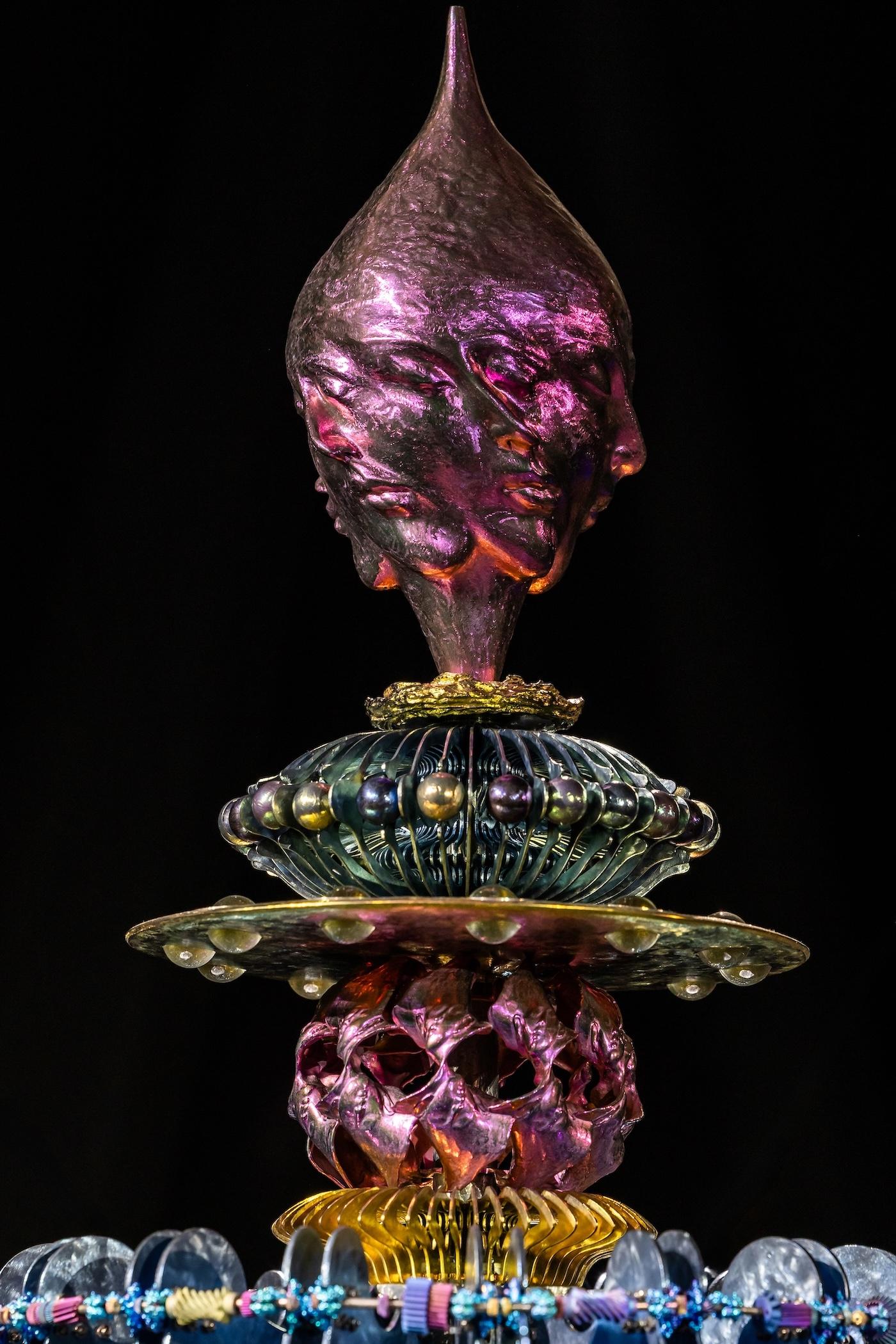

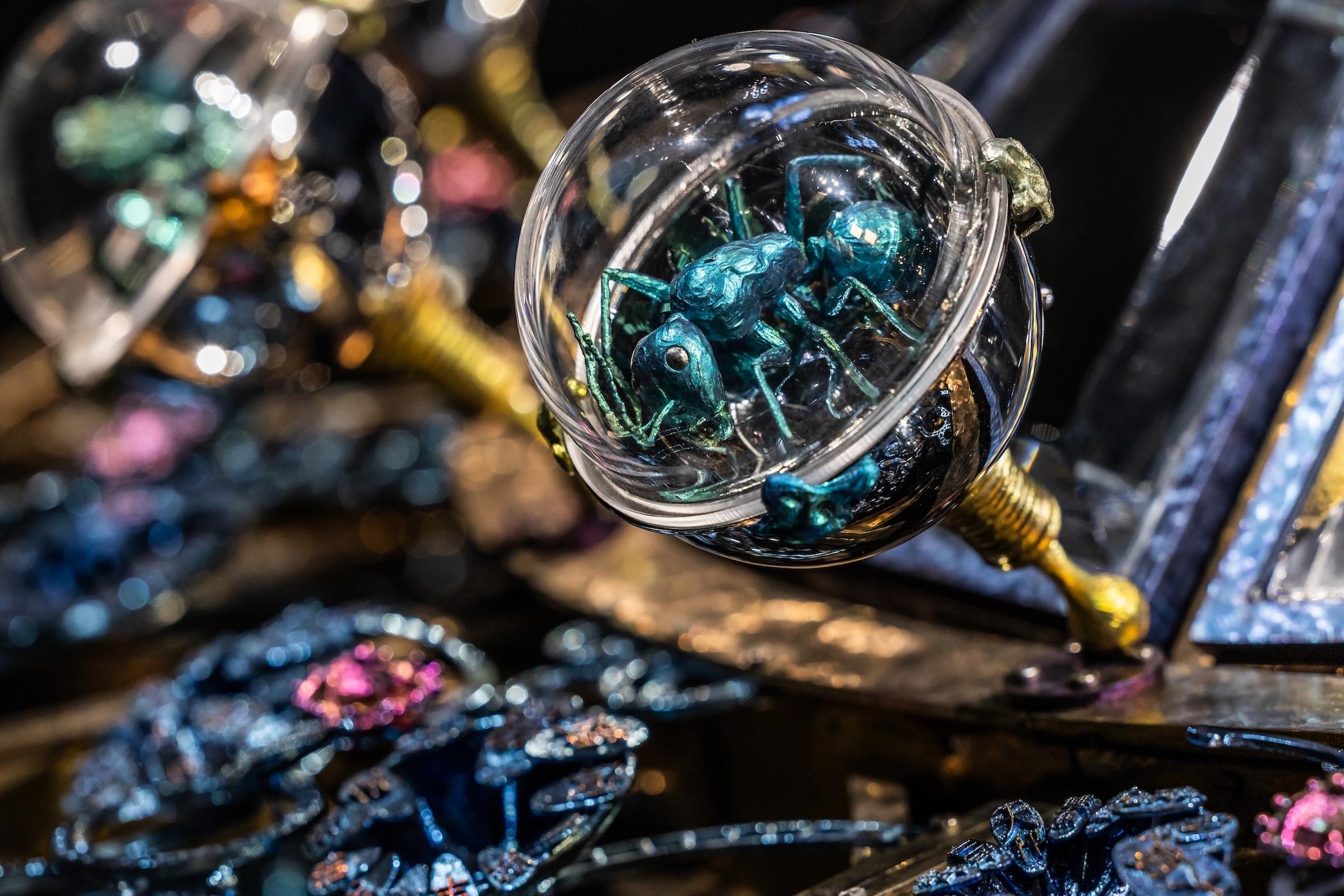
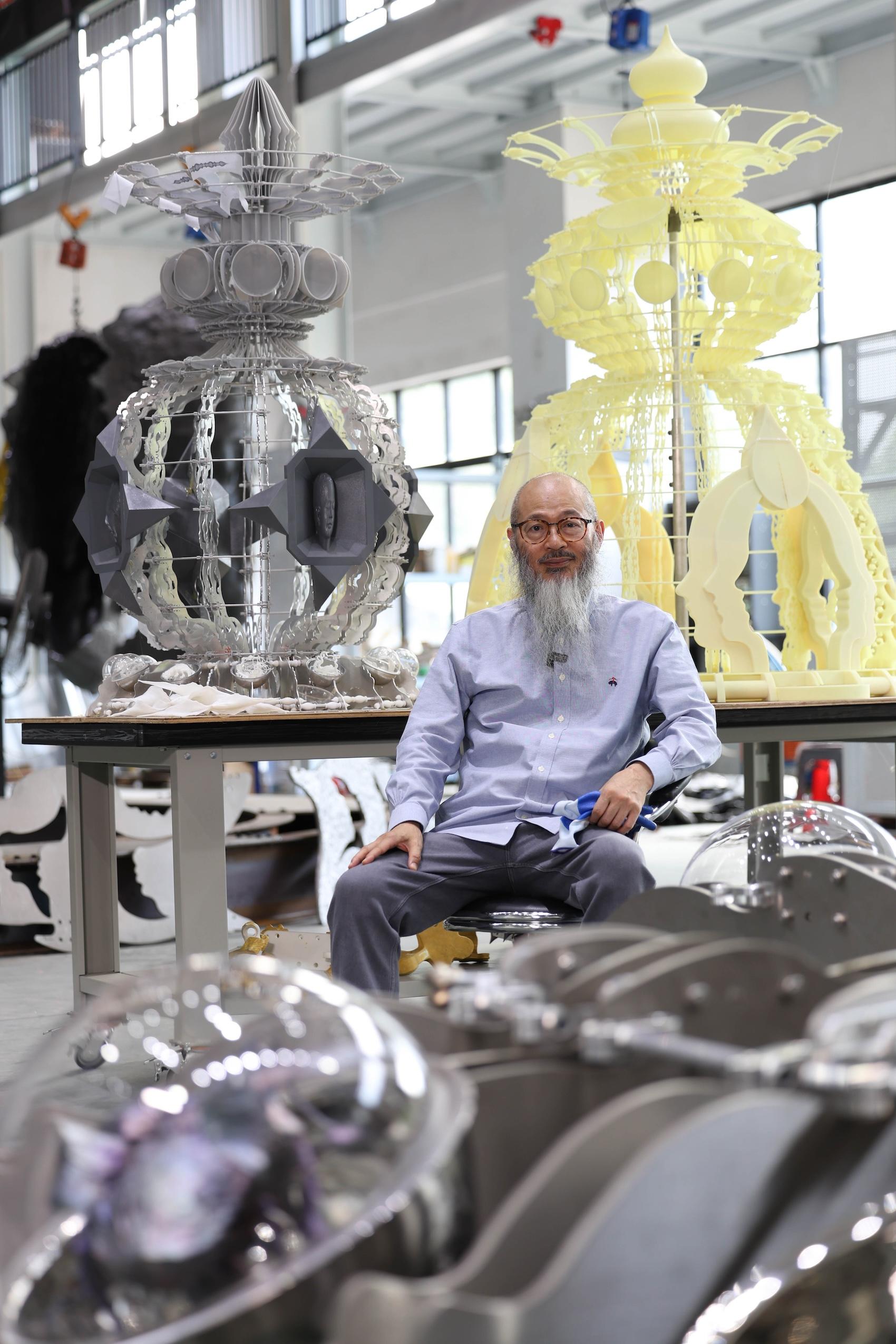
Installed within the historic chapel of Santa Maria della Pietà, Chan’s exhibition occupies the space like a suspended liturgy. His titanium sculptures—part reliquary, part cosmological fragment—appear almost untethered from gravity or chronology. They do not announce themselves with the urgency typical of Biennale culture. Instead, they slow perception, asking viewers to enter a contemplative register increasingly rare in contemporary art.
Chan has long worked between traditions: Chinese philosophy, Buddhist cosmology, Catholic iconography, and advanced material engineering. However, Vessels of Other Worlds feels less like a synthesis of belief systems than an inquiry into what remains after systems of belief begin to fracture. His sculptures do not preach transcendence; they test whether transcendence is still materially possible.
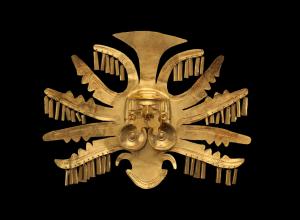
Titanium becomes central to this question. Lightweight yet nearly indestructible, industrial yet strangely celestial, the material operates in Chan’s work as a paradoxical skin for impermanence. The sculptures seem both ancient and futuristic, devotional and post-human. Their surfaces catch Venetian light like fragments of submerged architecture or ritual objects excavated from an unknown civilization.