
Among the icons at the heart of the collection is a sensational tribute to a Fang founding ancestor from Gabon and muse to the Western avant-garde. Before her arrival in the studio of the painter André Derain, she was positioned as the publicly accessible vigilant presence at the summit of a portable altar carried by members of a family as the location of their community shifted generationally. Her physical being is defined as a series of discrete volumes that may constitute a conceptual genealogical map. In Fang society the intense inky black tonality of the wood is associated with absence and its luminosity derived from the application of reflective palm oil evokes an ancestral state of being. Although works by African artists were ushered into institutions like The Met as a response to the transformative role and impact they had on a modern rebirth of Western expression, our new edition foregrounds the worldviews of their original authors. As much as possible, the emphasis in these galleries is on the biographies of those individuals and the original objectives that informed creations that by any measure attest to their virtuosity and ingenuity.
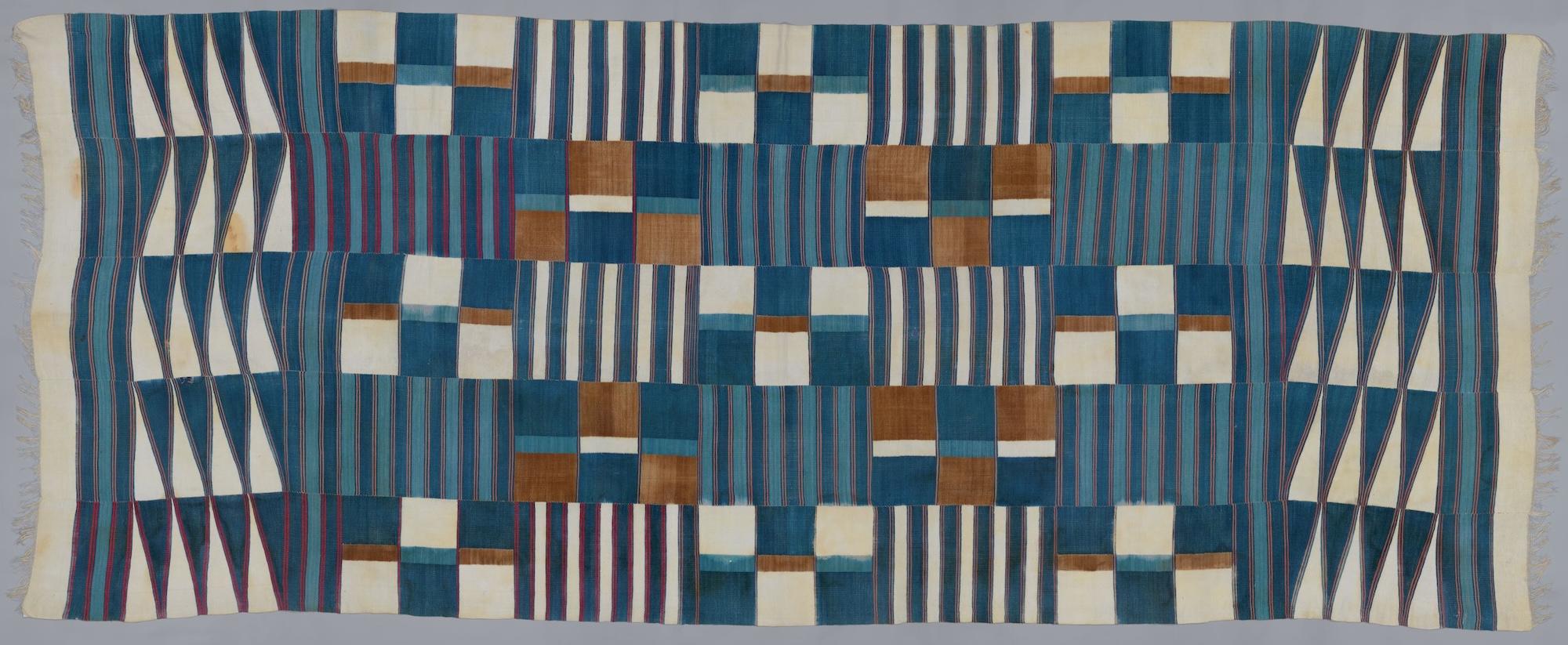
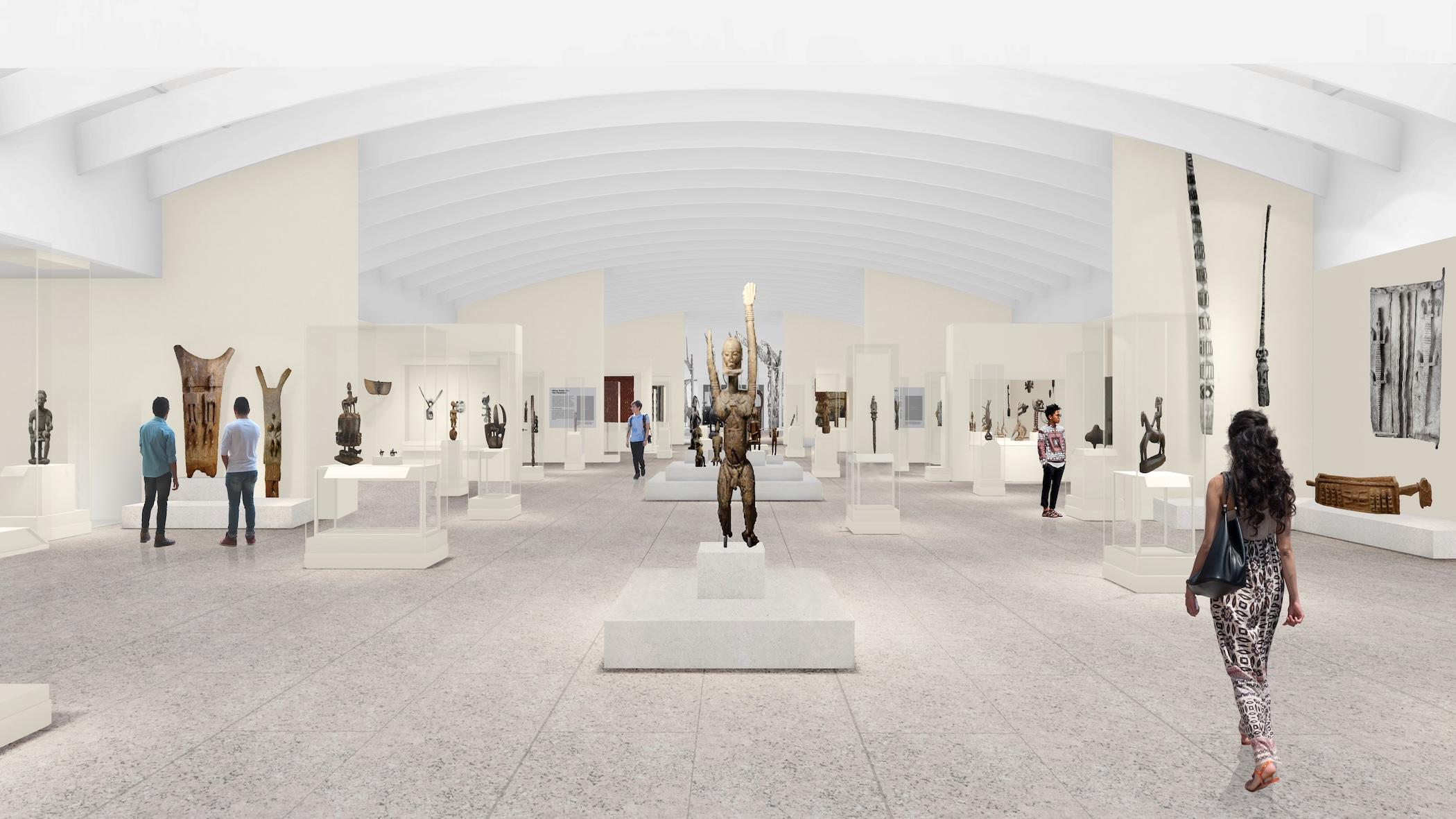
One of the most monumental extant works of Dogon sculpture, dating from as early as the 16th century, faces the point of entry to the new galleries. The corporeal presence of that over-life- sized priest with arms raised acts as a conduit for prayers to the heavens for life-giving rain on behalf of his constituents. Placed in dialogue with this classical landmark on the opposite wall is Bleu no. 1 (2014) by Abdoulaye Konaté. That contemporary fiber creation is a meditation on indigo as a critical ingredient of the region’s textile traditions whose palette evokes the skies overhead and seasonal rains that contrast with the arid Sahelian landscape.
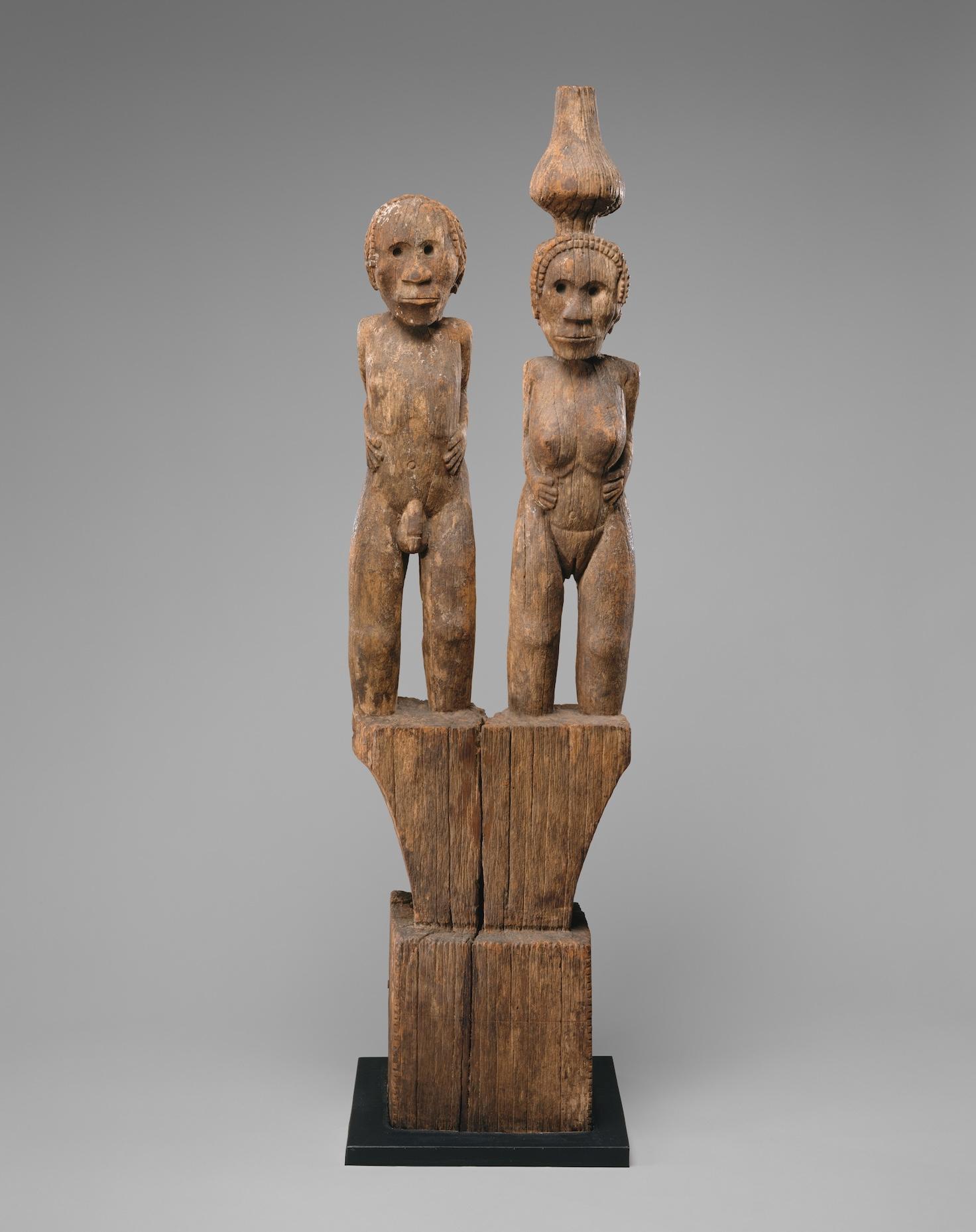
At the other end of the survey is a parallel juxtaposition that at once highlights the range of visual media and their dynamism past and present. A Malagasy sculptural landmark created off the coast of East Africa in the Indian Ocean reflects the heritage of its author’s forebears from both Africa’s mainland and Asia. Once the focus of rites of passage within a Sakalava community, despite centuries of exposure to the elements the gaze of this couple from the summit of a ceremonial post remains penetrating. Oriented toward galleries devoted to Oceanic art, the nude figures flank one another with hands held to their sides. The disparity in their heights is compensated for by a vessel of water delicately balanced on the woman’s head. Immediately adjacent are contemporary fiber creations by leading Malagasy artists—one by Martin Rakotoarimanana, reviving the brilliance of the island’s silk weaving tradition, and one by Jöel Andrianomearisoa, paying homage to the gentle hues of the island’s natural beauty.